

Soft and Fluffy Sourdough English Muffins Recipe
This post may contain affiliate links. Please read our disclosure policy.
Homemade sourdough English muffins are soft, tender, and lightly tangy, with a golden crust from cooking on the stovetop in a skillet while keeping the inside airy and pillowy. They split open easily to hold all your favorite toppings, from butter and jam to eggs and bacon. Made with an active sourdough starter, these muffins develop a tender crumb and subtle tang whether you let the dough rise slowly overnight at room temperature or chill it in the fridge before shaping and cooking the next morning. The muffins are sturdy enough for sandwiches but soft enough to enjoy on their own, and you can shape them using either of two methods for neat, uniform rounds. If you like using extra starter, Sourdough Discard English Muffins are another tasty pan-cooked English-style muffin.

MY LATEST VIDEO
Why You’ll Love This Recipe
- Super soft and tender – These muffins have a light crumb and a mild tang from the sourdough starter. They split open easily and hold your toppings really well. If you want a similar recipe that uses extra starter while keeping the same pan-cooked texture, try these Sourdough Discard English Muffins. And who knows, you might just become a big fan of English muffins!
- Easy to make at home – The dough in this easy recipe is simple and requires minimal kneading. If you enjoy baking sourdough breads for everyday meals and sandwiches, Sourdough Sandwich Bread follows the same slow fermentation process and produces a soft, sliceable loaf.
- Freezer friendly for busy mornings – These skillet-cooked breakfast rounds store well in the freezer and reheat quickly. You can also give these Sourdough Discard Burger Buns a try. They’re a quick recipe that gets ready in just under 2 hours and freezes well for sandwiches or quick meals.
Ingredients & Substitutions
* To find precise measurements, scroll to the bottom of this post to find the recipe card*
- Active Sourdough Starter – This great recipe uses a lively, bubbly sourdough starter for the softest, fluffiest English muffins. No baking soda or commercial yeast needed.
- Honey – Adds a touch of sweetness. You can swap with 2 tablespoons of sugar.
- Milk – Adds moisture and makes the muffins light and tender.
- Water – Provides extra moisture for the dough.
- Butter – Unsalted butter softens the crumb and adds flavor.
- Flour – I use all-purpose flour, not bread flour, for this recipe. That’s just my personal preference.
- Salt – Any unrefined salt works; I like Redmond’s Unrefined Salt for the extra minerals.
- Cornmeal – Dusts the tops and bottoms to prevent sticking.
Baking Schedule 1
|
Time |
Process |
|---|---|
|
DAY 1 |
|
|
12:00 PM |
Mix dough |
|
12:30 PM |
Knead the dough |
|
8:30 PM |
Cover and place the dough in the fridge |
|
DAY 2 |
|
|
6:00 AM |
Remove the dough from the fridge and shape |
|
8:00 AM |
Fry in the pan |
Baking Schedule 2
|
Time |
Process |
|---|---|
|
DAY 1 |
|
|
8:00 PM |
Mix the dough |
|
8:30 PM |
Knead the dough, cover, and let rise overnight |
|
DAY 2 |
|
|
6:00 AM |
Remove the dough from the bowl and shape |
|
8:00 AM |
Fry in the pan |
How to Make Sourdough English Muffins
Make the Dough:
- In a liquid measuring cup, add the milk, water, and cubed butter. Heat in the microwave until the butter is just melted and the liquid is warm. Let it cool slightly before adding to the dough (you don’t want the liquid to be hot or boiling, or it can kill the starter).
- Add the active starter and honey to a large bowl. Slowly pour the warm milk mixture into the bowl and stir with a Danish Dough Whisk until combined.
- Next, add the flour and salt to the liquid and stir until a rough dough forms. Scrape the sides of the bowl to incorporate all the flour. You will need to use your hands to incorporate the last bit of flour into the dough. Cover the dough with a damp tea towel, plastic wrap, or a reusable shower cap and let it rest for 30 minutes.
- After the dough has rested, knead it for 20 seconds by pulling a piece of the edge, folding it toward the center, and pressing it down with the heel of your hand. Repeat for 20 seconds on other edges.
Bulk Rise:
- Cover the bowl and leave in a warm place to bulk ferment until the dough doubles in size, about 8–10 hours at 70°F. The bulk fermentation can be done overnight. Otherwise, once the first rise is complete, cover the dough and place it in the fridge to chill overnight.
- The next morning, or when ready to shape, remove the dough from the fridge or bowl and place it on a lightly floured surface. Let the dough rest for 10 minutes before shaping.
- Meanwhile, prepare a cookie sheet by lining it with parchment paper and generously sprinkling with cornmeal to prevent sticking.
Shaping:
Technique #1:
- Pat the dough with a floured hand into a rectangle about 1/2 inch thick. Using 3-inch English muffin rings, a cookie cutter, biscuit cutter, or a rimmed drinking glass, cut the dough into 10–12 rounds. Place them on the prepared sheet pan.
Technique #2:
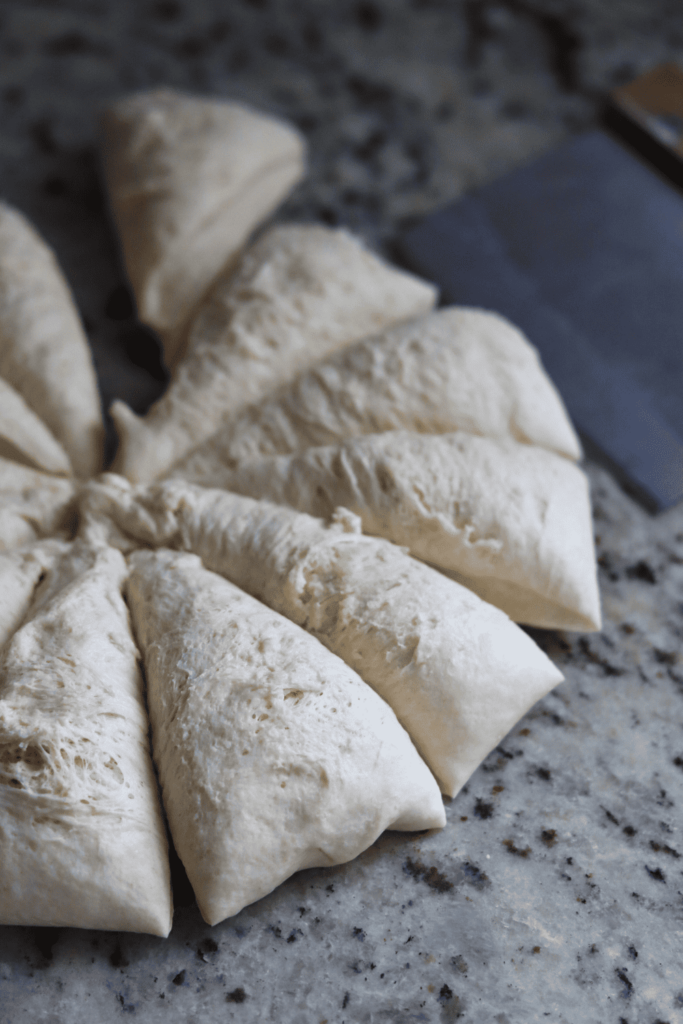
- Cut the dough with a bench scraper or sharp knife into equal pieces. Pull the corners of one piece toward the center, flip it, and roll it into a smooth round dough ball. Place it on the prepared sheet pan and gently flatten. Repeat for all the muffins.
Second Rise:
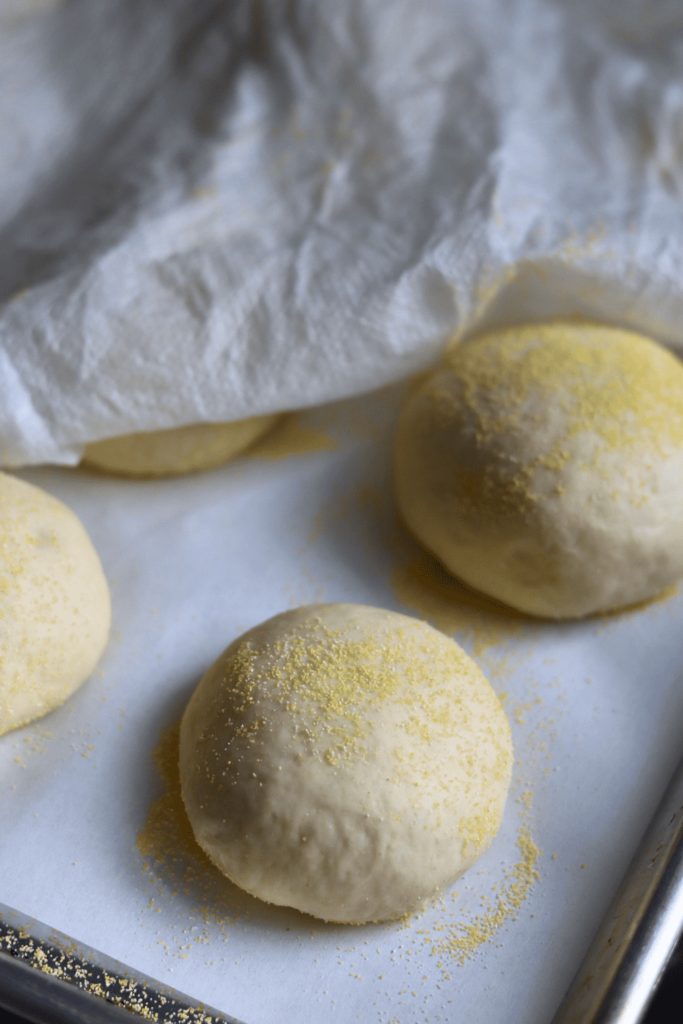
- Once all the muffins are shaped, cover with a slightly damp tea towel and let them rise until puffy, about 1–2 hours depending on kitchen temperature.
Cook:
- Warm a large cast-iron or nonstick skillet over low heat. Cook about 6 muffins at a time, since they don’t spread much.
- Cook on one side for 8–12 minutes, checking the bottoms halfway for even browning. Flip and cook the other side for another 8–12 minutes. The muffins are done when they feel light and the sides spring back when pressed gently.
- 10. Place the muffins on a wire rack to cool while cooking the second batch. Split in half when ready to serve and enjoy.
- Toast a freshly cooked sourdough English muffin and spread it with butter and a little honey. You can top them with anything you like, from more butter, honey, or jam, to making breakfast sandwiches with sausage, crispy bacon, a fried egg, and melted cheese.

McKenna’s Helpful Tips
- Use an active starter – Make sure your sourdough starter is bubbly and lively for the best rise and flavor.
- Cook low and slow – Use low heat so the muffins cook evenly and reach about 200°F inside.
- Let the dough rest – Giving the dough time to rise makes this sourdough English muffin recipe soft and fluffy.
- Dust with cornmeal – Prevents sticking and gives you that classic English muffin texture.
How to Store:
These muffins are best eaten within a few days while still soft and fresh. Store them in an airtight container at room temperature for up to 4–5 days. To keep leftover muffins longer, slice in half and place parchment between each before freezing so they don’t stick. After thawing at room temperature, microwave each half for 10–15 seconds or toast until warm, and they’ll still taste almost as good as fresh.

FAQs
If the outsides brown too fast, the middle can stay raw. Cook on low heat and give them time. You can finish them in a 250°F oven until the center reaches 200°F.
Make sure your sourdough starter is active and bubbly. Cold dough or a chilly kitchen can slow the rise. Let the dough go through its full bulk fermentation and second rise until puffy.
They should feel light, and the sides should spring back when you press them gently. The internal temperature should reach around 200°F.




Sourdough English Muffins Recipe
Enter your email below, and we’ll send it straight to your inbox! Plus, you’ll get my newest sourdough recipes and best tips every week!
Equipment
Ingredients
- 240 grams milk 1 cup
- 120 grams water 1/2 cup
- 42 grams unsalted butter 3 Tablespoons
- 75 grams active sourdough starter 1/3 heaping cup
- 24 grams honey 1 Tablespoon
- 550 grams all-purpose flour 4 cups + 3 Tablespoons
- 9 grams salt 1 1/2 teaspoons
- cornmeal for dusting
Instructions
Make the Dough:
- In a liquid measuring cup, add milk, water and cubed butter. Heat in the microwave until the butter is just melted and the liquid is warm. Cool slightly before adding to the dough. The liquid shouldn't be hotter than 110 degrees F, otherwise this can kill the starter and prevent the dough from rising.240 grams milk, 120 grams water, 42 grams unsalted butter
- Add the active starter and honey to a large bowl. Slowly pour the warm milk mixture into the bowl and stir with a Danish dough whisk or your hand until combined.75 grams active sourdough starter, 24 grams honey
- Next, add the flour and salt to the liquid and stir until a rough dough forms. Be sure to scrape the sides of the bowl for the extra flour. You will need to use your hands to incorporate the last bit of the flour into the dough. Cover the dough with a damp tea towel or plastic wrap. Leave to rest for 30 minutes.550 grams all-purpose flour, 9 grams salt
- After the dough has rested, knead the dough for 20 seconds by pulling a piece of the edge of the dough, folding it towards the center, and pushing it down with the heel of your hand. Repeat for 20 seconds.
Bulk Rise:
- Place the dough in a greased straight-edge bowl. Cover the bowl with the plastic cover or plastic wrap and leave in a warm place to bulk ferment until doubled in size. In my 70 degree F kitchen this takes about 8-10 hours. If your kitchen is warmer, it will take less time. If your kitchen is cooler, it will take more time.
- Once the first rise is complete, either cover the dough and place it in the fridge to chill overnight or continue on to shaping. Note: If you chill the dough overnight, the second rise will take longer the following day since the dough will be cold.
- When you are ready to shape, remove the dough from the fridge or the bowl and place it on a lightly floured surface. Let the dough rest for 10 minutes.
- In the meantime, prepare a baking sheet by lining it with a piece of parchment paper and generously sprinkling it with cornmeal to prevent the dough from sticking.cornmeal for dusting
Shaping:
Technique 1:
- Pat the dough with a floured hand into a rectangle shape that is 1/2 inch thick. Using a 3-inch English muffin ring, cookie cutter, biscuit cutter, or a rimmed drinking glass, cut the dough into 10-12 rounds. Place them onto the prepared sheet pan.
Technique 2:
- Cut the dough with a bench scraper or a sharp knife into 10-12 equal pieces.
- Pull the corners of one piece of dough towards the center, flip, and then roll each piece of dough into a round, smooth dough ball. Place it onto a prepared sheet pan and gently flatten until 1/2 inch thick. Repeat until all the Sourdough English Muffins are formed.
Second Rise:
- Once all of the Sourdough English Muffins have been shaped, cover them with plastic wrap or this plastic cover that fits my baking sheet and let them rest until puffy. The second rise.In my 70 degree F kitchen, this step took about 1-2 hours when the dough was room temperature. When the dough was stored in the fridge overnight, this took about 3-4 hours. Again, if your kitchen is warmer, it will be faster. If your kitchen is cooler, it will be slower.
Cook:
- Warm a large cast-iron skillet or nonstick skillet over low heat. I usually cook 6 at a time since they do not spread very much when they are cooking.
- Cook on one side for 12-14 minutes, checking the bottoms halfway for even cooking. Flip to the other side and continue to cook for another 12-14 minutes or until the internal temperature reaches 200 degrees F.
A great way to know when the muffins are done cooking is they should feel lightweight and when pressed gently, the sides spring back.
- Place the Sourdough English Muffins on a wire rack to cool while you cook the second batch. Split in half when ready to serve and enjoy!

is it possible to leave in the fridge for 24 hrs after making the dough before you shape and allow the second rise? TIA
I haven’t tested a full 24-hour cold ferment with this recipe, but that should be fine! You can refrigerate the dough after the first rise (or after shaping), then shape the muffins the next day and let them complete their second rise before cooking. Because the dough will be cold, that second rise may take a little longer than usual. I’d watch the dough rather than the clock and wait until the muffins look noticeably puffy before cooking. Thanks so much for asking!
Could I bake these on a pre heated stone and get the same outside browning?
Hi! I personally haven’t tested this baking method, so I’m not 100% certain, but I have seen other bakers bake with a similar method and have great success. If you give it a go, I would love to hear how it turns out!
I have tried numerous sourdough English muffin recipes and none have worked until this one. Another recipe of yours that is a fav in my house.
I’m so thrilled this recipe finally gave you the English muffins you were looking for!. Thank you so much for taking the time to leave such a kind review!
Can I use almond milk?
Yes, it should work! I’d recommend using plain, unsweetened almond milk so it doesn’t add any additional sweetness or flavor. If you try it, I’d love to hear how they turn out!
Can you cook them on a griddle?
Yes! A griddle is actually one of my favorite ways to cook English muffins. Just keep the heat fairly low so they cook all the way through without getting too dark on the outside.