

Sourdough Ham and Cheese Scones
This post may contain affiliate links. Please read our disclosure policy.
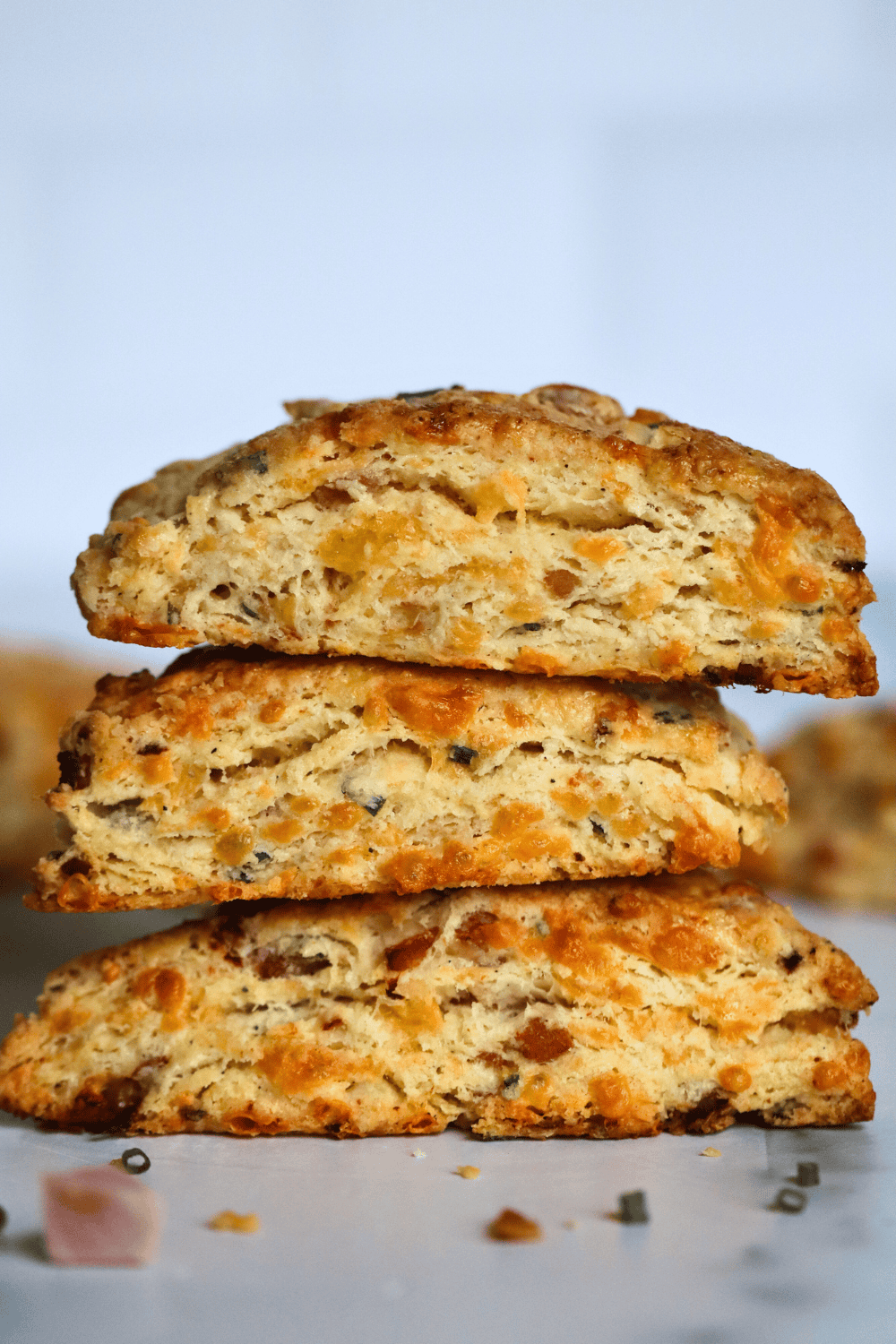
These savory Sourdough Ham and Cheese Scones are the kind of cheesy, flaky baked good that makes sourdough discard worth keeping around. Sharp cheddar, salty ham, and fresh chives come together in a buttery scone dough that is simple to mix and even easier to love!
The best part is that this recipe uses up leftover ham and sourdough discard, so nothing goes to waste. If you’re more of a sweet scone person, these Sourdough Blueberry Scones and Sourdough Chocolate Chip Scones use the same easy method and are just as hard to stop eating.
Quick Look: Sourdough Ham and Cheese Scones
- Prep Time: 15 minutes
- Chill Time: 15 minutes
- Bake Time: 17 minutes
- Total Time: 47 minutes
- Servings: 8 scones
- Calories: ~347 kcal per serving
- Cook Method: Baked
- Flavor Profile: Savory, buttery, and perfectly tender with pockets of melty cheese and bits of salty ham in every bite. Lightly crisp on the outside and soft on the inside, with a subtle sourdough tang that makes them extra flavorful and hard to resist.
- Difficulty: Beginner-friendly – Scones are pretty straightforward, and this recipe keeps things simple. As long as you don’t overwork the dough, you’ll end up with tender, flaky scones. Great if you want something homemade without a lot of fuss!
SUMMARIZE & SAVE THIS CONTENT ON
Why You’ll Love This Recipe
- Simple to make – These savory sourdough cheese and ham scones come together with straightforward steps and no complicated techniques or secret ingredient. If you love easy sourdough baking, these Sourdough Chocolate Chip Scones and Sourdough Gingerbread Scones are made the same way and just as easy to pull off.
- Great for leftovers – This recipe is the best way to use up leftover holiday ham and sourdough discard so nothing goes to waste, just like my Sourdough Ham and Bean Dumpling Soup or my Sourdough Ham and Cheese Rolls-ups!
- Savory, buttery, and flaky – Sharp cheddar, salty ham, and fresh chives baked into perfectly flaky, buttery layers make these scones seriously hard to resist. If you love savory baked goods, these Sourdough Biscuits or Sourdough Garlic Herb Biscuits belong on your list too.
Ingredients & Substitutions
* To find precise measurements, scroll to the bottom of this post to find the recipe card*
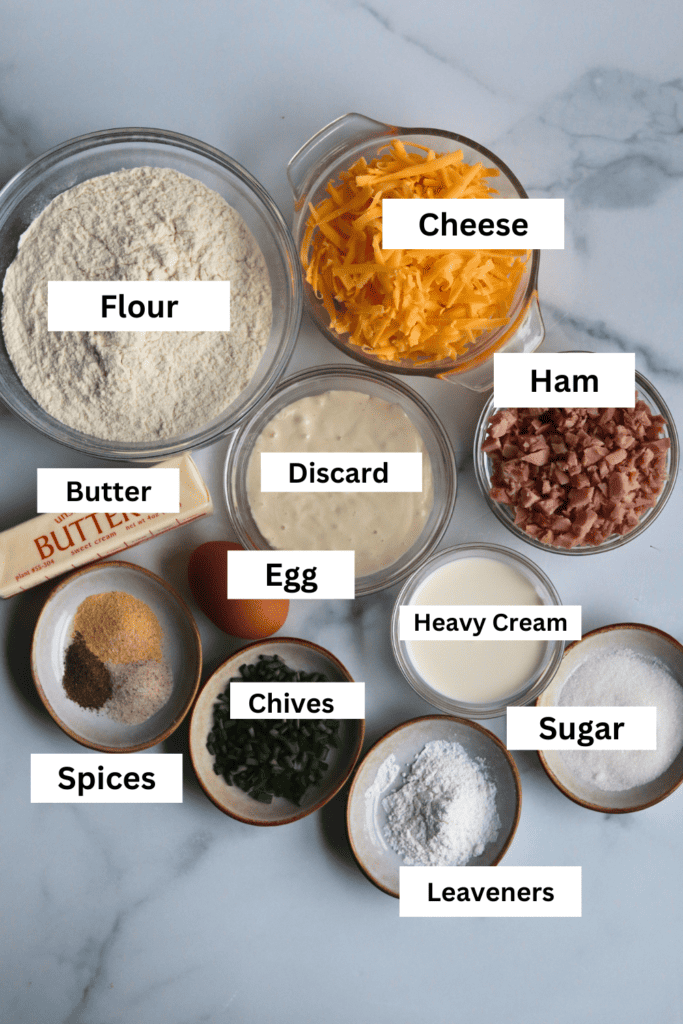
- Flour – I use all-purpose flour for these tender scones.
- Sugar – Just a little goes a long way for this recipe. It keeps the scones tender while balancing out all those savory flavors.
- Baking Powder – This is what gives the scones their lift, so make sure it hasn’t expired.
- Unsalted Butter – Cold or frozen butter is the secret to light, flaky scones, so don’t skip that step. If you only have salted butter, just reduce the salt by 1g (¼ teaspoon).
- Cheddar Cheese – Sharp cheddar gives you the best flavor here. Gruyere is a great swap too.
- Ham – This is a perfect recipe for leftover ham. Chop the ham into bite-sized cubes. You can use ham steak or deli ham.
- Chives – Fresh chives add a nice pop of freshness, but feel free to use any herbs you love or swap in some chopped scallions.
- Heavy Cream – Stick with heavy cream instead of milk. The thickness gives the scones just the right texture, and using anything thinner can make them bake up flat and dry. Full-fat canned coconut milk is a great dairy-free option.
- Sourdough Discard – I like to use unfed discard that’s no more than 1-2 days old for recipes like this. A fed starter works too, just measure by grams rather than volume. Be sure to keep that discard cold, as that helps your butter stay cold, which means flakier scones.
How to Make Sourdough Ham and Cheese Scones

- In a large mixing bowl, combine the dry ingredients: flour, sugar, baking powder, garlic powder, salt, and pepper. Whisk until everything’s well combined.
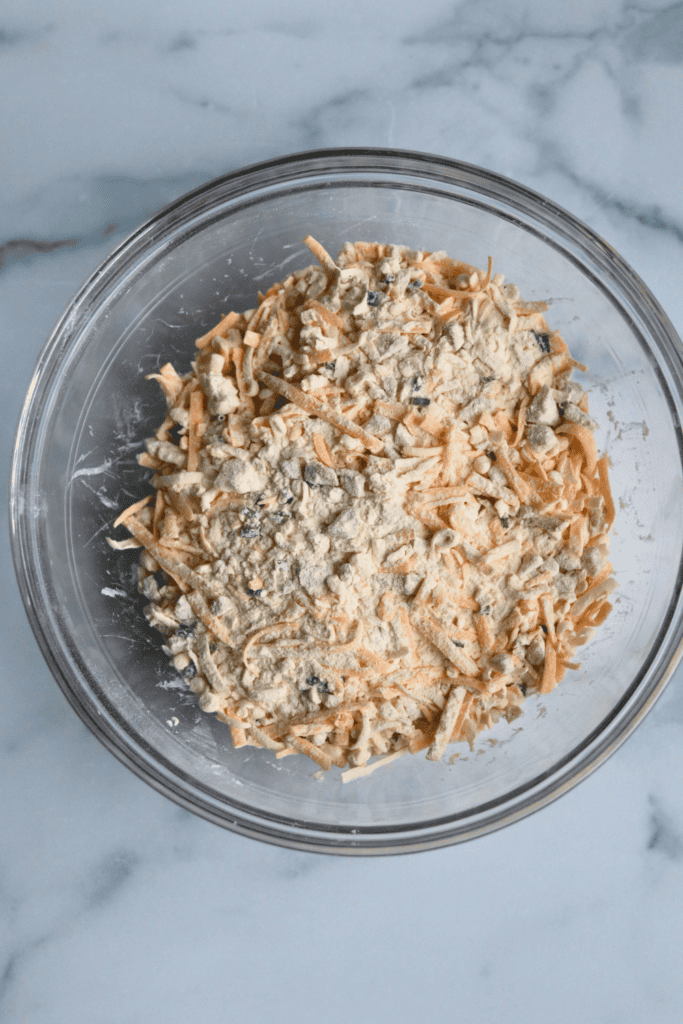
- Grate the cold or frozen butter and add it to the flour mixture. Cut it in with a pastry cutter or work it in with your fingers until the butter pieces are coated in flour and form coarse pea-sized crumbs. Sprinkle in the halved ham, cheese, and chives and mix until combined.

- In a medium bowl, whisk together the heavy cream, egg, and sourdough discard until smooth.

- Pour the wet ingredients evenly over the butter mixture and mix with a rubber spatula until just combined. The dough will be crumbly with some spots of dry flour.
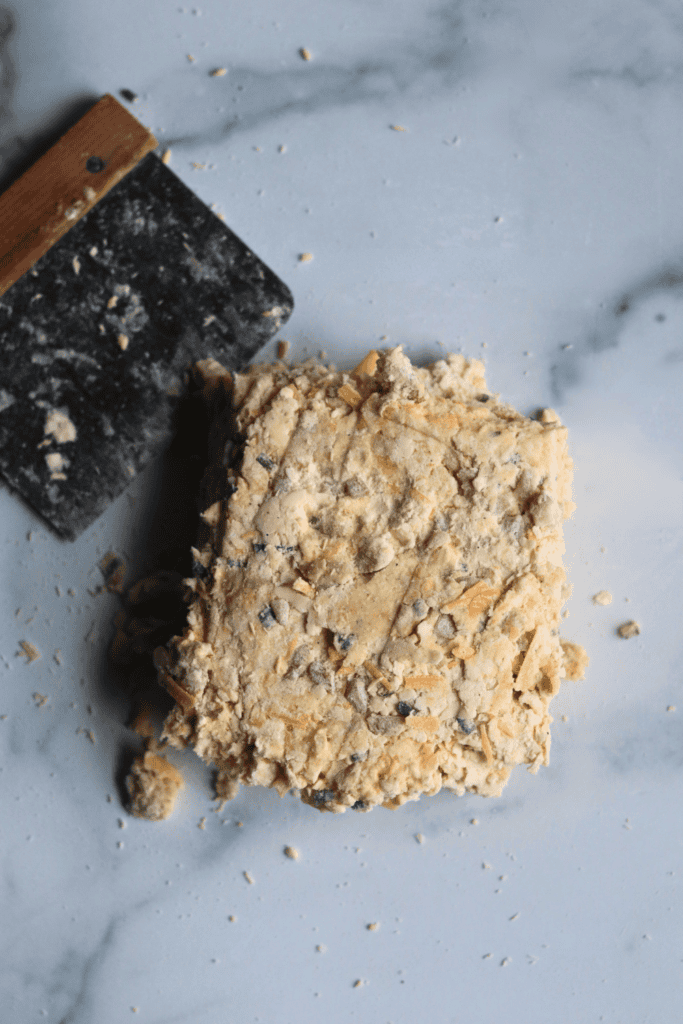
- Turn the dough out onto a lightly floured surface and pat it down into a rectangle. Using a bench scraper, fold the dough in half, then press it back down into a rectangle. Repeat 3 to 4 times.
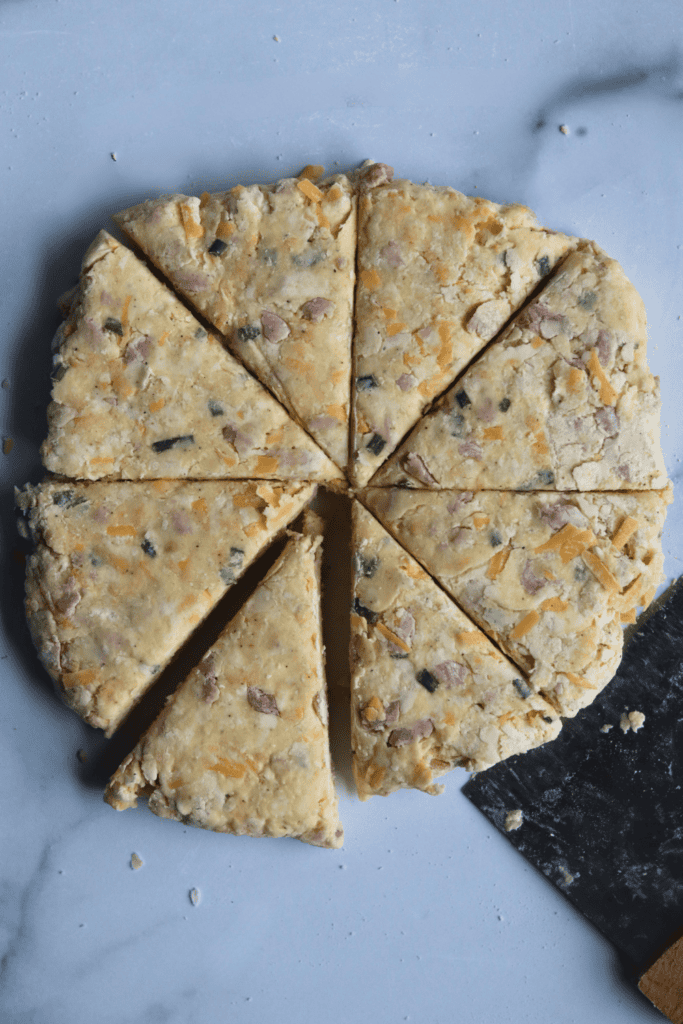
- Shape the dough into an 8-inch disc with your hands, then cut the soft dough into 8 equal wedges with a bench scraper or large knife.
- Place the unbaked scones on a baking sheet, cover, and chill in the fridge for at least 15 minutes.
Long Fermentation Tip
If you prefer to long ferment your sourdough scones for easier digestibility, prepare the sourdough scone dough and store it in the fridge covered overnight and bake the following day.

- Preheat the oven to 400°F.
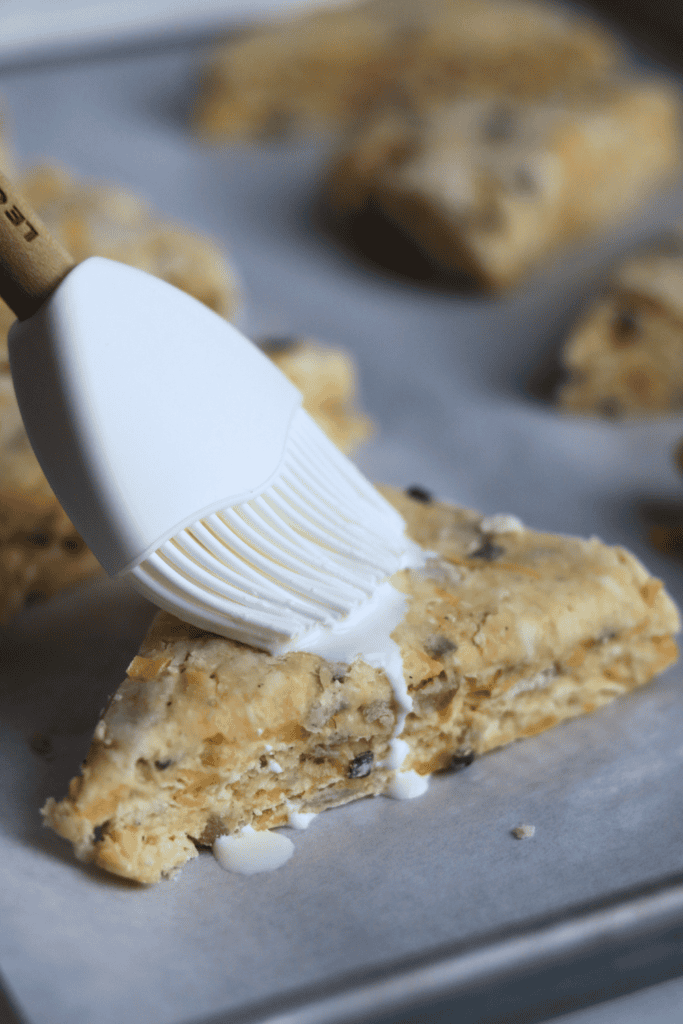
- Brush the tops of the scones with heavy whipping cream using a pastry brush.

- Bake for 17 to 20 minutes, or until the tops are lightly golden brown. Transfer the savory scones to a wire rack to cool.
McKenna’s Helpful Tips
- Use a kitchen scale: Too much flour and your scones will be dry; too much liquid and they’ll bake up dense and flat. A kitchen scale is an inexpensive tool that takes the guesswork out of measuring and is totally worth it.
- Keep everything cold: Cold butter is the secret to light, flaky scones. As it melts in the oven, it releases moisture and creates those flaky layers. Use cold discard over active starter, and keep all your other ingredients cold too, like your eggs and heavy cream. If the butter melts before baking, your scones will be flat and dry.
- Work quickly and chill the dough: The less you handle the dough, the better. Overworking it warms up the butter and leads to flat scones. Once shaped, pop them in the fridge before baking to firm the butter back up and give you the best shot at flaky, tall scones.
How to Store
Store leftover scones in an airtight container at room temperature for up to two days or refrigerate them for up to five days if you need them to last longer.
Before serving, warm them in a 300°F oven for 5 to 10 minutes to bring back that fresh-baked texture.
Freeze
Unbaked scones freeze well. Shape the dough into wedges, place them on a parchment-lined baking sheet, and freeze for 1 to 2 hours until solid, then transfer to a freezer-safe bag or container. Bake frozen scones straight from the freezer on a baking sheet, brush with heavy cream, and add 2 to 3 extra minutes to the baking time.
Baked scones freeze well too. Let them cool completely, then wrap each one individually in plastic wrap and store in a freezer-safe bag. Thaw baked scones at room temperature or warm them in a 300°F oven for about 10 minutes.

Sourdough Ham and Cheese Scones FAQs
Yes, there are several swaps that work well here. Sharp cheddar can be replaced with Gruyere. Fresh chives can be swapped out for any herbs you love or chopped scallions. If you only have salted butter, reduce the salt by 1g (¼ teaspoon). Full-fat canned coconut milk works as a non-dairy substitute for heavy cream. Leftover ham, ham steak, and deli ham all work great. Other substitutions like different flours or cheeses have not been tested in this recipe, so results may vary. If you try something new, come back and share how it went.
The most likely cause is warm butter. Cold or frozen butter is essential for light, flaky scones, so keep all your ingredients cold, including the eggs, heavy cream, and sourdough discard. Too much flour will dry the scones out, and too much liquid will make them dense and flat, which is why a kitchen scale makes a real difference here. Overworking the dough can also be a factor, so work quickly and don’t skip the chill before baking.
Yes. Shape the dough, place the unbaked scones on a parchment-lined baking sheet, cover, and refrigerate overnight. This also allows for a long fermentation, which makes the scones easier to digest. Bake them straight from the fridge the next day at 400°F for 17 to 20 minutes.
Instead of dividing the dough into 8 large scones, divide it into 16 mini scones and reduce the bake time slightly.



If you tried this Sourdough Ham and Cheese Scones recipe or any other recipe on my blog, please leave a 🌟 star rating and let me know how it went in the 📝 comments below. Thanks for visiting!
Sourdough Ham & Cheese Scones Recipe
Enter your email below, and we’ll send it straight to your inbox! Plus, you’ll get my newest sourdough recipes and best tips every week!
Ingredients
- 250 grams all-purpose flour 1 3/4 cups
- 15 grams sugar 1 Tablespoon
- 10 grams baking powder 2 1/2 teaspoons
- 3 grams garlic powder 1 teaspoon
- 3 grams salt 1/2 teaspoon
- 1 gram black pepper 1/4 teaspoon
- 113 grams unsalted butter, frozen 1/2 cup
- 100 grams cheddar cheese, freshly shredded about 1 cup
- 100 grams ham, finely cubed 3/4 cup
- 6 grams chives, chopped 2 Tablespoons
- 45 grams heavy cream, cold 3 Tablespoons, plus more for topping
- 1 egg, cold about 62 grams
- 120 grams sourdough discard, cold 1/2 cup
Instructions
- In a large mixing bowl, combine flour, sugar, baking powder, garlic powder, salt and black pepper. Whisk together until incorporated. If not using a kitchen scale, be sure to fluff the flour and spoon it into your measuring cups and level off with a knife. This will give you a more accurate measurement.250 grams all-purpose flour, 15 grams sugar, 10 grams baking powder, 3 grams garlic powder, 3 grams salt, 1 gram black pepper
- Grate the cold/frozen butter and add to the flour mixture. Cut in with a pastry cutter or mix with your fingers until the small pieces of butter are coated with flour and create pea-sized coarse crumbs.113 grams unsalted butter, frozen
- Next, sprinkle in the cheddar cheese, ham and chives and mix until incorporated.100 grams cheddar cheese, freshly shredded, 100 grams ham, finely cubed, 6 grams chives, chopped
- In a medium bowl, whisk together the heavy cream, egg and sourdough discard until smooth.You can use active sourdough starter, just be sure to use the same amount in grams. Using cold starter works best because it helps keep the butter from melting too early.45 grams heavy cream, cold, 1 egg, cold, 120 grams sourdough discard, cold
- Pour the wet ingredients evenly on top of the butter mixture. Mix the scone dough with a rubber spatula until the cream mixture is combined. The dough will be crumbly with some bites of dry flour. Be careful not to over mix the dough, the flour will be incorporated in the next step.
- Turn out the mixture onto a clean work surface and pat into a rectangle. Then, with a bench scraper, fold the dough in half, then press down to create the large rectangle again. Repeat this 3-4 times. Folding the dough helps to create all of those beautiful flaky layers!
- With your hands, form the dough into an 8″ disc. Cut the soft dough into 8 equal wedges with a bench scraper or a large knife. Be careful not to slide the bench scraper when cutting the scones! This will close off the dough, which prevents the scones from getting the flaky layers. Simply press straight and pull straight up.
- Place the unbaked scones on a baking sheet lined with parchment paper. Cover with a plastic lid and chill them in the fridge for at least 15 minutes while the oven preheats. This plastic lid fits perfectly over my baking sheets!
- Long Ferment: If you prefer to long ferment your sourdough scones for easier digestibility, prepare the sourdough scone dough and store them in the fridge covered overnight and bake them the following day!
- When ready to bake, preheat the oven to 400 degrees F.
- With a pastry brush, top the scones with more heavy whipping cream for a golden finish.
- Bake the scones for 17-20 minutes, or until the top of the scones are lightly golden brown. Remove and place on a wire rack to cool slightly.
Notes
Ingredients & Substitutions
- Flour – I use all-purpose flour for these tender scones.
- Sugar – Just a touch to help keep the scones extra tender, while also balancing out the savory flavors.
- Baking powder – This will bring a little lift to our scones! Double-check that it hasn’t expired.
- Unsalted butter – To get light and flaky scones, it’s best to use really cold or frozen butter. If you’re using salted butter, reduce the salt by ¼ teaspoon (1g).
- Ham – This recipe is great for leftover ham! Chop it up into bite-sized cubes. Ham steak or deli ham works well.
- Cheddar Cheese – For the best flavor you’ll want to use a sharp cheddar cheese. Gruyere also works well!
- Chives – Fresh chives bring the perfect freshness to these scones, but you can also substitute with any of your favorite herbs or chopped scallions.
- Heavy cream – It’s important to use heavy cream instead of milk because the thick liquid brings just the right amount of moisture to these scones. If you add too much liquid or use one that’s thinner, your scones will bake up flat and dry. Canned full-fat coconut milk is a fabulous non-dairy alternative.
- Sourdough discard – I prefer using sourdough discard that’s no older than 1-2 days for sweet recipes like these scones. However, you can also use the same amount of active sourdough starter. Just make sure to measure in grams instead of volume. Using cold discard is another helpful trick to keep your butter cold!
- Use a kitchen scale: For the most accurate measurement of your ingredients, use a kitchen scale! Add too much flour, your scones will be dry. Add too much liquid, your scones will bake up dense and flat. This is such a cheap investment and it allows you to properly measure your ingredients.
- Use cold/frozen butter: To get the most light and flakey crust, you need cold butter! When the butter starts to melt while it is baking, it releases moisture. This creates those flakey layers. If you use room temperature or the butter melts before baking, the scones will be flat and dry.
- Use cold ingredients: Furthermore, to help keep the butter cool, use as many cold ingredients as possible, like cold eggs, cold heavy cream, cold sourdough discard, etc.
- Work quickly: As stated above, you don’t want your butter to melt into the dough, so you must work quickly.
- Chill the dough before baking: Chilling the scones before popping them into the oven allows the butter to stay cold, which gives you the best chance for flakey scones.

The most perfect savory scone! Crispy on the outside, but so tender in the inside and packed with ham and melty cheese.