

Easy Sourdough Dutch Baby Recipe (German Pancake)
This post may contain affiliate links. Please read our disclosure policy.
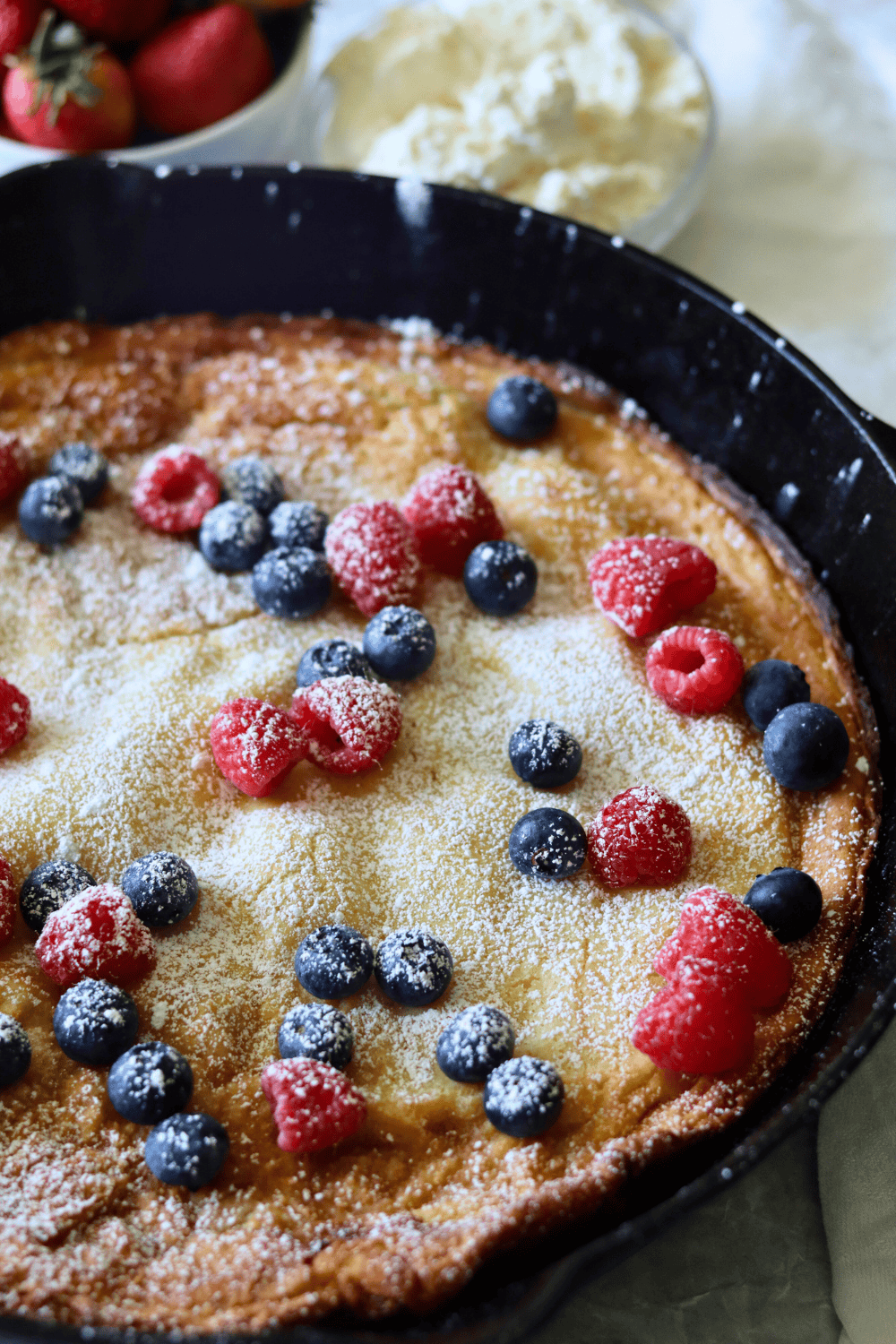
This Sourdough Dutch Baby Pancake is one of those recipes that looks impressive but couldn’t be easier to make. Just blend the batter, pour it into a hot skillet, and let the oven do the work—it bakes up golden and puffed with crisp edges and a soft, custardy center.
This sourdough discard version skips the leavening and works for just about any time of day, whether you go sweet with berries and powdered sugar or savory with bacon and cheese. If you’re in the mood for something more classic, my Sourdough Pancakes and Sourdough Waffles are always favorites too.
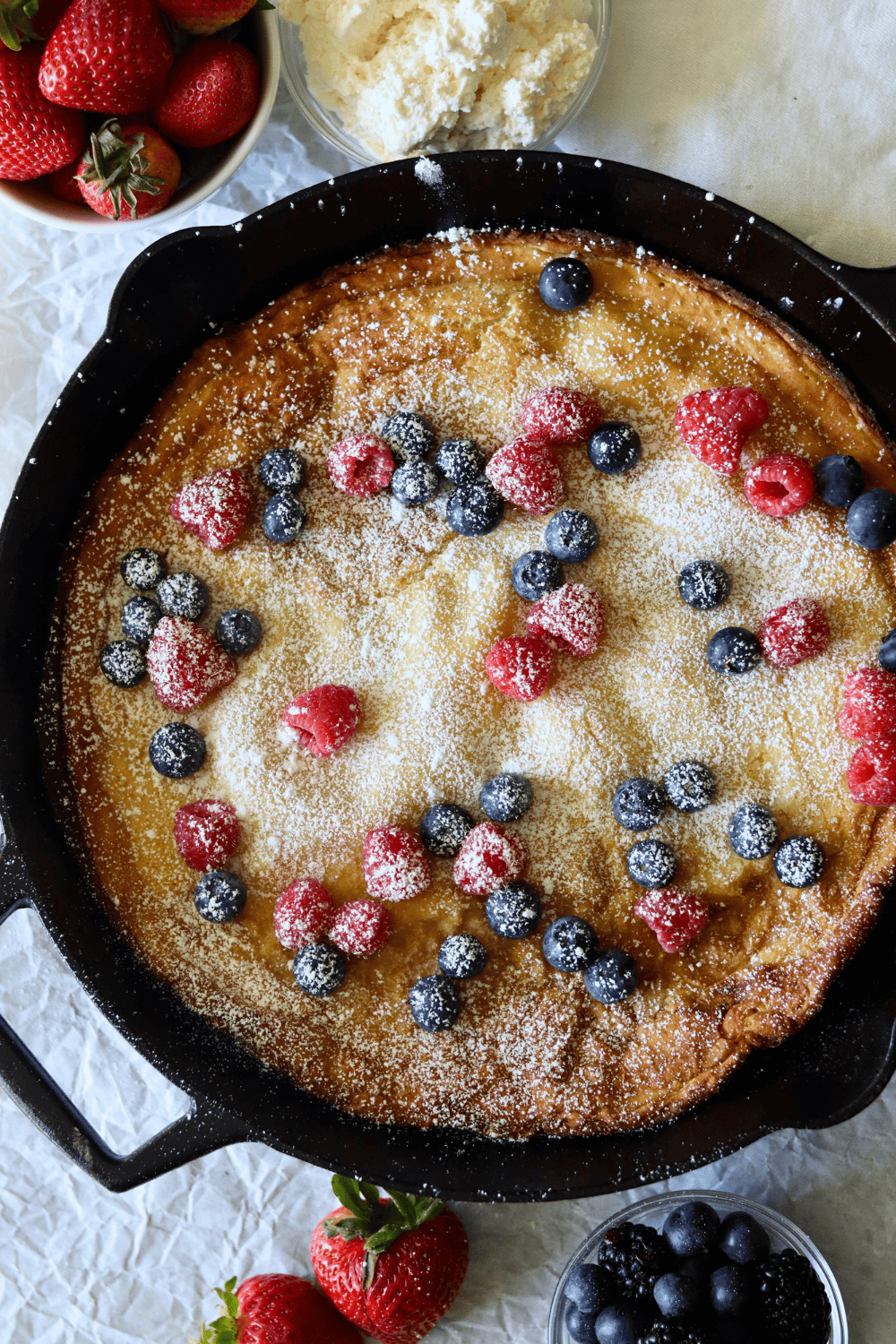
Quick Look: Sourdough Dutch Baby Pancake
- Prep Time: 10 minutes
- Rest Time: 10 minutes
- Bake Time: 15 minutes
- Total Time: 35 minutes
- Servings: 12-inch Dutch baby pancake, about 8 slices
- Calories: ~211 kcal per serving (based on nutrition panel)
- Cook Method: Baked
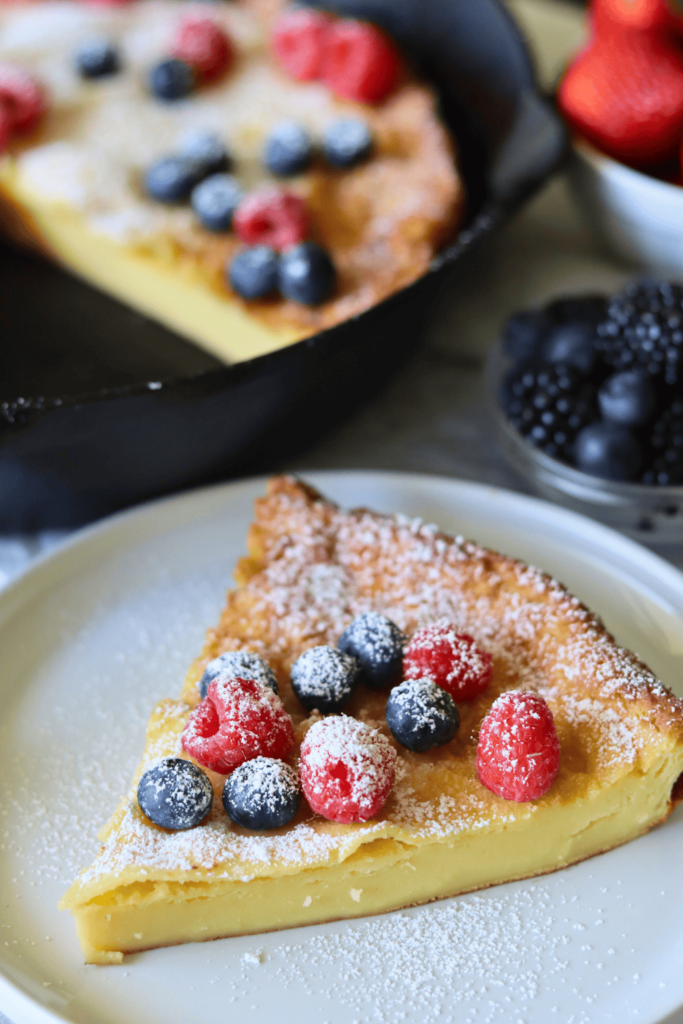
- Flavor Profile: Light, custardy, and slightly crisp around the edges with a soft, airy center. It has a subtle sourdough tang that pairs perfectly with sweet toppings like fruit, powdered sugar, or syrup for a bright, balanced bite.
- Difficulty: Beginner-friendly – This is one of the easiest recipes to make. Just blend, pour, and bake—no special techniques required. It’s a great low-effort recipe with a big, impressive payoff!
SUMMARIZE & SAVE THIS CONTENT ON
Why You’ll Love This Sourdough Dutch Baby Pancake Recipe:
- It Could Not Be Easier – The German pancake batter comes together in a blender in about 30 seconds, and the oven does the rest. There’s no flipping, no standing over a hot stove, and no timing individual pancakes. If you love quick sourdough breakfast recipes, these Sourdough Crepes are another great option that come together just as fast.
- It Looks Impressive – Sourdough Dutch Baby is the kind of thing you put on the table and people stop and stare. The puffed up edges and golden color do a lot of the talking before anyone even takes a bite. If you want another delicious breakfast recipe that feels a little special, these Sourdough Pancakes are it.
- It Uses a Lot of Discard – This recipe calls for two full cups of sourdough discard, which makes it a great way to use up a large amount of starter at once. If you’re looking for more discard breakfast recipes, these Sourdough Apple Pancakes are another easy recipe to try.
Ingredients & Substitutions
* To find precise measurements, scroll to the bottom of this post to find the recipe card*
- Sourdough Starter Discard – Both active sourdough starter and discard work here. Make sure it’s at room temperature before you start for the best rise.
- Milk – I used whole milk, but this can be substituted with your favorite dairy or non-dairy milk.
- Eggs – Give the batter structure and add moisture to this oven-baked pancake.
- Sugar – You can leave this out if you are making a savory Dutch Baby.
- Vanilla – For the best flavor I suggest using pure vanilla extract over imitation.
- Salt – Any unrefined salt will do, but my favorite is Redmond’s Unrefined Salt for the extra minerals!
- Butter – Helps create those flavorful, crispy edges.
How to Make a Sourdough Dutch Baby
- Place a 12-inch cast iron skillet in your oven and preheat to 425°F.
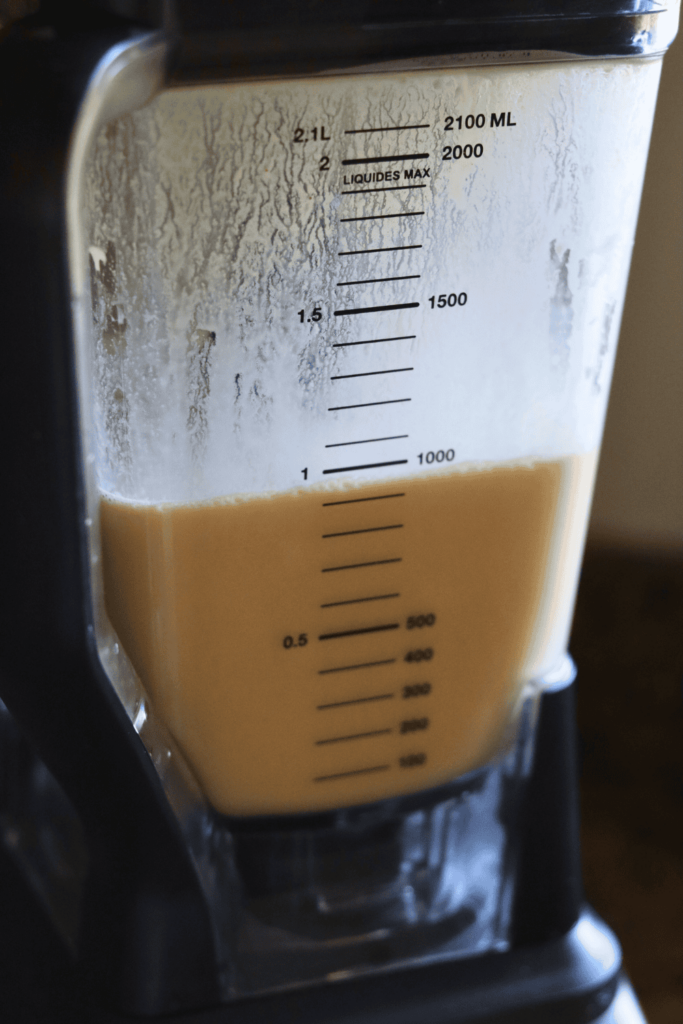
- While the oven is preheating, add the sourdough discard, milk, eggs, sugar, vanilla, melted butter, and salt to a blender. Mix on high for 30 seconds, or until the batter is smooth with no lumps. Let the batter rest for 10 minutes so your Dutch baby puffs up the way it should.

- Just before baking, add the remaining butter to the hot cast iron skillet and allow it to melt in the oven. Once the butter has melted, give the batter another 30 seconds in the blender. Carefully remove the hot skillet from the oven, swirl the melted butter to coat the bottom of the pan, and pour in the batter.

- Return the skillet to the oven and bake for 15-20 minutes, or until the Dutch Baby has puffed up and is golden brown on top.
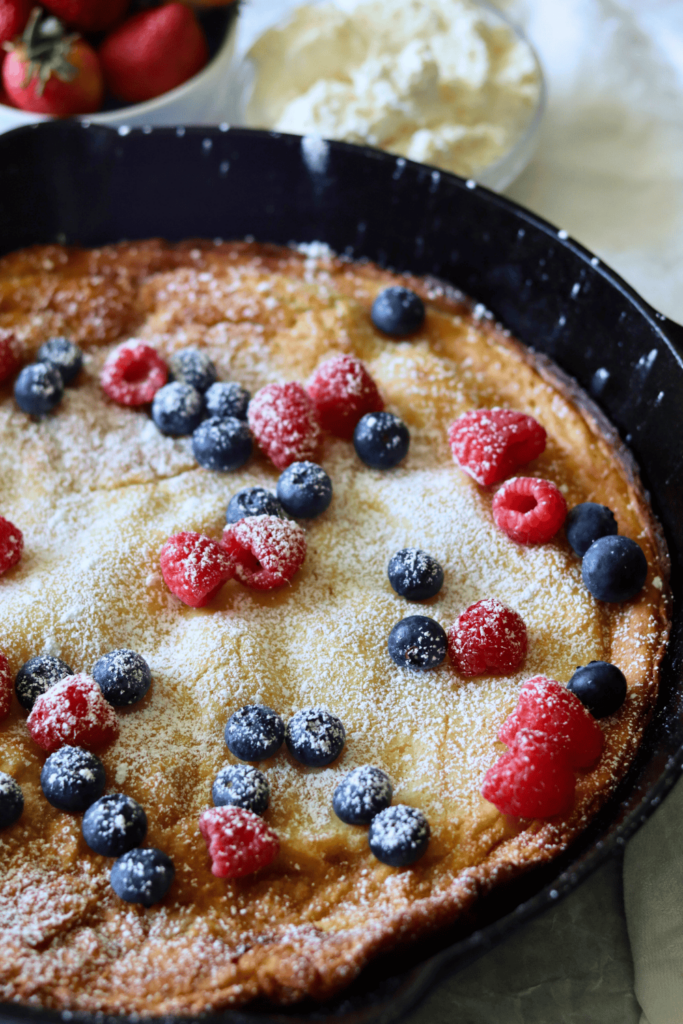
- Remove the Dutch Baby from the oven and serve immediately with your favorite toppings.
Here are some topping ideas:
Sweet toppings:
- Pure Maple Syrup
- Homemade Whipped Cream
- Scoop of Ice Cream
- A Squeeze of Fresh Lemon Juice
- Heavy Cream
- Jams or Jellies
- Fresh Berries
- Lemon Curd
Savory toppings:
- Melty Cheese
- Fresh Herbs
- Sliced Ham
McKenna’s Helpful Tips
- Make sure all your ingredients are at room temperature. Room temperature ingredients trap air bubbles more consistently, which gives you a better rise. Cold ingredients straight from the fridge will work against you here.
- Let the batter rest for 10 minutes before baking. This gives the batter time to settle and helps it rise properly in the oven.
- Don’t open the oven door while it’s baking. The temperature drop from opening the door will cause the Dutch Baby to collapse before it has a chance to set.
- Whip the batter again for 30 seconds right before pouring it into the skillet. This last blend incorporates any air bubbles that settled during the rest period and helps the Dutch Baby puff up as high as possible.
How to Store
Leftover pancakes are unlikely with this one, but if you do have some remaining, store them in an airtight container in the fridge for up to 5 days and reheat in the microwave until warm.
Sourdough Dutch Baby Pancake FAQs
You may notice this recipe does not use a leavening agent like baking powder or baking soda, or whipped egg whites. So how does it puff up? Steam. While the Sourdough Dutch Baby Pancake bakes in a hot skillet, the edges cook and set quickly while the center continues to rise. The high heat causes the air bubbles trapped in the batter to expand rapidly, which is what pushes it up.
There are a few things that could cause this. First, your ingredients may not have been at room temperature. Room temperature ingredients trap air bubbles more consistently, which gives you a better rise. Second, the batter may not have rested long enough. Resting the batter gives it time to settle so it can rise properly in the oven. Third, the oven door may have been opened too early. The temperature drop causes the Sourdough Dutch Baby to collapse before it has a chance to set.
Yes! Preheat the muffin tin in the oven first. Once hot, add a small slice of butter into every cup, then pour in 1/3 cup of batter. Bake for 12-15 minutes or until puffed up and golden brown. Another fun recipe to try would be my Sourdough Popovers!
You don’t have to, but it really does make a difference. Cast iron retains heat really well, which helps the Dutch Baby puff up high and get those crispy edges. A baking dish of similar size can work too.


If you tried this Sourdough Dutch Baby Pancake recipe or any other recipe on my blog, please leave a 🌟 star rating and let me know how it went in the📝 comments below. Thanks for visiting!
Sourdough Dutch Baby Recipe
Enter your email below, and we’ll send it straight to your inbox! Plus, you’ll get my newest sourdough recipes and best tips every week!
Equipment
Ingredients
- 480 grams sourdough discard, room temperature 2 cups *see notes below
- 90 grams milk, room temperature 6 Tablespoons
- 6 eggs room temperature
- 50 grams sugar 4 Tablespoons
- 6 grams vanilla extract 1 1/2 teaspoons
- 3 grams salt 1/2 teaspoon
- 85 grams unsalted butter, divided 6 Tablespoons
Instructions
- Place a 12-inch cast iron skillet in your oven and preheat to 425 degree F.For the best chances for a puffy Sourdough Dutch Baby, be sure to use all room temperature ingredients.
- While the oven is preheating, add the sourdough discard, milk, eggs, sugar vanilla extract, melted butter (save 28g/ 2 T for later) and salt to a blender. Mix on high for 30 seconds, or until the mixture is smooth without any lumps. *If you don't have 480 grams (2 cups) of sourdough discard, refer to the notes below. Alternatively, add the ingredients in a large bowl and beat with a hand mixer until smooth.480 grams sourdough discard, room temperature, 90 grams milk, room temperature, 6 eggs, 50 grams sugar, 6 grams vanilla extract, 3 grams salt, 85 grams unsalted butter, divided
- Leave the batter to rest for 10 minutes. This helps you achieve a puffed up top of the Dutch baby as the gluten will develop in the batter.
- Just before baking, add the remaining 28 grams (2 T) butter to the hot cast iron skillet and allow it to melt in the oven. Keep an eye on the butter to make sure it doesn't burn!
- Once the butter has melted, whip the batter again for 30 more seconds in the blender.
- Carefully remove the hot skillet from the hot oven, swirl the melted butter to cover the bottom of the pan, and pour in the batter. Return the hot skillet to the preheated oven and bake for 15-20 minutes, or until the Sourdough Dutch Baby has puffed up and is golden brown on top.Careful no to open the oven door prematurely, as this can cause the dutch baby to deflate!
- Remove the puffy pancake from the oven and immediately serve with your favorite toppings!
Notes
I don’t have 480 grams of sourdough discard. What should I do?
If you don’t have 480 grams (2 cups) of sourdough discard, you can do 240 grams (1 cup) of discard with a scant 1 cup of flour (120g) and a scant 1/2 cup of milk (120g). For 120 grams (1/2 cup) of discard, add 180 grams (1 1/4 cups + 1 teaspoon) flour and 180 grams ( 3/4 cup) of milk.Variations
This Sourdough Dutch Baby recipe is absolutely delicious, but this simple pancake recipe is the perfect canvas for all of your favorite flavor combinations! Sweet or savory, mix it up and try a variety of toppings from the suggestions below!- Pure Maple Syrup
- Homemade Whipped Cream
- Scoop of Ice Cream
- A Squeeze of Fresh Lemon Juice
- Heavy Cream
- Jams or Jellies
- Fresh Berries
- Lemon Curd
- Fresh Herbs
- Sliced Ham
- Melty Cheese

This is a wonderful recipe. But one thing… I don’t know what you put in your sourdough starter that 2 cups is anywhere near 560g. I cannot think of any type of flour that would do that. I made this with the 2 cups because I wasn’t going put nearly 5 cups of starter in. I’d recommend checking the conversation on that.
Thank you so much for pointing this out — I really appreciate you taking the time to share it! You’re absolutely right: 2 cups of sourdough discard should be about 480g. The weight was incorrect on the recipe card, and I’ve since updated both the recipe and the notes to reflect the correct measurement. Thanks again for catching that and helping make the recipe better for everyone!
You still have it listed as 560 in step 2. That was a bit confusing… glad I read the comments!
Thank you so much for catching that! You’re absolutely right and I’ve now updated the recipe card to match. I really appreciate you taking the time to let me know!
I am wondering if you’ve ever made the batter the night before, let it come to room temperature then bake the next morning?
Hi Julia! I personally haven’t but I would do just that! Let it come to room temperature and give it a quick blend before baking for the best rise. Let me know how it turns out if you give this method a try!
Thank you for such a delicious recipe. I made this recipe this morning for breakfast. My family loved it. It is definitely going to be made regularly on the weekend breakfast menu. We served it with blueberries and strawberries macerated in maple syrup.
Yay! So glad everyone loved it.
I just made this, but savory gruyere and diced ham. I wish I had some apricot jam to dollop on top.
Next time I’ll throw in some onion.
It is delicious!
Thanks for the recipe!
Hi Patti! Love this savory version. It sounds fabulous! So glad you enjoyed it. Thank you for sharing!