

Sourdough Focaccia in a Loaf Pan (100% Sourdough or Discard)
This post may contain affiliate links. Please read our disclosure policy.
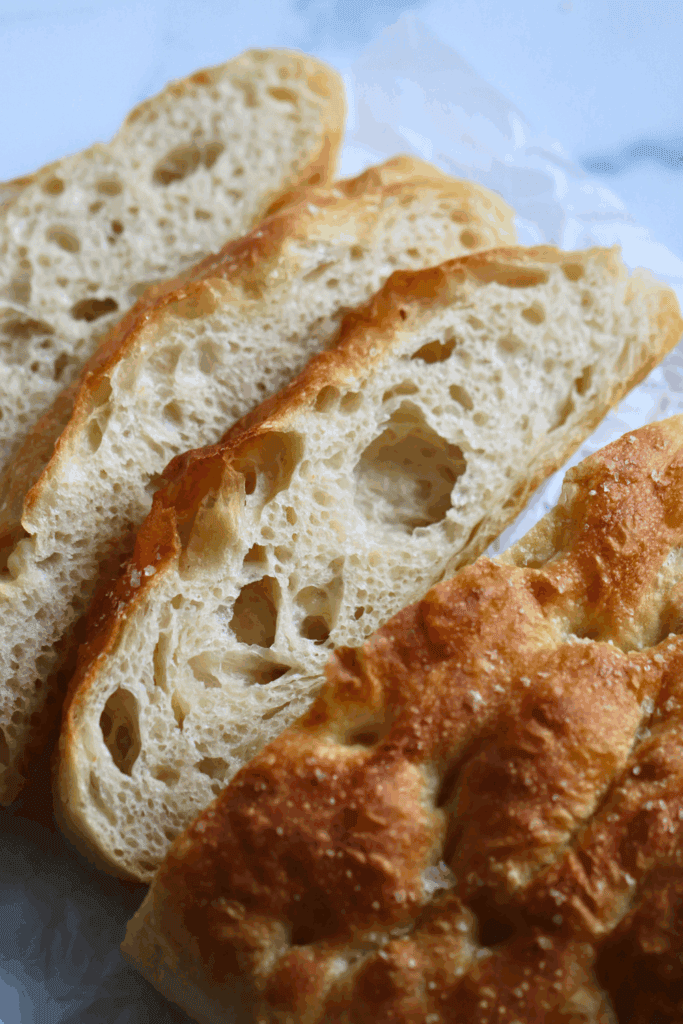
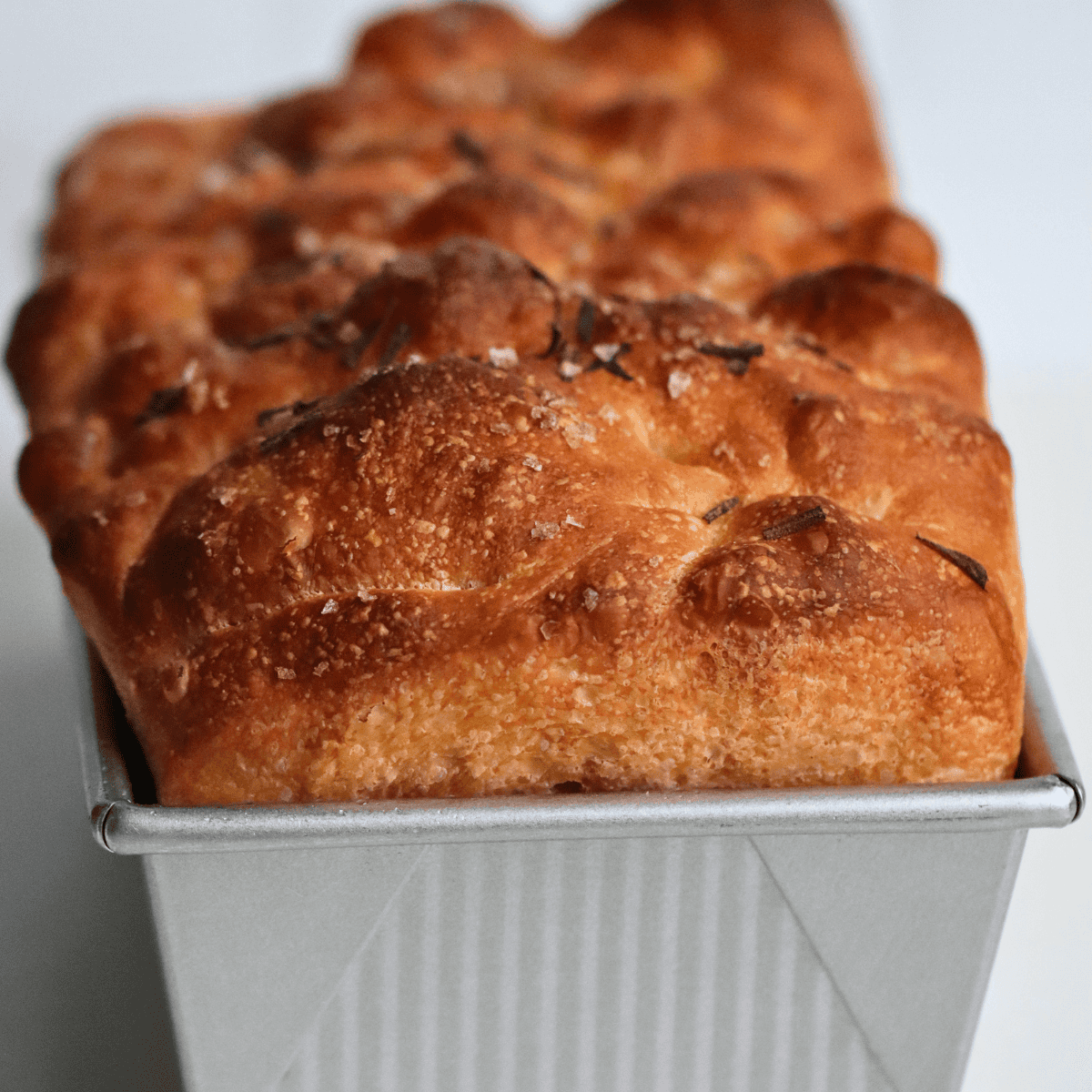
This Sourdough Focaccia in a Loaf Pan is perfect for those days when you want homemade focaccia that slices beautifully – making it the perfect bread for any sandwich. Baking it in a 9×5 loaf pan gives you a smaller, extra-thick focaccia with crispy golden edges, a soft airy center, and plenty of olive oil flavor in every bite.
I’ve included both a 100% Sourdough Focaccia version for that classic long-fermented flavor and a Sourdough Discard Focaccia version when you need something quicker. The discard version is ready in under 3 hours, so you can choose whichever one works best for your schedule.
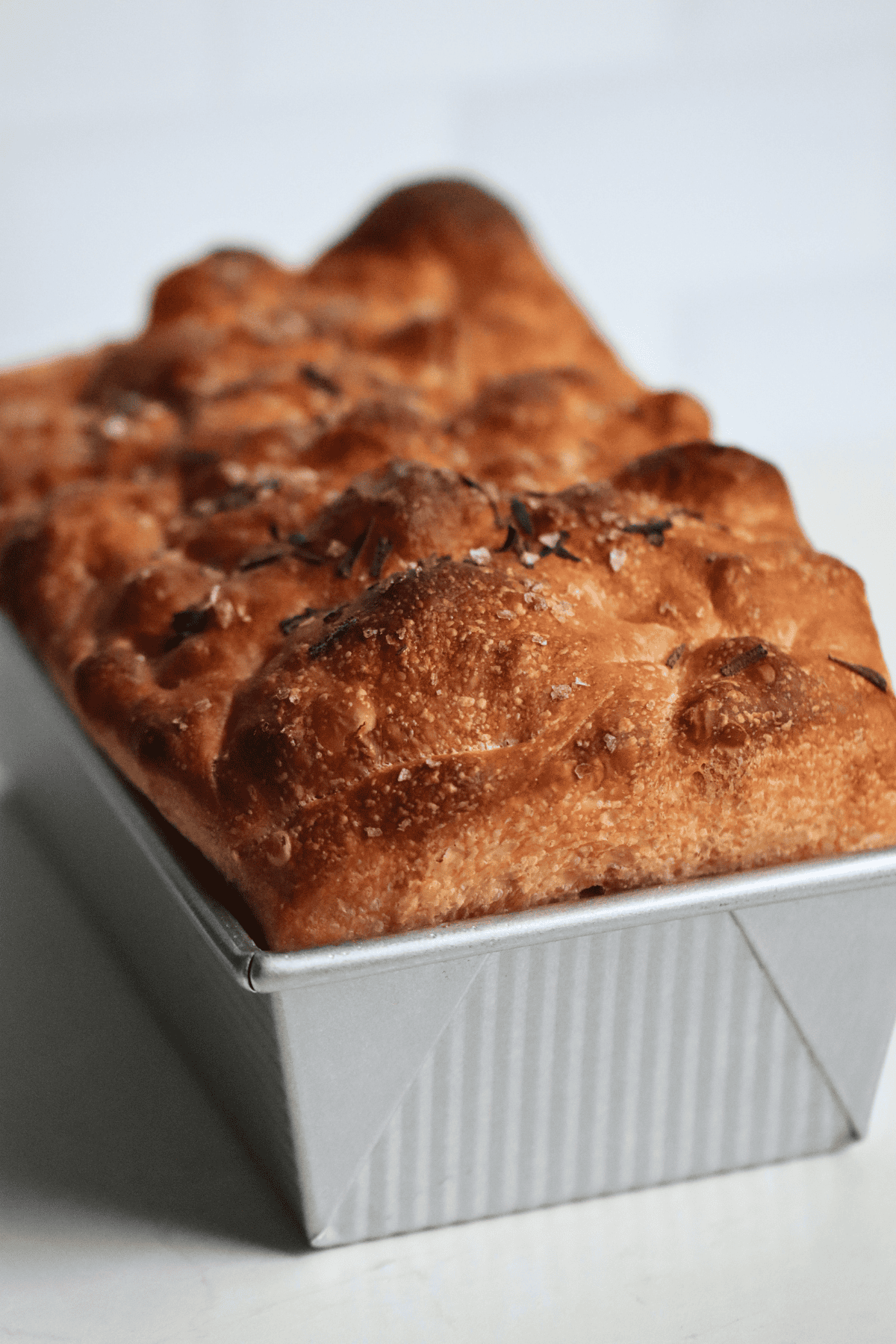
Quick Look: Sourdough Focaccia in a Loaf Pan
- Prep Time: 30 minutes
- Bulk Fermentation: 9 hours (100% sourdough) or 1.5 hours (discard version)
- Second Rise: ~3 hours (100% sourdough) or ~45 minutes (discard version)
- Cook Time: 40–50 minutes
- Total Time: ~12 hours (100% sourdough) or ~3 hours (discard version)
- Servings: 1 loaf
- Calories: ~ 2098kcal per loaf (based on nutritional panel)
- Cook Method: Baked
- Flavor Profile: Crispy, golden crust with a soft, chewy, airy crumb and rich olive oil flavor. Top with flaky salt, rosemary, or your favorite savory toppings!
- Difficulty: Easy to Intermediate — The discard version is quick and beginner-friendly; the 100% sourdough version requires a longer bulk fermentation but is mostly hands-off!
SUMMARIZE & SAVE THIS CONTENT ON
Why You’ll Love This Loaf-Pan Sourdough Focaccia
- Great for slicing, toast, and sandwiches— The loaf-pan shape makes this focaccia easy to slice, whether you’re serving it with breakfast, making toast, or putting together a sandwich. It’s always nice to have homemade sourdough on hand for sandwiches, and this Sourdough Sandwich Bread is another recipe worth trying.
- The same chewy, airy texture in a smaller size—You still get the chewy texture and soft, airy crumb you expect from focaccia, but the 9×5 loaf pan gives you a smaller loaf that’s easy to slice and serve. And when you want a softer bread for sandwiches, this Sourdough Discard Sandwich Bread fits the bill.
- No special focaccia pan needed – Unlike my Beginner’s Sourdough Bread that’s baked in a Dutch oven, this sourdough focaccia bread recipe uses a standard 9×5 loaf pan, making it easy to bake if you don’t have a sheet pan or traditional focaccia dish.
- Works with active starter or discard—Whether you prefer baking with bubbly, active sourdough starter or need a way to use up extra discard, this recipe gives you both options. Both versions deliver the classic chewy texture and airy crumb you love in homemade focaccia without sacrificing flavor or texture.
Ingredients & Substitutions
* To find precise measurements, scroll to the bottom of this post to find the recipe card*
This great recipe includes both a discard and a 100% sourdough version, so I thought it would be helpful to separate the ingredients and highlight the ones that are unique to each recipe.
The discard version uses the same core ingredients as the true-sourdough one, but it gets a little help from instant yeast instead of relying only on the starter.
Choose the discard version if you want to use up extra starter discard or make focaccia faster. If you prefer a fully naturally leavened bread and don’t mind a longer bulk fermentation, the full-sourdough version is the one to choose.
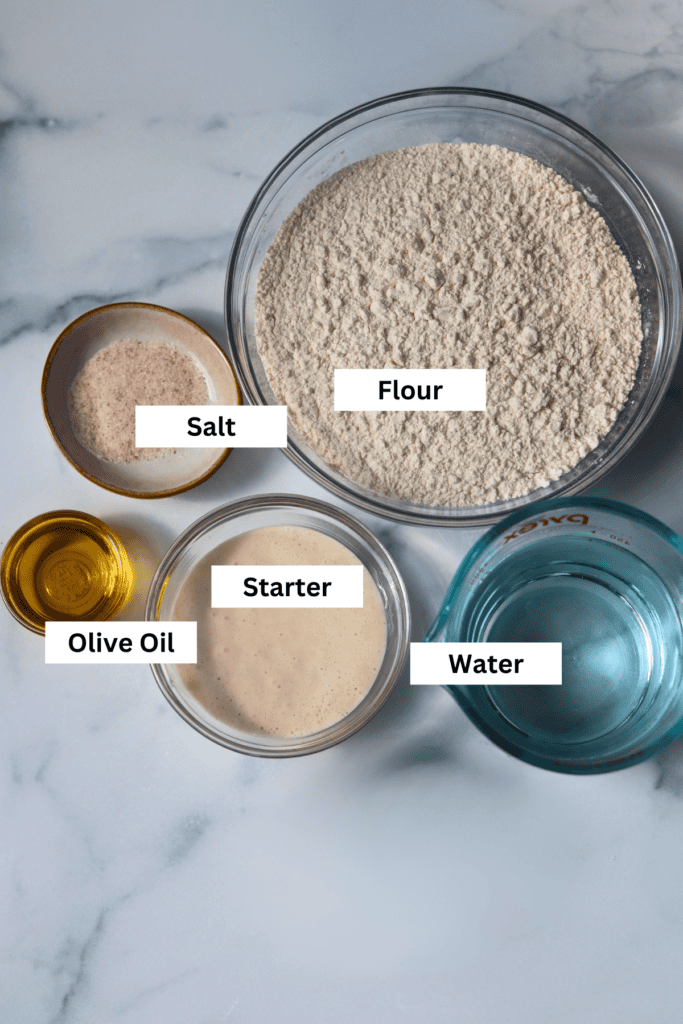
100% Focaccia
- Water – Use warm water to help the dough rise faster. I used 110°F water, which is warm enough to encourage fermentation without harming your active sourdough starter. Avoid using water hotter than 120°F, as higher temperatures can weaken or deactivate the starter and prevent the dough from rising properly.
- Sourdough Starter – Make sure your starter is bubbly, has at least doubled in size, and is at its peak before using it. A strong, active starter helps the dough ferment right and creates the light, airy texture you’re after.
- Bread Flour – Bread flour works best for this recipe. Its higher protein content helps develop stronger gluten in the dough, which holds those beautiful air pockets in place and gives you the light, chewy crumb you expect from a good focaccia.
- Salt – Any unrefined salt will work well in this recipe, but I really like Redmond’s Unrefined Salt for its extra minerals and clean flavor.
- Olive Oil – Use a good-quality extra-virgin olive oil for the best flavor. It adds richness to the dough and helps create focaccia’s golden crust, tender crumb, and delicious olive oil flavor.
- Toppings—Garlic powder, Parmesan cheese, flaky sea salt, and fresh rosemary are just a few options. You’ll find a full list of topping ideas below so you can customize your loaf with your favorite flavors.
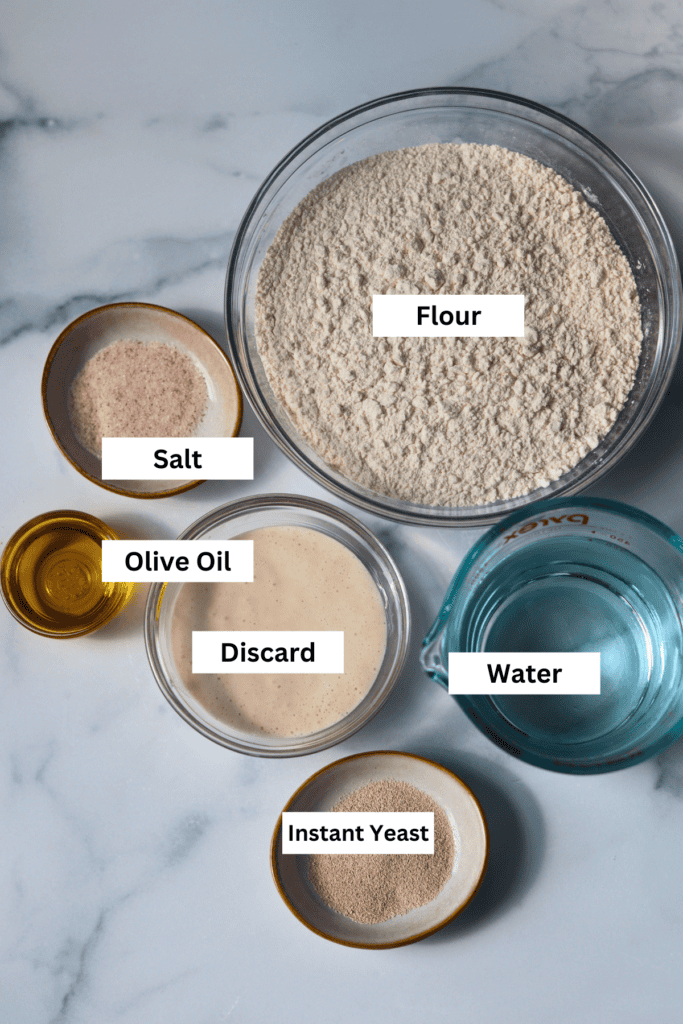
Discard Focaccia
- Sourdough Discard—I used fresh, room temperature sourdough discard for this recipe. For the best results, use discard that’s no more than 1–2 days old. Cold discard straight from the fridge will slow down the rise time. You can also swap in the same amount (by weight) of active sourdough starter.
- Instant Yeast – This recipe uses a small amount of commercial yeast to help the dough rise. I recommend instant yeast rather than active dry yeast because it can be mixed directly into the dry ingredients and works faster. Active dry yeast needs to be dissolved in liquid first and typically takes longer to rise.
- This discard version is ready in just under 3 hours from start to finish. It’s not quite as deep in flavor as the 100% sourdough version, but it’s still a really good loaf.
The 100% Focaccia Baking Schedule:
|
Time |
Process |
|---|---|
|
7:30 AM |
Mix the ingredients |
|
8:00 AM |
Stretch and fold |
|
8:00 AM – 4:00 PM |
Bulk fermentation |
|
4:00 PM |
Second rise in baking dish |
|
7:00 PM |
Dimple and bake |
The Discard Focaccia Schedule
|
Time |
Process |
|---|---|
|
3:00 PM |
Mix the dough |
|
3:10 – 4:40 PM |
First rise and stretch & folds |
|
4:40 PM |
Shape |
|
4:40 – 5:25 PM |
Second rise |
|
5:30 PM |
Bake |
How to Make Sourdough Focaccia in a Loaf Pan
- In a large mixing bowl, whisk together the sourdough starter or discard, olive oil (if making the discard version), and warm water until the mixture looks like a milky liquid. Add the bread flour, instant yeast (if making the discard version), and salt. Mix until all the flour is incorporated.
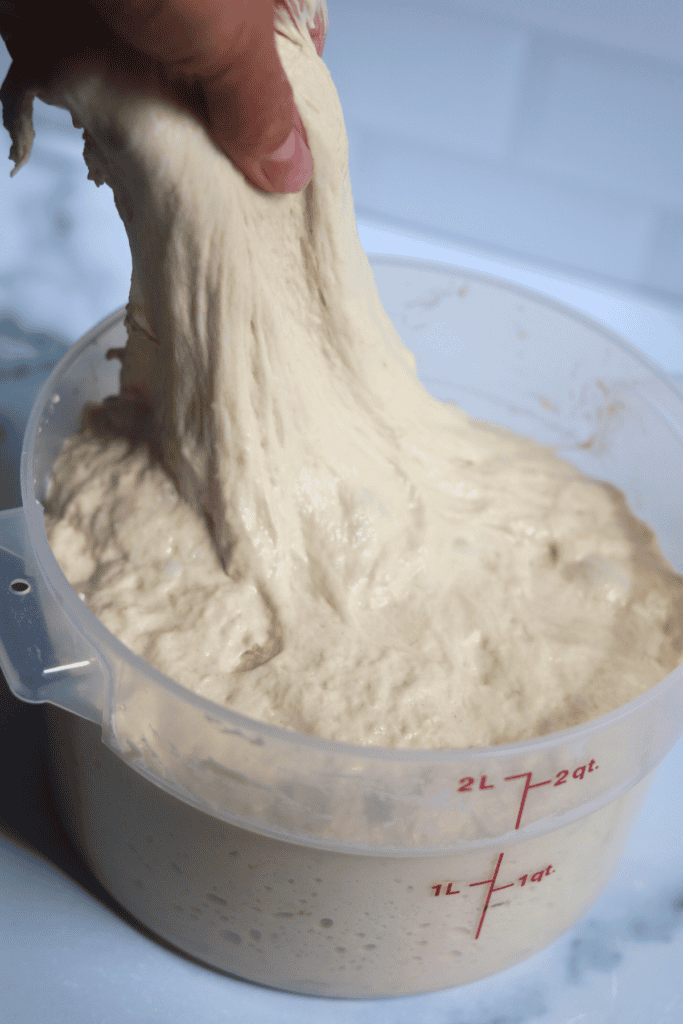
- With slightly wet hands, perform a round of stretch and folds. Cover the bowl and leave the dough in a warm spot until it doubles in size. If you are making the Sourdough Discard Focaccia version, perform a second round of stretch and folds before letting the dough rise.
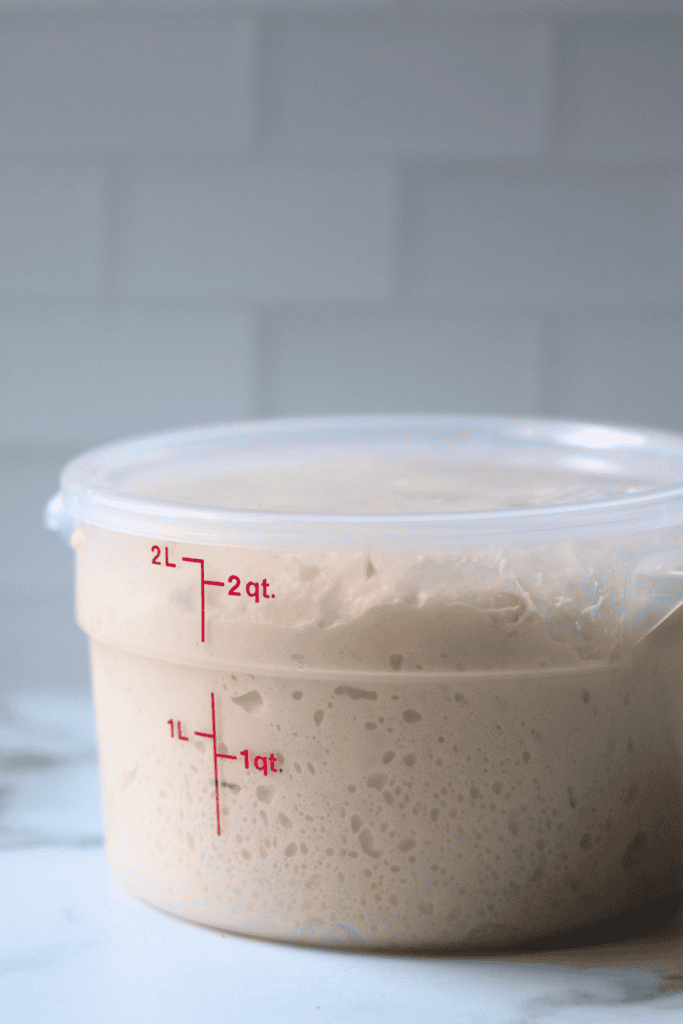
- Once the dough has grown 75% for the 100% sourdough version or doubled for the discard version, pour olive oil into the bottom of a 9×5 metal loaf pan. Spread it evenly across the bottom of the pan and sides.
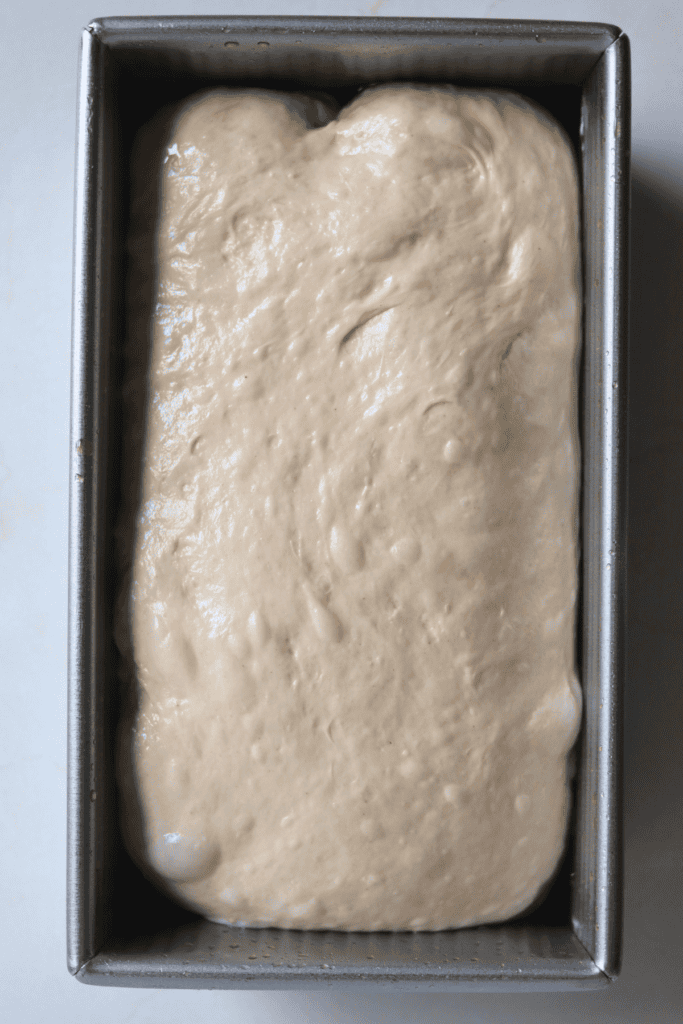
- Pour the sourdough focaccia dough into the pan. Shape and cover the dough once more until the dough rises to 1 inch above the loaf pan.
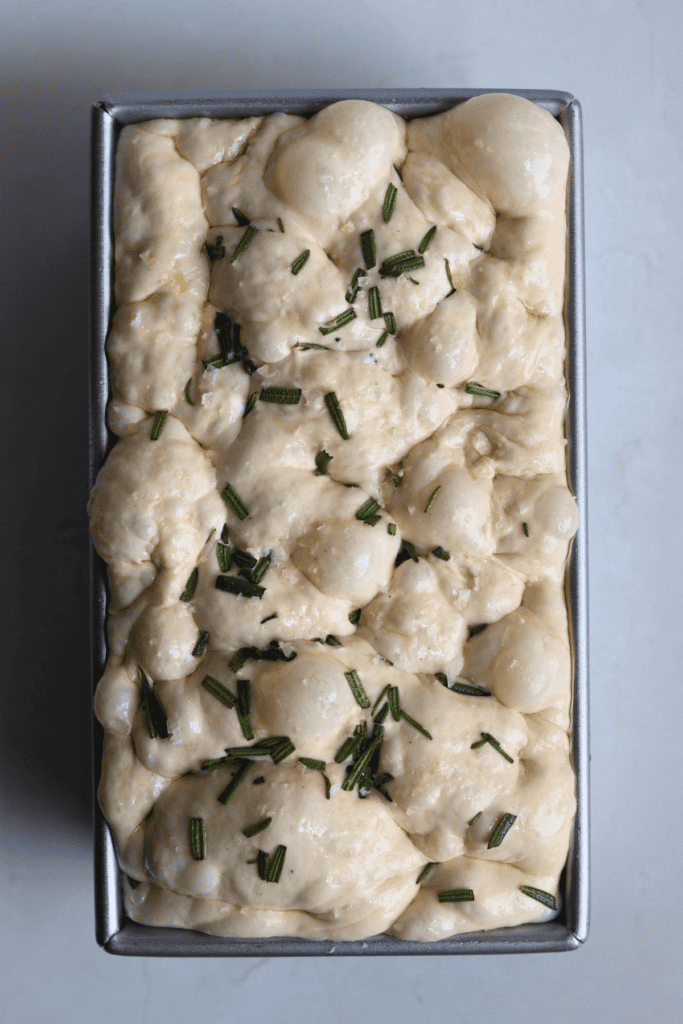
- Preheat the oven to 425°F. Drizzle more olive oil over the high-hydration dough and your fingers, then dimple the dough and add flaky salt and your favorite toppings.
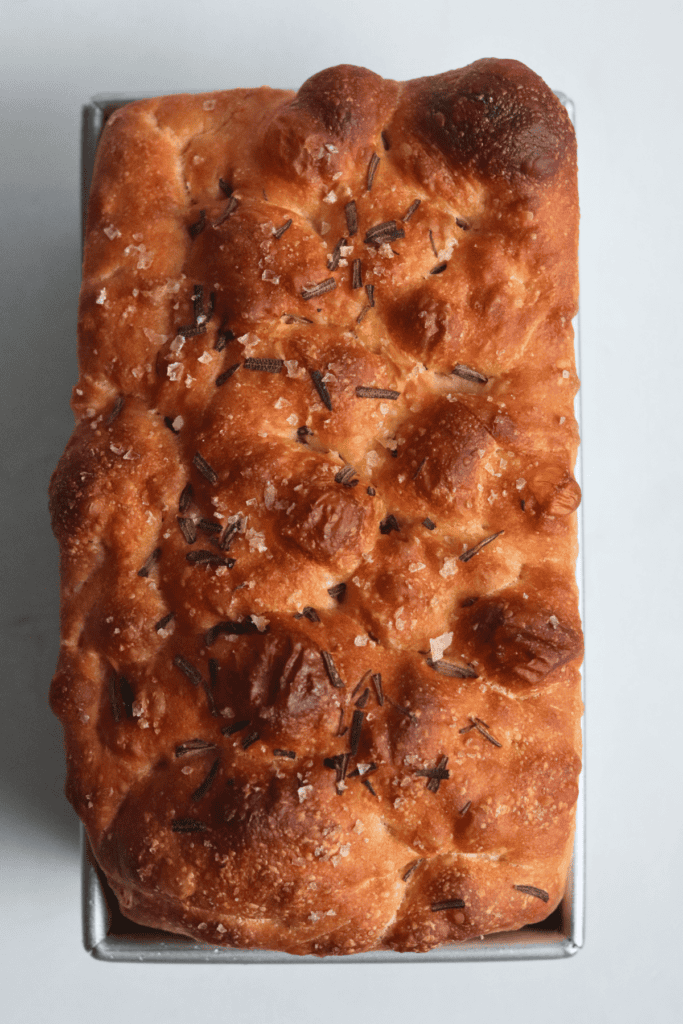
- Bake for 20-25 minutes, then cover with a piece of aluminum foil and continue to bake for 20-25 more minutes or until the internal temperature is 200-205°F. By now, the focaccia should be golden brown on top and begging to be eaten!
- Cool slightly before slicing and enjoy!
McKenna’s Helpful Tips
- Use bread flour for the best rise: All-purpose flour will work, but I prefer bread flour for this recipe. Its higher protein content helps this high-hydration dough develop stronger gluten, which gives you a softer texture and airier crumb. I use this flour for the same reason in my Sourdough Sandwich Bread.
- Watch the dough more than the clock: Fermentation time can vary depending on the temperature of your kitchen and the strength of your starter. Instead of relying only on the clock, look for dough that has become puffy and airy, with visible bubbles beneath the surface.
- Don’t skimp on the olive oil. Pour a generous amount into the bottom of the pan before you add the dough. That’s what keeps it from sticking and gives you a crispy, golden crust. Drizzle more oil on top of the dough right before it goes in the oven. Once the focaccia is baked and sliced, that crispy crust makes it especially good for a Sourdough Grilled Cheese.
- Wet your hands for stretching and folding: This is a high hydration dough, so it’s a pretty wet dough and can be quite sticky. Keep your hands slightly wet when doing your stretch and folds to keep the dough from sticking to your fingers.
How to Store
After the focaccia has cooled completely, wrap it in plastic wrap or store it in an airtight container and keep it on the counter for a day or two. If you won’t eat it within that time, I’d freeze it rather than refrigerate it. The fridge can make bread go stale faster.
I like slicing the focaccia before freezing so I can pull out just what I need. Place pieces of parchment paper between each slice, pop them into a freezer bag, and freeze for up to 3 months. When you’re ready for a slice, thaw it and warm it in the oven or toaster.
Sourdough Focaccia in a Loaf Pan FAQs
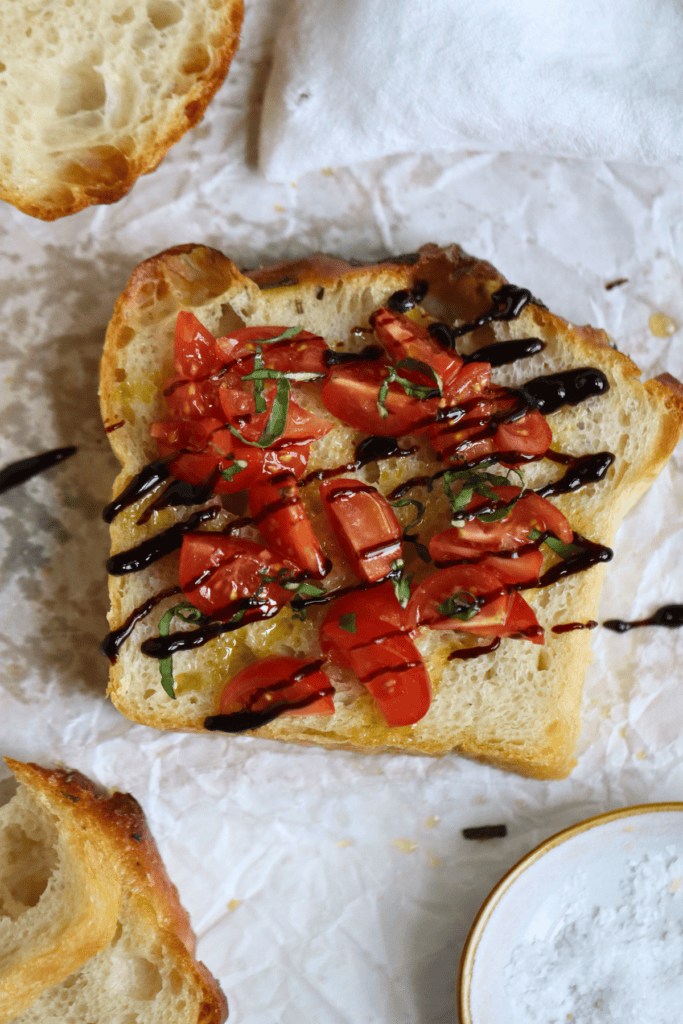
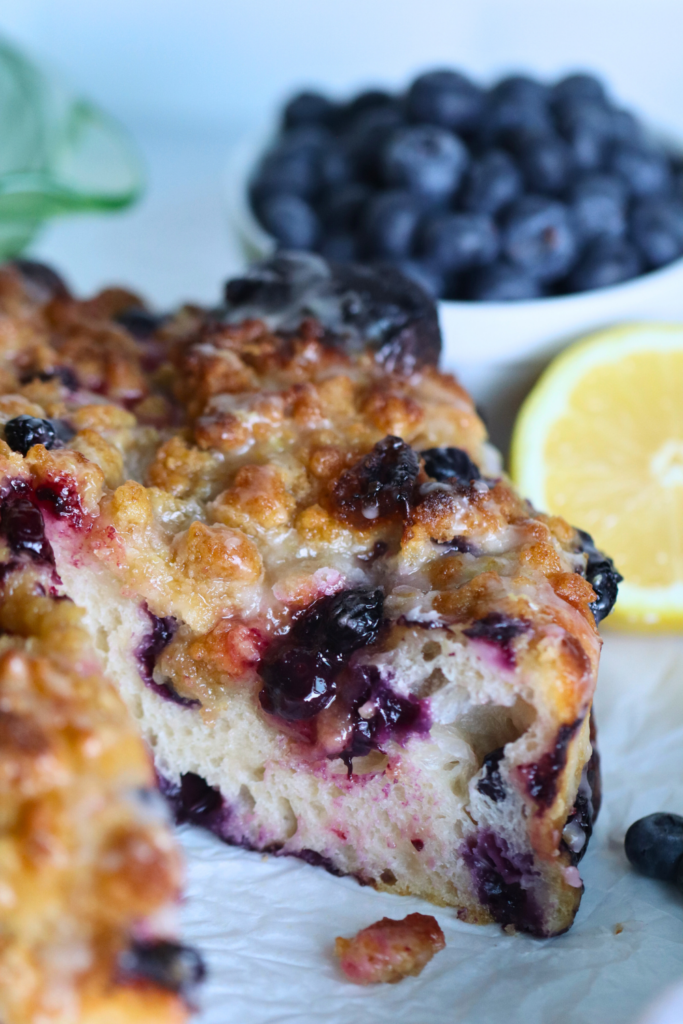
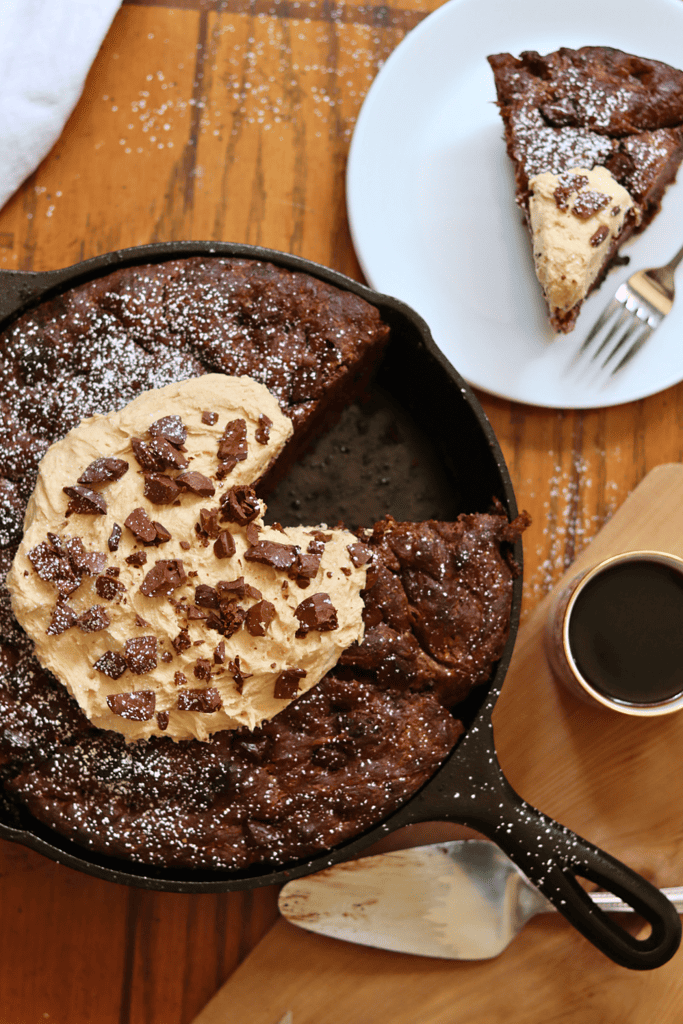
You can add toppings to either version of this focaccia. Try fresh herbs, sliced cherry tomatoes, caramelized onions, sliced yellow potatoes, olives, shredded cheese, pesto, flaky sea salt, or even cinnamon and sugar. If you’re using fresh herbs, coat them in a little olive oil first so they don’t burn in the oven. For a sweet version, give my Sourdough Lemon Blueberry Focaccia or Chocolate Sourdough Focaccia a go.
Yes, you can bake both versions the next day. After shaping the dough in the loaf pan, cover it and place it in the fridge overnight. The next day, take the dough out and let it finish its second rise before baking. The second rise will most likely take longer because the dough is cold from the fridge. If you like making sourdough recipes ahead of time, check out my Overnight Sourdough Recipes for more ideas.
Yes, you can use a glass or ceramic loaf pan, but I prefer a metal loaf pan for this recipe. Metal conducts heat well, releases the focaccia easily, and helps create a crisp, golden outer crust. Glass and ceramic pans heat differently and may produce a softer, less evenly browned crust. If you use one, keep an eye on the focaccia as it bakes, since you may need to adjust the baking time a bit.

If you tried this Sourdough Focaccia in a Loaf Pan recipe or any other recipe on my blog, please leave a 🌟 star rating and let me know how it went in the📝 comments below. Thanks for visiting!
Sourdough Focaccia in a Loaf Pan
Enter your email below, and we’ll send it straight to your inbox! Plus, you’ll get my newest sourdough recipes and best tips every week!
Ingredients
100% Sourdough Focaccia Ingredients
- 50 grams active sourdough starter 1/4 cup
- 400 grams filtered water scant 1 3/4 cups
- 500 grams bread flour 3 1/2 cups
- 10 grams salt 1 1/2 teaspoons
- oil for pan & drizzling
- flaky salt to taste
Sourdough Discard Focaccia Ingredients
- 100 grams sourdough discard 1/3 cup
- 28 grams olive oil 2 Tablespoons
- 400 grams warm water 1 1/2 cups + 3 Tablespoons
- 500 grams bread flour 3 1/2 cups
- 8 grams instant yeast 2 1/4 teaspoons
- 10 grams salt 1 1/2 teaspoons
- oil for pan & drizzling
- flaky salt
Instructions
100% SOURDOUGH FOCACCIA INSTRUCTIONS
MIX DOUGH
- In a straight-edge bowl, mix the active starter and filtered water with a Danish dough whisk or your hand until it looks like a milky liquid.I love using a straight-edge bowl because it allows me to clearly see when the dough is done rising.50 grams active sourdough starter, 400 grams filtered water
- To the wet ingredients, add the bread flour and salt. Again, mix with a whisk or by hand. Be sure to mix until all of the flour is incorporated. Note: This recipe has a higher amount of water, so it will an extra sticky and wet dough. This is normal.500 grams bread flour, 10 grams salt
- Cover the bowl with the plastic cover or plastic wrap and let the dough rest for at least a half hour before you move on to the next step.
STRETCH AND FOLDS:
- With a bowl scraper, scrape the dough away from the the sides of the bowl.
- Now, with slightly wet hands, grab a section of the focaccia dough and stretch it above the bowl, then fold it over on top of the dough. Rotate your bowl clockwise a quarter of the way and repeat an identical stretch and fold. Repeat the process until you come full circle. You will notice the dough will start to look much smoother than before.
- Then, flip the dough ball with the seam side down. Continue to cup the sides of the dough by scooping and tucking the dough underneath itself to create a more smooth looking dough ball. Do this about 10-20 times while turning the dough in a circle. Stop if you start to see the top of the focaccia dough begin to rip.
- Cover the bowl again, then place the dough in a warm place to rise.
BULK FERMENTATION:
- Now this is the most finicky part of sourdough. There isn’t a set time for your bulk ferment. It is greatly dependent on the temperature of your environment. The warmer it is, the faster your dough will ferment. The opposite is true for cooler temperatures.
- In my 70 degrees F kitchen, the bulk ferment took about 8-10 hours, but again, you will have to look for the signs that your dough is done fermenting, rather than the clock. Warm temperatures will be faster, while cooler will be slower.
- Here’s what to look for:-The dough has increased by 75%-The dough looks light and airy, and jiggles when shaken.-There should be visible bubbles in and on top of the dough.
SHAPE
- Once the dough has doubled in size, pour olive oil on the bottom of the 9×5 metal loaf pan (about 28 grams) and spread it evenly all over the bottom and the sides.oil for pan & drizzling
- Release the dough gently from the sides of the bowl with a dough scraper and tilt it into the prepared loaf pan.
- Then take the top of the dough and fold it towards the middle and lightly press it with your fingers so that it sticks. Repeat the same motion with the bottom of the dough, to create like a tri-fold. Turn the dough so that it is vertical and flip the dough with the seam side down.
- Cover the dough and allow it to rise again until the dough is just under the rim of the loaf pan. In my 70 degree F kitchen, this took about 2-4 hours.
DIMPLE
- Once the dough has doubled in size, it should fill the space of the loaf pan and be very light and jiggly when you shake the pan.
- Preheat the oven to 425 degrees F and place the oven rack in the lower third of the oven. I like to place a small baking sheet on the oven rack underneath the loaf pan just in case any olive oil runs over the pan.
- Grease your fingers with olive oil to prevent the dough from sticking to your fingers. To dimple the dough, gently press your fingers into the sourdough focaccia until you lightly touch the bottom of the loaf pan. To prevent the oil from rolling off the dough, drizzle it on top after the first few dimples and continue to dimple the dough. Repeat until the entire dough has been dimpled. Be sure not to over-dimple the dough. This can cause the lovely air pockets to pop and create a dense crumb.
- Sprinkle the sourdough with flaky sea salt and any other delicious toppings fresh herbs (coat in oil so they don't burn), sliced cherry tomatoes, caramelized onions, olives, shredded cheese , pesto, etc.flaky salt
- Gently press the toppings into the dimpled focaccia.
BAKE
- Bake for 20-25 minutes or until the top is perfectly golden brown. Then cover the top with a piece of aluminum foil and continue to bake for 20-25 minutes more or until the internal temperature is 205 degrees F.
- Remove the Sourdough Focaccia from the oven and allow it to cool in the loaf pan for a few minutes before removing it and placing the bread on a wire rack to cool. Once cooled slightly, slice and enjoy!
SOURDOUGH DISCARD FOCACCIA INSTRUCTIONS
MIX DOUGH
- In a straight-edge bowl, mix the sourdough discard, olive oil and filtered water with a Danish dough whisk or your hand until it looks like a milky liquid.100 grams sourdough discard , 28 grams olive oil , 400 grams warm water
- To the wet ingredients, add the bread flour, instant yeast and salt. Again, mix with a whisk or by hand. Be sure to mix until all of the flour is incorporated. Note: This recipe has a higher amount of water, so it will be an extra sticky and wet dough.500 grams bread flour , 8 grams instant yeast , 10 grams salt
- Cover the bowl and let the dough rest for 30 minutes.
STRETCH AND FOLD
- With a bowl scraper, scrape the dough away from the sides of the bowl.
- Now, with slightly wet hands, grab a section of the focaccia dough and stretch it above the bowl, then fold it over on top of the dough. Rotate your bowl clockwise a quarter of the way and repeat an identical stretch and fold. Repeat the process until you come full circle.
- Then, flip the dough ball with the seam side down. Continue to cup the sides of the dough by scooping and tucking the dough underneath itself to create a more smooth looking dough ball. Do this about 10-20 times while turning the dough in a circle. Stop if you start to see the top of the focaccia dough begin to rip.
- Cover the bowl and leave to rest for 30 more minutes.
- Repeat the same stretch and folds, then cover the bowl and leave to rest until it doubles in size, about 30-45 minutes more.
SHAPE
- Once the dough has doubled in size, pour olive oil on the bottom of the 9×5 metal loaf pan (about 28 grams) and spread it evenly all over the bottom and the sides.oil for pan & drizzling
- Release the dough gently from the sides of the bowl with a dough scraper and tilt it into the prepared baking dish.
- Pour the sourdough discard focaccia dough into the pan. Then take the top of the dough and fold it towards the middle and lightly press it with your fingers so that it sticks. Repeat the same motion with the bottom of the dough, to create a tri-fold. Turn the dough so that it is vertical with the pan and flip the dough with the seam side down.
- Cover the dough and allow it to rise again until the dough is 1 inch above the rim of the loaf pan. In my 70 degree F kitchen, this took about 45-60 minutes.
DIMPLE
- Once the dough has doubled in size and looks puffy/jiggly, preheat the oven to 425 degrees F and place the oven rack in the lower third of the oven. I like to place a small baking sheet on the oven rack underneath the loaf pan just in case any olive oil runs over the pan.
- Grease your fingers with olive oil as well to prevent the dough from sticking to your fingers. To dimple the dough, gently press your fingers into the sourdough discard focaccia until you lightly touch the bottom of the loaf pan. To prevent the oil from rolling off the dough, pour some after the first few dimples. Drizzle about 28g (2 Tablespoons) more of olive oil on top of the dough and continue to dimple. Repeat until the entire dough has been dimpled. Be sure not to over-dimple the dough. This can cause the lovely air pockets to pop and create a dense crumb.
- Sprinkle the top of the focaccia with flaky sea salt and any other delicious toppings like fresh herbs (coat in oil so they don't burn), sliced cherry tomatoes, caramelized onions, olives, shredded cheese, pesto, etc.flaky salt
BAKE
- Bake for 20-25 minutes or until the top is perfectly golden brown. Then cover with a piece of aluminum foil and continue to bake for 20-25 more minutes or until it an internal temperature of 205 degrees F.
- Remove the Sourdough Discard Focaccia from the oven and allow it to cool in the loaf pan for a few minutes before removing it and placing the bread on a wire rack to cool. Cool slightly before slicing and enjoy!
Notes
Ingredients & Substitutions
100% Focaccia
Water- Use warm water. I used 110°F water, which is warm enough to help the dough rise faster without harming the active sourdough starter. Keep your water under 120°F, as hotter water can deactivate the starter and prevent the dough from rising. Sourdough Starter – Make sure your starter is bubbly, has doubled in size, and is at its peak before you use it. Bread Flour – I highly recommend bread flour for this recipe. The higher protein content develops stronger gluten in the dough, which is what holds all those beautiful air pockets in place and gives you that light, chewy crumb. Salt – Any unrefined salt will do the job, but I really like Redmond’s Unrefined Salt for the extra minerals. Olive Oil – Use a good quality extra virgin olive oil for the best flavor and a golden, crispy crust. Toppings – Garlic powder, parmesan cheese, flaky sea salt, and fresh rosemary are just a few options. You’ll find a full list of topping ideas below.Sourdough Discard Focaccia
Sourdough Discard: For this discard recipe, I used fresh, room-temperature sourdough discard. I suggest using discard that’s no more than 1-2 days old. If you use discard straight from the fridge, it’ll slow down the rise time. And you definitely can swap in the same amount of active sourdough starter (grams). Instant Yeast: This recipe uses a little commercial yeast to help it along. I go with instant yeast, not active dry. Active dry yeast needs to be dissolved in liquid first and takes longer to rise. Instant yeast can be mixed right into the dry ingredients and works faster, but not quite as fast as rapid-rise yeast.Helpful Tips
- Use bread flour for the best rise: All-purpose flour will work, but I prefer bread flour for this recipe. Its higher protein content helps this high-hydration dough develop stronger gluten, which gives you a softer texture and airier crumb. I use this flour for the same reason in my Sourdough Sandwich Bread.
- Watch the dough more than the clock: Fermentation time can vary depending on the temperature of your kitchen and the strength of your starter. Instead of relying only on the clock, look for dough that has become puffy and airy, with visible bubbles beneath the surface.
- Don’t skimp on the olive oil. Pour a generous amount into the bottom of the pan before you add the dough. That’s what keeps it from sticking and gives you a crispy, golden crust. Drizzle more oil on top of the dough right before it goes in the oven. Once the focaccia is baked and sliced, that crispy crust makes it especially good for a Sourdough Grilled Cheese.
- Wet your hands for stretching and folding: This is a high hydration dough, so it’s a pretty wet dough and can be quite sticky. Keep your hands slightly wet when doing your stretch and folds to keep the dough from sticking to your fingers.

Same delicious sourdough focaccia, but now easier to slice and perfect for sandwiches! Can’t wait to make some grilled cheese with this bread. Yum!