

Sourdough Discard Cinnamon Raisin Sandwich Bread Recipe
This post may contain affiliate links. Please read our disclosure policy.
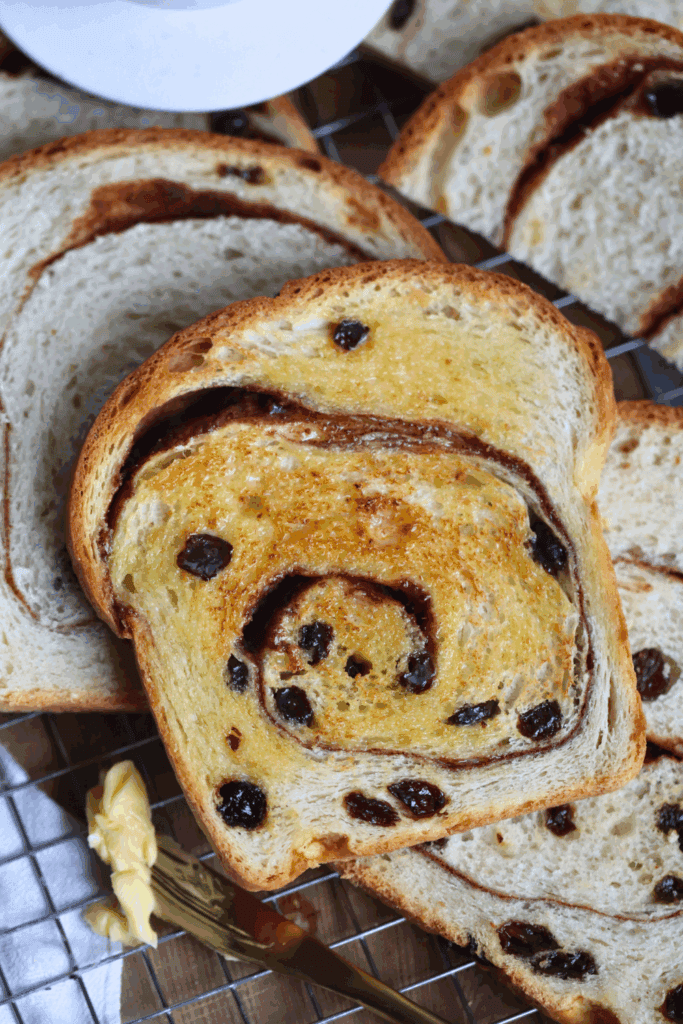
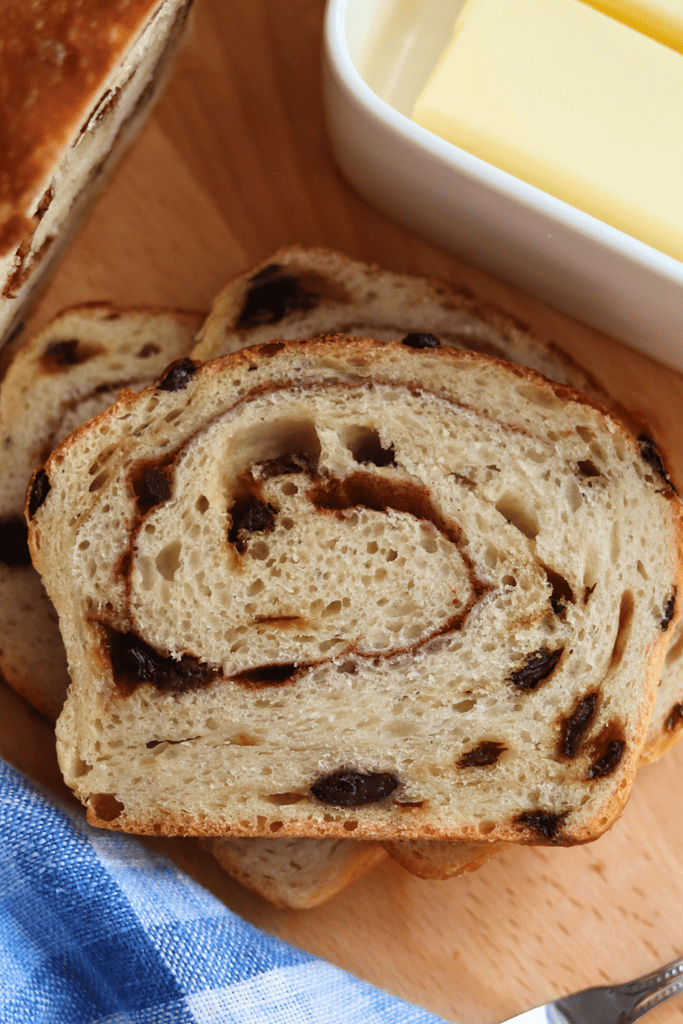
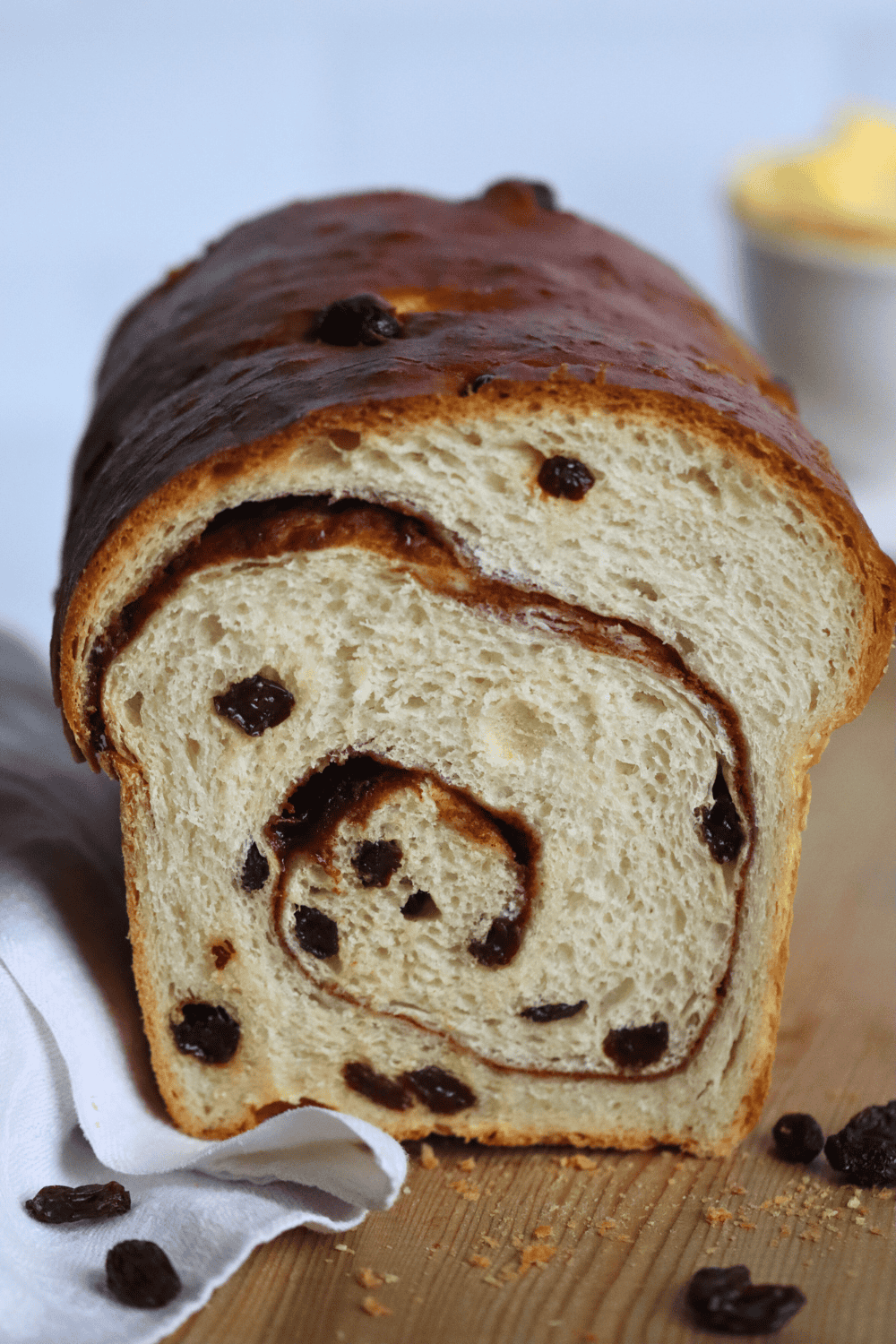
This Sourdough Discard Cinnamon Raisin Sandwich Bread is the kind of cozy recipe that makes the whole kitchen smell incredible while it bakes. With warm cinnamon swirled through a soft honey-kissed crumb and plump raisins in every bite, it’s perfect for toast, breakfast, or an afternoon snack straight from the counter.
This quicker discard version was inspired by my 100% sourdough cinnamon raisin bread, but it’s ready to bake in just 2 hours, making it much easier to fit into a busy day. It stays soft for days and makes an especially delicious base for recipes
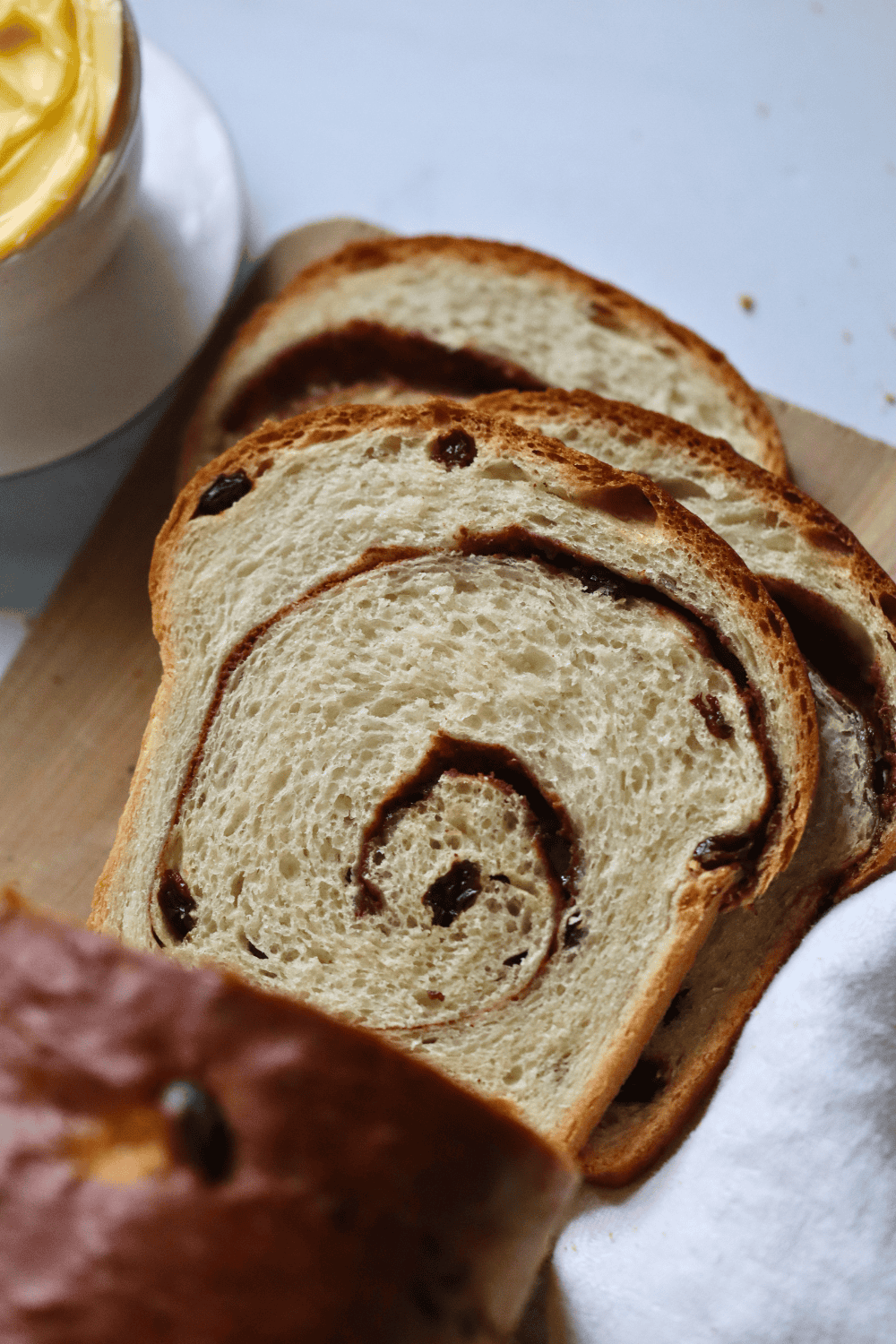
Quick Look: Sourdough Discard Cinnamon Raisin Sandwich Bread
- Prep Time: 10 minutes
- Fermentation Time: 1 hour 20 minutes
- Bake Time: 55 minutes
- Total Time: 2 hours 25 minutes
- Servings: 1 loaf
- Calories: ~ 199kcal per slice (based on nutrition panel)
- Cook Method: Baked
- Flavor Profile: Soft and fluffy with a sweet cinnamon swirl, plump vanilla-soaked raisins, and a subtle tang from sourdough discard. Perfect for toasting!
- Difficulty: Easy to Intermediate — Straightforward steps with a stand mixer, but requires attention to rise times for the best results.
SUMMARIZE & SAVE THIS CONTENT ON
Why You’ll Love This Discard Cinnamon Raisin Sandwich Bread
- Same-day bake. From mixing to rising to baking, this cinnamon raisin sourdough bread takes a little over 2 hours. Many sourdough recipes call for long rests or overnight proofs, but this one doesn’t tie you down. You can start mixing around 3 p.m. on a slow Saturday afternoon and have a warm, cinnamon-swirled loaf cooling on your counter by dinner. If you love quick bakes, you should also try my Easy Sourdough Discard Sandwich Bread Recipe.
- Soft, juicy raisins throughout. Soaking the raisins before mixing them in makes such a big difference. They plump up and stay soft while the bread bakes, instead of drying out or getting chewy like they sometimes can. You end up with sweet, tender raisins all through the loaf, blending perfectly with that warm cinnamon swirl. I use this same trick for my Homemade Sourdough Cinnamon Raisin Bagels Recipe.
- The loaf stays soft for days. A bit of honey in the dough helps the crumb stay tender and moist, even a couple of days after baking. The slices don’t dry out quickly, so you can enjoy them for breakfast, snacks, or sandwiches through the week. It’s especially good toasted with a little butter the next morning. If you love soft loaves, you’ll also enjoy my Soft Whole Wheat Sourdough Sandwich Bread Recipe.
Ingredients & Substitutions
* To find precise measurements, scroll to the bottom of this post to find the recipe card*
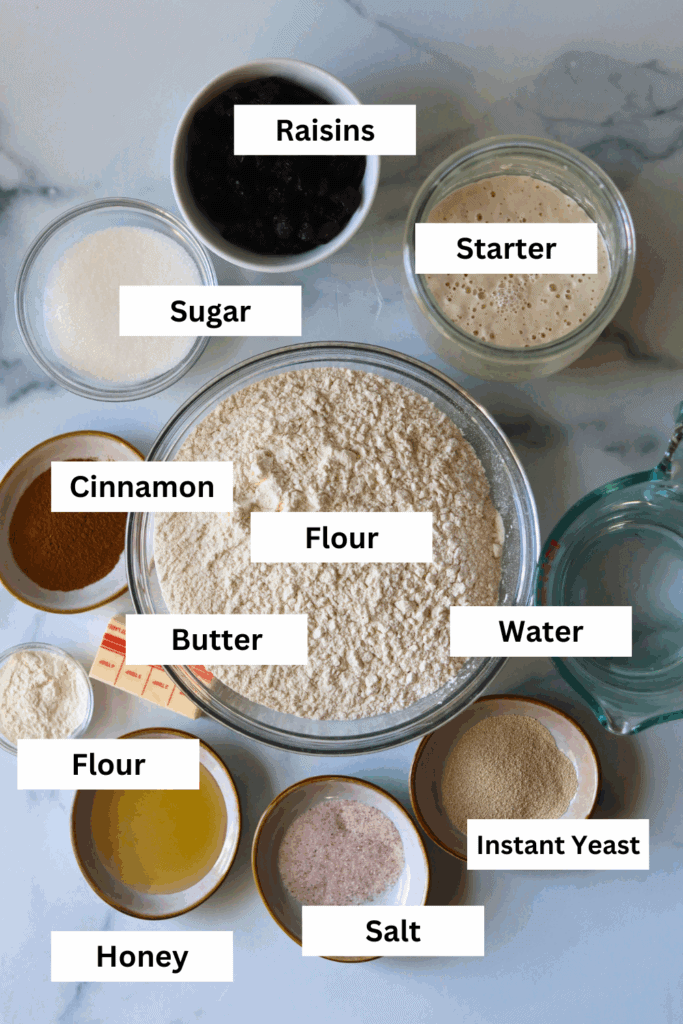
- Sourdough Discard – I used fresh, room temperature sourdough discard. I suggest using discard that’s no more than 1-2 days old. If you use discard straight from the fridge, it’ll slow down the rise time. By the way, you can swap in the same amount of active sourdough starter (grams).
- Instant Yeast – Be sure to use instant yeast for this recipe, not active dry yeast. Active dry yeast needs to be dissolved in liquid to activate and takes longer to rise dough. Instant yeast, in contrast , can be added directly to dry ingredients, and it works much faster. The yeast does all the heavy lifting, while the discard or active starter mostly adds flavor. If you prefer only using sourdough starter, be sure to check out my 100% sourdough version!
- Bread Flour – You can use all-purpose flour if needed, but bread flour works best because it has more protein. That extra protein helps the dough rise higher and makes the bread soft and fluffy.
- Water – Use warm water, no hotter than 120°F, as this can kill the yeast and prevent your dough from rising. A little yeast helps jump-start your dough rise; it also helps the dough to rise quickly. I used 110°F water for this sourdough baking recipe.
- Honey – Just a touch of honey not only brings a slight sweetness to this loaf, but it also helps browning and to keep the loaf soft and moist for days. Substitute the same amount in grams with brown sugar or cane sugar, if you prefer.
- Raisins– Pre-soaking raisins before adding them to the bread dough will give each bite a plump, sweet raisin.
- Vanilla: A little vanilla in this cinnamon raisin sourdough bread makes a noticeable difference. I stir it in while soaking the raisins so the flavor seeps into them and gently perfumes the dough. It’s subtle, just enough to highlight the cinnamon and sweetness of the raisins without being overpowering.
Baking Time For Cinnamon Raisin Discard Sandwich Bread
|
Time |
Process |
|---|---|
|
3:00 PM |
Mix and knead the dough |
|
3:10 PM |
First rise |
|
4:10 PM |
Shape and second rise |
|
4:35 PM |
Bake |
How to Make Sourdough Discard Cinnamon Raisin Sandwich Bread
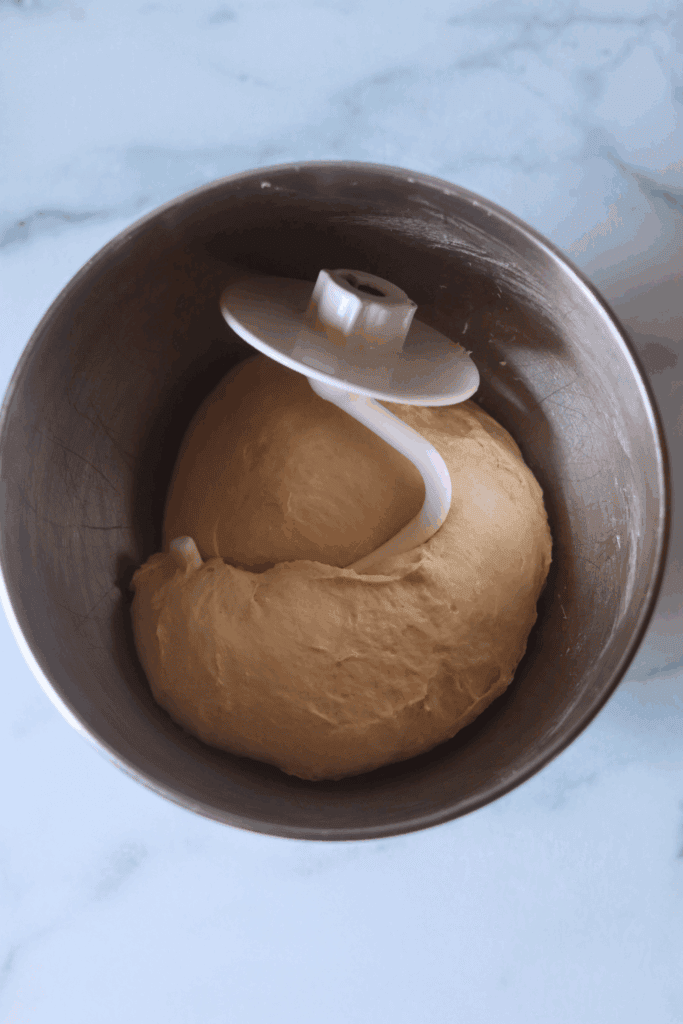
- To the bowl of a stand mixer with a dough hook, add all of the dough ingredients and mix on low for 10 minutes until smooth. Use your hands and a large bowl if you don’t have a stand mixer, though I recommend getting one if you plan to bake often.
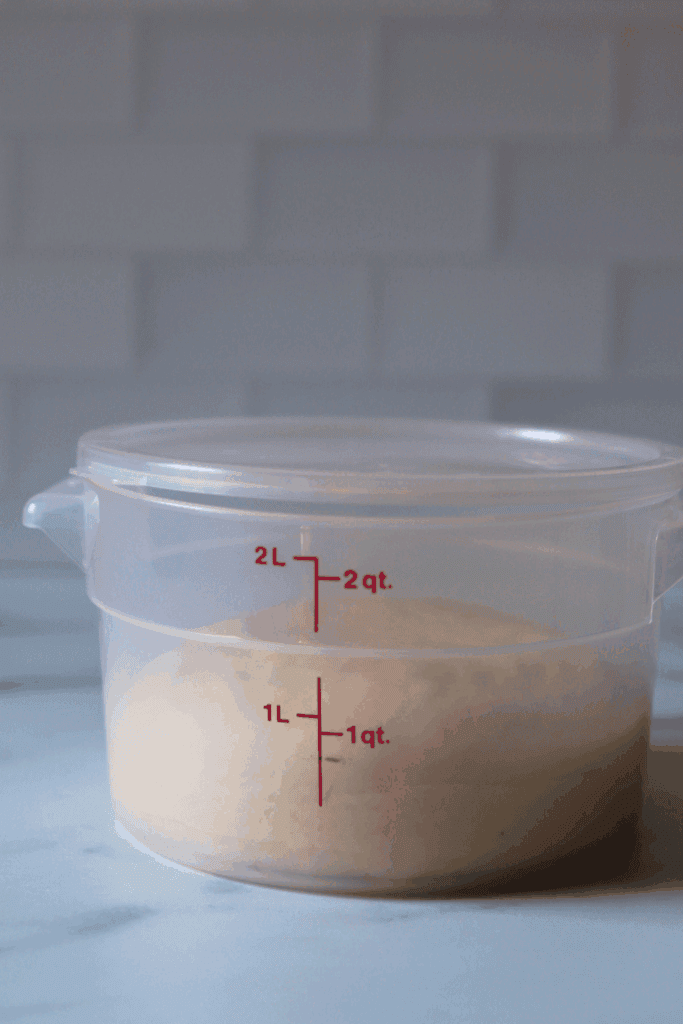
- Remove the dough and place it in a lightly greased bowl. Cover and let rest for 30 minutes.
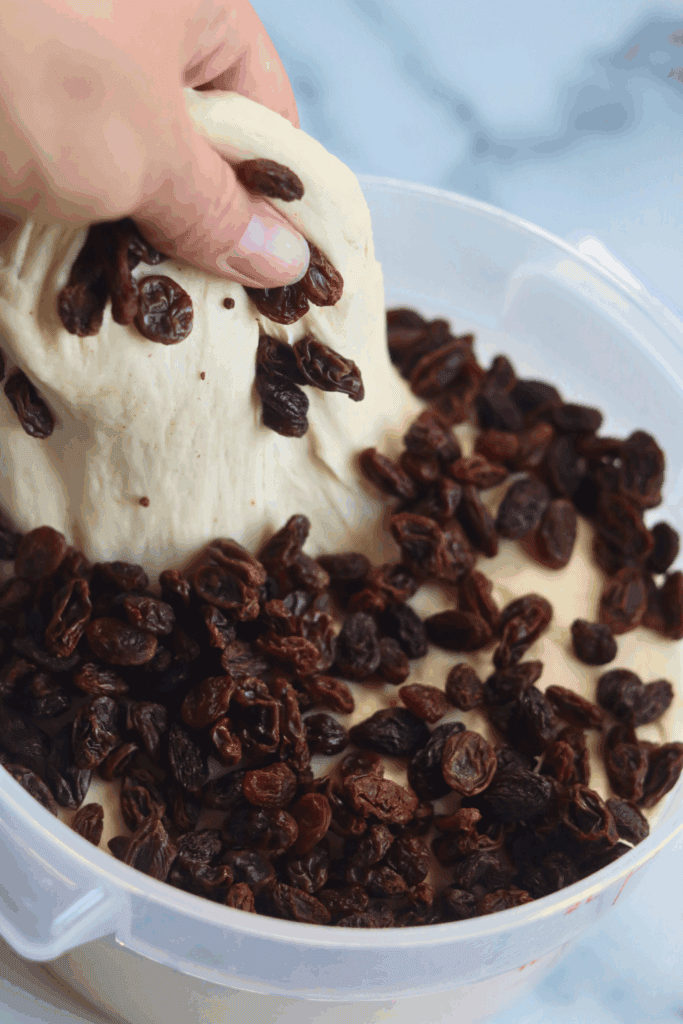
- After 30 minutes, knead the raisins into the dough. Cover and leave to rest until doubled in size.
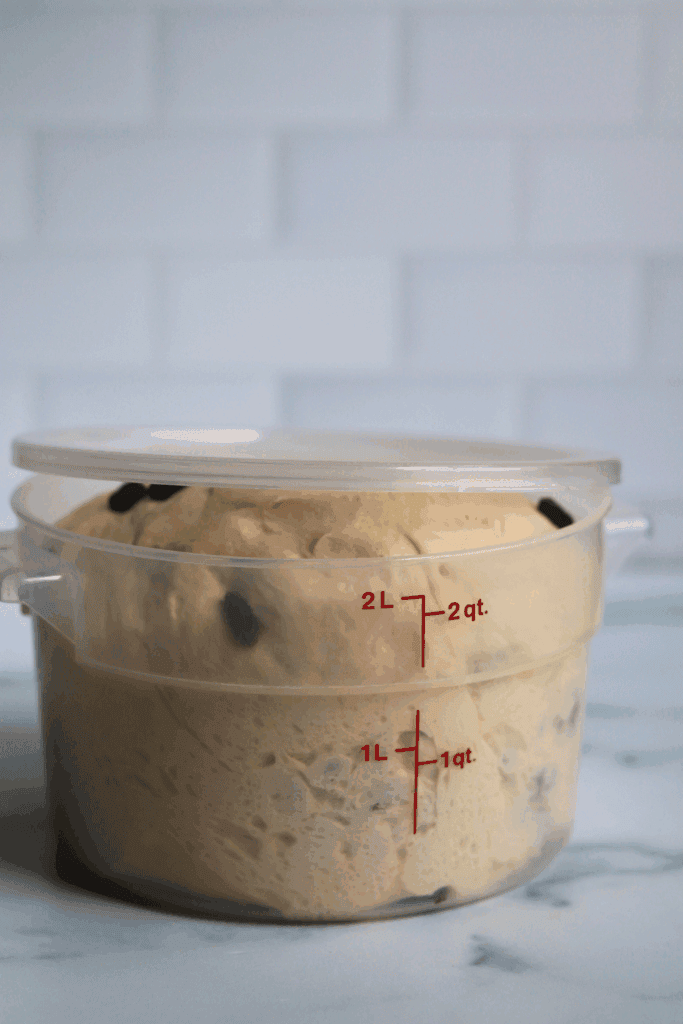
- Once the dough has doubled in size, punch it down to remove all of the air bubbles.
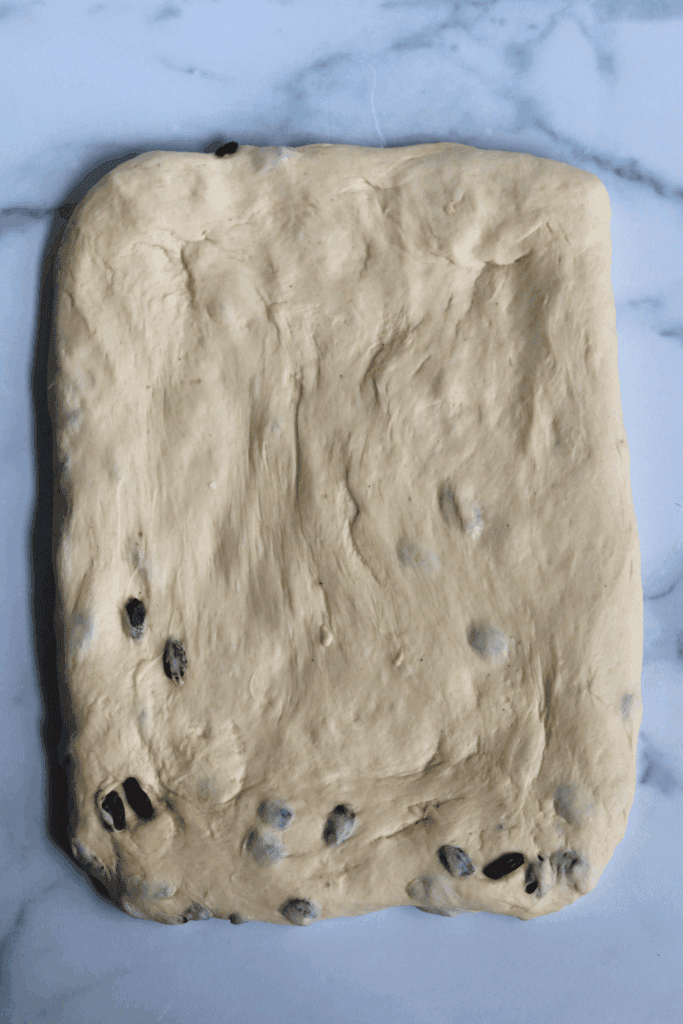
- Stretch or roll the bread dough into a large rectangle with a rolling pin, about 8 inch x 12 inch. With a pastry brush, brush water about 1 inch wide along the sides and 2 inches wide along the top and bottom of the rectangle. This will help seal the bread dough when shaped.
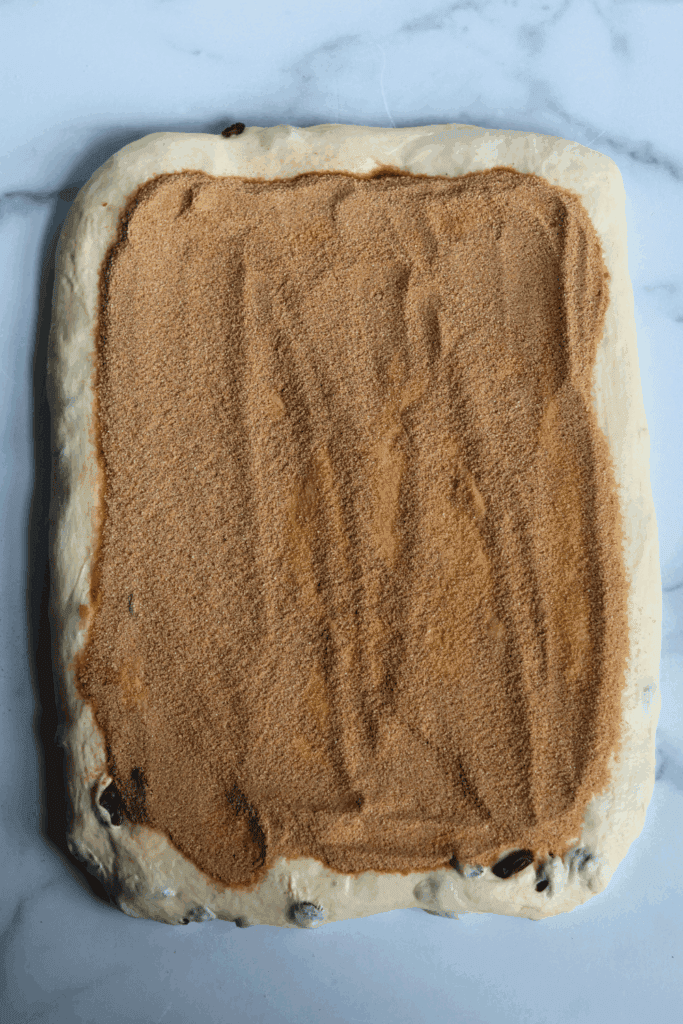
- In a small bowl, whisk together the sugar, cinnamon and flour. Sprinkle the rest of the dough with the cinnamon-sugar mixture, avoiding the edges.
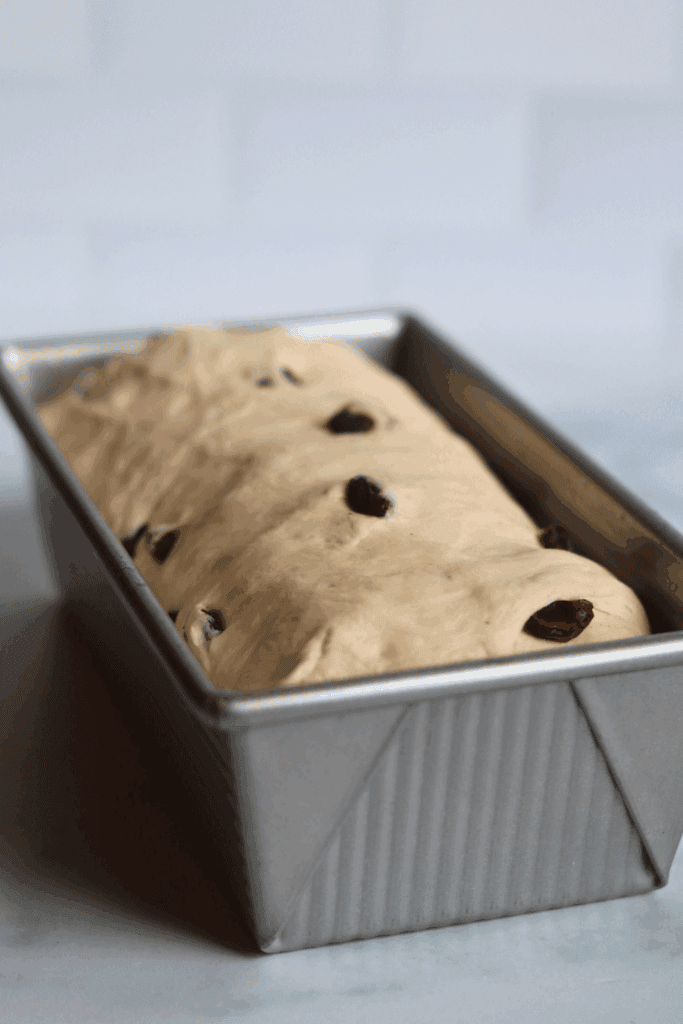
- Starting with the side closest to you, tightly roll the bread dough into a log, like you would a cinnamon roll. Curl the ends of the sourdough sandwich bread under itself and pinch the seams together. Gently lift the dough and place it into a greased 8.5 x 4.5-inch loaf pan with the seam side down. Cover the dough with a plastic cover and allow it to rise until the dough is 1″ above the rim of the pan and looks puffy. This took 25 minutes in my 70°F kitchen. It is tempting to rush this step, but don’t! If your loaf has not risen properly, it will be dense and gummy.
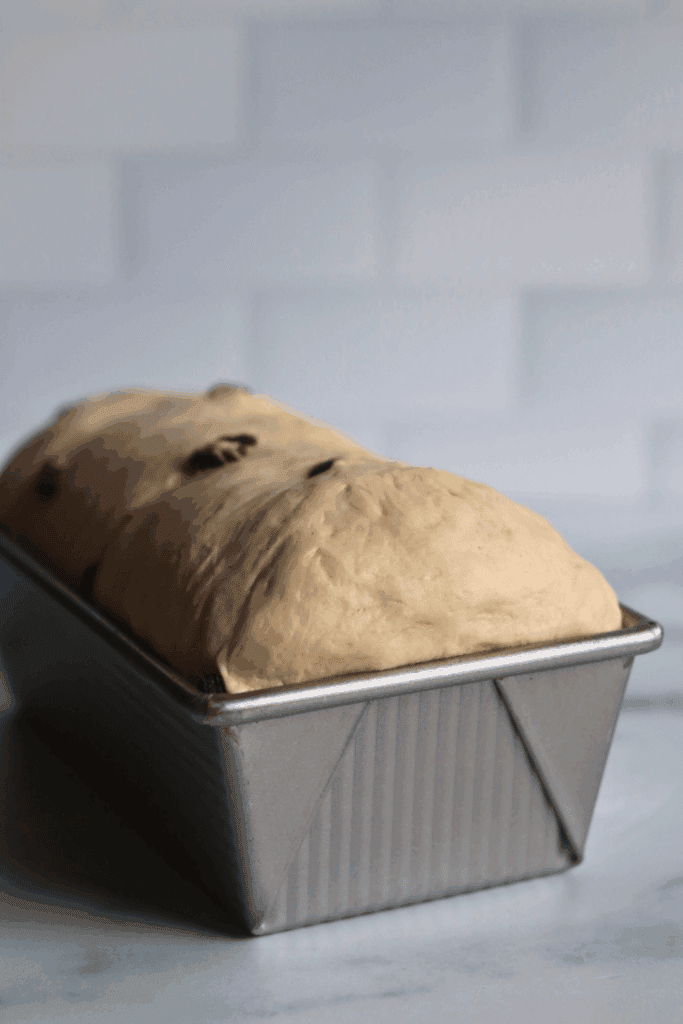
- Cover and let the dough rest for its second rise. While the dough rises, preheat the oven 375°F.
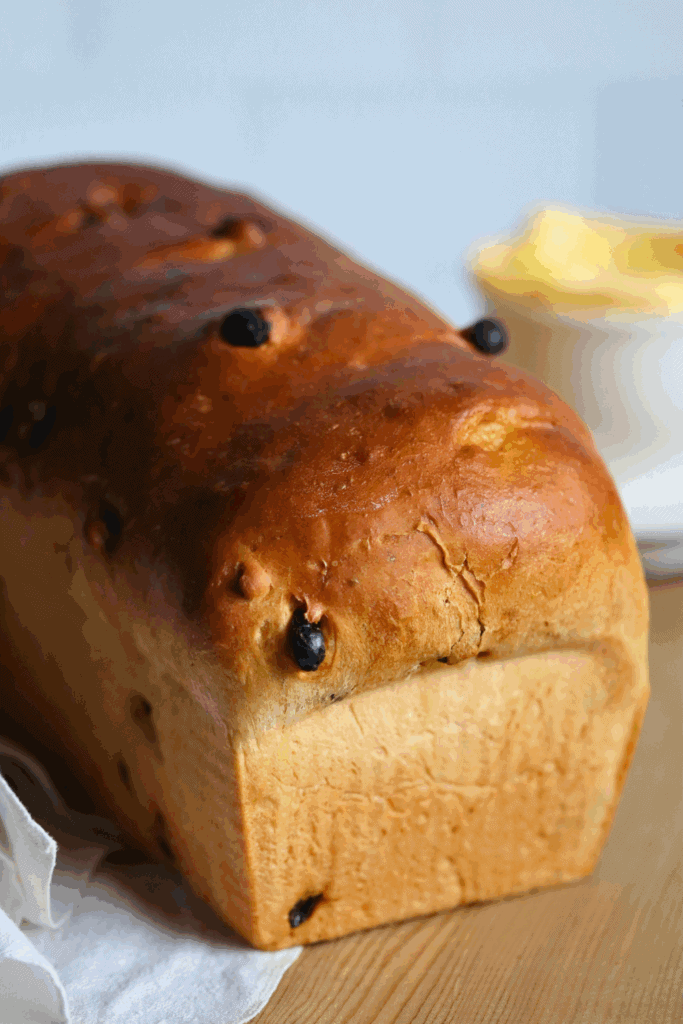
- Bake for 50-55 minutes or until the top is golden brown and the internal temperature has reached 195°F. If the top is browning too quickly, cover it with a piece of aluminum foil and continue to bake.
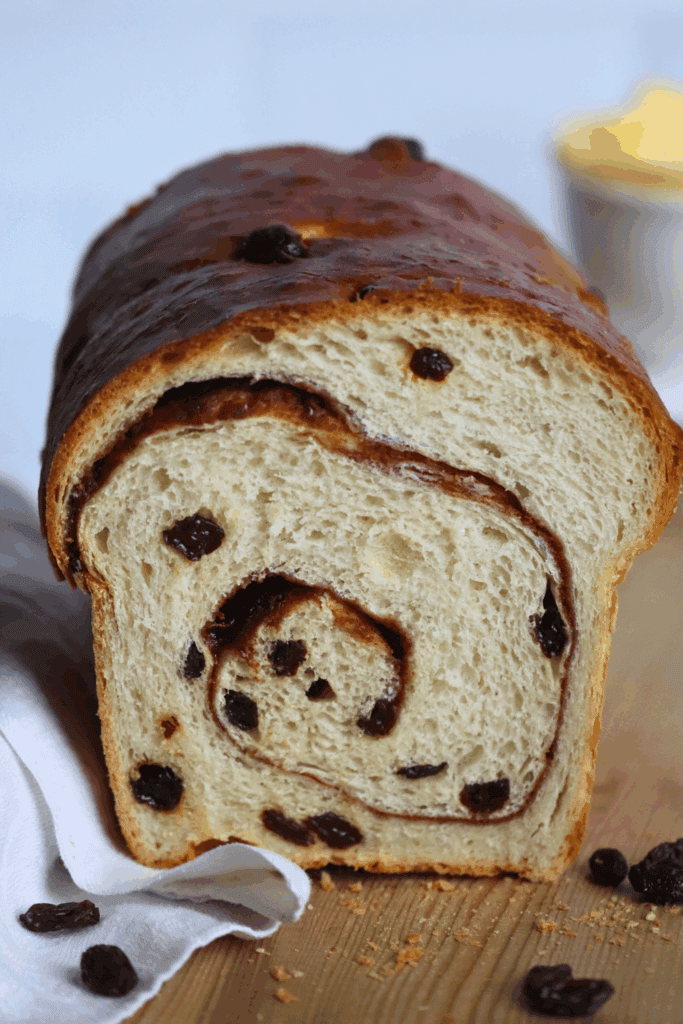
- Remove the loaf from the hot oven and keep in the loaf pan for 5 minutes, before removing to cool on a wire rack. For an extra soft crust, rub butter on the top of the warm loaf. Cool until room temperature before slicing. Enjoy!
McKenna’s Helpful Tips
- Don’t skip soaking the raisins: This is the secret to getting those perfectly plump, juicy bursts of sweetness in every bite. If you skip this step, the raisins will absorb moisture from your dough and become tough. I also recommend this for my Sourdough Cinnamon Raisin English Muffins Recipe.
- Add a splash of vanilla: I love stirring a little vanilla extract into the water while soaking the raisins. The flavor seeps into them and gently perfumes the dough, highlighting the cinnamon without being overpowering.
- Use bread flour for the best texture: While all-purpose flour works in a pinch, bread flour has a higher protein content that helps the dough rise higher and makes the bread incredibly soft and fluffy. This is the same flour I use for The Best Sourdough Sandwich Bread.
- Let it cool completely: It is so tempting to slice into a warm loaf of cinnamon raisin bread, but cutting it too soon can make the crumb seem gummy. Let it cool completely on a wire rack so the crumb sets perfectly.
- Turn leftovers into French toast: If you happen to have any slices left after a few days, they make the most incredible breakfast! Try using them in The Best Easy Sourdough French Toast Recipe.
How to Store:
I let the loaf of bread cool completely on a wire rack before wrapping it so the crust doesn’t get soggy. Once cooled, I wrap the whole loaf tightly in plastic wrap and tuck it into an airtight container or bag to keep it soft. It stays good at room temperature for about 3 days. If you want it to last longer, slice the bread and freeze the slices in a freezer bag, pressing out as much air as possible. When I’m ready to eat one, I either pop a slice straight into the toaster on medium heat or warm it in a toaster oven at 350°F for a few minutes. If the slice feels a little firm after freezing, I rub a tiny bit of butter on it while it’s still warm, and it’s soft and tender again.
Discard Cinnamon Raisin Sandwich Bread FAQs
It’s best to use fresh sourdough discard, preferably one that’s no more than a day or two old. Cold or older discard won’t ruin your bread, but it’ll slow down the rise and give the loaf a slightly more sour flavor. Let the discard sit out until it’s at room temperature before mixing so your dough warms up and rises on schedule. If you want to use active starter instead, check out my Soft Cinnamon Raisin Swirl Sourdough Bread Recipe.
I highly recommend not skipping this step; it makes a big difference. Soaking the raisins in hot water keeps them soft, plump, and sweet. If you skip this little process, the raisins will stay tough or dry out as the bread bakes. Be sure to drain and pat them dry before kneading them in so they don’t add too much moisture to the dough.
That usually means your sandwich bread dough didn’t rise enough before baking. With this recipe, the dough should double in size on the first rise and puff up until it’s about 1 inch above the rim of the pan on the second. If it hasn’t reached that point, give it more time, especially if your kitchen is cooler than 70°F. Slicing the bread before it has fully cooled can also make the crumb seem gummy, even if the loaf baked correctly. So, let this delicious bread cool completely to room temperature before slicing so the crumb sets and stays soft.
Yes, you can knead the dough by hand if you don’t have a stand mixer, but it will take a bit more time and effort. Expect to spend about 15 minutes kneading. You’ll know the dough is ready when it feels smooth, elastic, and slightly tacky without sticking to your hands. It will tighten and smooth out as the gluten develops. That said, a good stand mixer can make the process faster and easier, which is especially helpful if you bake often, like when making my Sourdough Discard Cinnamon Rolls.

If you tried this Sourdough Discard Cinnamon Raisin Sandwich Bread recipe or any other recipe on my blog, please leave a 🌟 star rating and let me know how it went in the📝 comments below. Thanks for visiting!
Sourdough Discard Cinnamon Raisin Sandwich Bread Recipe
Enter your email below, and we’ll send it straight to your inbox! Plus, you’ll get my newest sourdough recipes and best tips every week!
Ingredients
Bread Dough
- 100 grams sourdough discard, room temperature 1/3 cup
- 300 grams warm water, 110 degrees F 1 1/4 cups
- 550 grams bread flour scant 4 cups
- 57 grams unsalted butter, melted 4 Tablespoons
- 25 grams honey 1 Tablespoon
- 9 grams salt 1 1/2 teaspoons
- 7 grams instant yeast 2 teaspoons
- 100 grams raisins 1/2 cup
- 4 grams vanilla extract 1 teaspoon
- 240 grams boiling water 1 cup
Cinnamon-Sugar Mixture
- 65 grams sugar 1/3 cup
- 6 grams ground cinnamon 1 Tablespoon
- 10 grams all-purpose flour 1 Tablespoon
Instructions
- To the bowl of a stand mixer with a dough hook, add all of the bread dough ingredients, except for the raisins, vanilla and boiling water, and mix on low speed for 10 minutes. After kneading, the dough should be pulling from the sides of the bowl, smooth and tacky to the touch – not sticking to your hand. Alternatively, you can mix and knead the dough by hand. I would increase the time from 10 to 15 minutes.100 grams sourdough discard, room temperature, 300 grams warm water, 110 degrees F, 550 grams bread flour, 57 grams unsalted butter, melted, 25 grams honey , 9 grams salt , 7 grams instant yeast
- Place the dough in a lightly greased bowl, cover with a plastic cover and leave to rest for 15 minutes.
- While the dough is resting, pour boiling water, raisins and vanilla into a small bowl. Leave them to soak.100 grams raisins, 240 grams boiling water, 4 grams vanilla extract
- After 15 minutes, drain and dry the raisins. Remove the dough cover and pour the raisins on top of the dough. With slightly wet fingers, take a piece of the bread dough, pull it upwards, and fold it towards the center of the dough. Push the heel of your hand into the dough. Turn the bowl clockwise a quarter turn and repeat the same motion. Continue to knead the dough for about 20 seconds. The dough should become more stiff and smooth looking. The raisins will be mixed throughout the smooth ball of dough.
- Cover the dough again and wait until it doubles in size, typically 30-45 minutes more, depending on the temperature of your dough and environment.
- Once the dough has doubled in size, punch it down to remove all of the air bubbles. This helps to keep a tight crumb. Then, place the dough on a clean work surface.
- Stretch or roll the bread dough into a large rectangle with a rolling pin, about 8 inch x 12 inch. With a pastry brush, brush water about 1 inch wide along the sides and 2 inches wide along the top and bottom of the rectangle. This will help seal the bread dough when shaped.
- In a small bowl, whisk together the sugar, cinnamon and flour. Sprinkle the rest of the dough with the cinnamon-sugar mixture, avoiding the wet edges.65 grams sugar, 6 grams ground cinnamon, 10 grams all-purpose flour
- Starting with the side closest to you, tightly roll the bread dough into a log, like you would a cinnamon roll, avoiding any air bubbles. Curl the ends of the sourdough sandwich bread under itself and pinch the seams together.
- Gently lift the dough and place it into a greased 8.5 x 4.5-inch loaf pan with the seam side down. Cover the dough with a plastic cover and allow it to rise until the dough is 1″ above the rim of the pan and looks puffy. This took 25 minutes in my 70 degree kitchen. It is tempting to rush this step, but don’t! If your loaf has not risen properly, it will be dense and gummy.
- While the dough is rising, preheat the oven to 375 degree F.
- Bake for 50-55 minutes or until the top is golden brown and the internal temperature has reached 195 degrees F. If the top is browning too quickly, cover it with a piece of aluminum foil and continue to bake.
- Remove the loaf from the hot oven and keep in the loaf pan for 5 minutes, before removing to cool on a wire rack. For an extra soft crust, rub butter on the top of the warm loaf. Cool until room temperature before slicing. Enjoy!
Notes
Ingredients & Substitutions
- Sourdough Discard – I used fresh, room temperature sourdough discard. I suggest using discard that’s no more than 1-2 days old. If you use discard straight from the fridge, it’ll slow down the rise time. By the way, you can swap in the same amount of active sourdough starter (grams).
- Instant Yeast – Be sure to use instant yeast for this recipe, not active dry yeast. Active dry yeast needs to be dissolved in liquid to activate and takes longer to rise dough. Instant yeast, in contrast , can be added directly to dry ingredients, and it works much faster. The yeast does all the heavy lifting, while the discard or active starter mostly adds flavor.
- Bread Flour – You can use all-purpose flour if needed, but bread flour works best because it has more protein. That extra protein helps the dough rise higher and makes the bread soft and fluffy.
- Water – Use warm water, no hotter than 120°F, as this can kill the yeast and prevent your dough from rising. A little yeast helps jump-start your dough rise; it also helps the dough to rise quickly. I used 110°F water for this sourdough baking recipe.
- Honey – Just a touch of honey not only brings a slight sweetness to this loaf, but it also helps browning and to keep the loaf soft and moist for days. Substitute the same amount in grams with brown sugar or cane sugar, if you prefer.
- Raisins– Pre-soaking raisins before adding them to the bread dough will give each bite a plump, sweet raisin.
- Vanilla: A little vanilla in this cinnamon raisin sourdough bread makes a noticeable difference. I stir it in while soaking the raisins so the flavor seeps into them and gently perfumes the dough. It’s subtle, just enough to highlight the cinnamon and sweetness of the raisins without being overpowering.

I’m new to sourdough. This was one of the first discard recipes I tried. The bread turned out delicious! The family loved it.
I’m so glad this was one of your first discard recipes and that it turned out so well! Even better that your family loved it too. Thank you so much for trying the recipe and taking the time to leave a review!
How can i make this recipe using an active starter? When can i add my raisins? After bulk fermentation by sprinkling it over the sugar cinnamon mixture?
Also, i see that you baked this one longer than the regular sandwich bread recipe. Whats the case with an active starter? Thank you
Great question! If you’d like to make this without commercial yeast, I actually have a separate 100% sourdough cinnamon raisin bread recipe!
This turned out perfectly the first time I made it. And although my family liked it, they felt it needed more raisina and more cinnamon swirl mixture. So my question is how much can I increase those without throwing off the recipe? Thanks for you help.
I’m so glad it turned out perfectly for you! You can definitely increase both a little, but I wouldn’t go too heavy with the swirl mixture, since too much sugar can melt during baking and cause gaps or separation between the layers of bread. Thanks so much for trying the recipe. I hope the next loaf is incredible!
I made this recipe and it was absolutely perfect!
I’m so glad you enjoyed it!
I have made this recipe many times now and absolutely love it. I make it as plain and raisin breads and both ways it is a fantastic recipe. Thank you so much for sharing this and giving me an excellent recipe that everyone enjoys. Blessings to you and your family.
Thank you so much for such a sweet comment! I’m so happy this recipe has become one you make again and again. Thank you for taking the time to share this. It truly means so much to me. Blessings to you and your family as well!
Would it be all right to use Einkorn flour instead of bread flour? Thank you
You can certainly try it, but I haven’t personally tested this recipe with Einkorn flour, so I can’t guarantee the results. Einkorn absorbs liquid differently. If you decide to experiment, I’d start by replacing only part of the bread flour with Einkorn rather than all of it. If you give it a try, I’d love to hear how it turns out!
Where do I get the sourdough discard or do you have a recipe for it? The bread looks so good love to make it.
Great question! Sourdough discard comes from maintaining a sourdough starter. Each time you feed your starter, you remove a portion of it and that portion is called discard.If you’re new to sourdough, I have a step-by-step sourdough starter tutorial that will show you exactly how to make your own starter from scratch. Once it’s established, you’ll have plenty of discard to use in recipes like this one. You can find the blog post here – https://simplicityandastarter.com/how-to-make-a-sourdough-starter/. You can also grab my free printable guide here – https://sunny-artisan-7227.kit.com/980d432161 Don’t hesitate to reach out with any questions!
Omigosh! I made this yesterday and it turned out beautifully! It was so delicious in the morning for toast with butter. Very easy instructions to follow and everything went along smoothly. Thank you!
This made me so happy to read, thank you so much! I’m so glad the instructions were easy to follow and that everything turned out beautifully for you.
Great recipe! Very easy to follow and the bread turns out great. I’ve made it three times. I slice and freeze it. We just pull out a slice when we want some and it toasts up nicely.
Thank you so much! I love that you’ve made it three times already — that’s the best compliment! And slicing and freezing is such a smart idea. Thanks for sharing your tip!
This recipe couldn’t be easier! Soft, fluffy with cinnamon and raisins in every bite – yum!
Hello. I want to make this recipe this morning. I would like to make it without raisins, so do I just skip the whole boiling water strep? And add the vanilla directly to the bread dough? Or to the cinnamon sugar mix? Thank you
Great question! Yes — if you’re skipping the raisins, you can skip the entire boiling water/vanilla step. That step is only to plump and flavor the raisins. Hope you love it — happy baking!
It’s in the oven now! Looks so great! Thank you for all your recipes
Yummy! I didn’t incorporate raisins as my husband is a hater. Still tasted great! Toasted a slice and slathered some cream cheese frosting on it. Thanks for the recipe!
I’m so glad it still turned out delicious without them! Yum, toasted with cream cheese frosting sounds amazing. Thank you so much for trying the recipe and sharing that idea!