

How to Make Sourdough Pizza Dough (Easy Recipe)
This post may contain affiliate links. Please read our disclosure policy.
This homemade 100% Sourdough Pizza Dough made us forget takeout entirely! The dough is easy to mix, bakes fast, and gives you a crust that’s chewy with a light, puffy edge and a crisp bottom.
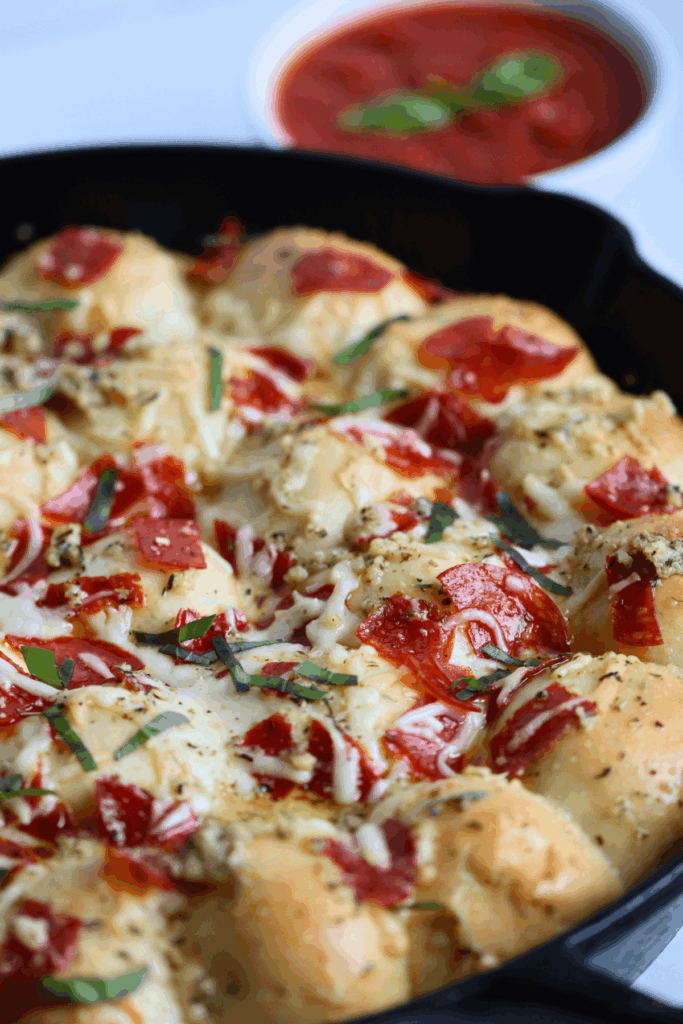
As a busy mom, I love how you can prep it ahead and keep it in the fridge for up to 3 days, making weekend pizza night that more simple. But when I’m low on time, I also love making my 2-hour Sourdough Discard Pizza or my Sourdough Discard Pizza Pull Apart Rolls for another fun twist on pizza night!

MY LATEST VIDEO
Why You’ll Love This Recipe:
- Gut-friendly recipe: Sourdough pizza dough is alive with natural yeast and lactic acid bacteria, which slowly ferment the flour. This process helps break down some of the phytic acid in the flour, making minerals like iron and magnesium easier for your body to absorb. The slow fermentation also partially breaks down starches and gluten, so the dough feels lighter and can be easier on your stomach than quick-rise yeast dough, all while keeping that familiar tangy flavor and chewy texture.
- Personal Pizza: This sourdough pizza recipe makes enough dough for four personal pizzas, so everyone can top theirs just the way they like. You can also split it into eight smaller portions for mini pizzas that kids will love. You can spread tomato sauce, pesto, or even a white garlic sauce, then layer on mozzarella, cheddar, or a mix of your favorite cheeses. Top it with pepperoni, sausage, roasted veggies, fresh herbs, or even fruit for a sweeter twist. The dough is easy to shape thin and crisp or thicker and puffier, so each pizza can be exactly what you and your family want. For more homemade pizza ideas, check out my Easy Sourdough Pizza Crust Recipe (uses discard), my Breakfast Pizza with a Sourdough Pizza Crust, or my Easy Sourdough Fruit Pizza Recipe.
- Make Ahead Convenience: One of the best things about this dough is how easy it is to prep ahead. Mix it a day or two before pizza night and let the natural fermentation do its work in the fridge. You can even freeze portions for later. That way, last-minute dinners are a breeze since the dough is already fermented, flavorful, and ready to shape and top. You can also prep my Sourdough Discard Pizza Pull Apart Rolls the day before for a super easy and delicious game-day appetizer!
Ingredients & Substitutions
* To find precise measurements, scroll to the bottom of this post to find the recipe card*
- Active Sourdough Starter: Active and bubbly so it can naturally leaven the dough, giving your crust that mild tang and chewy texture.
- Water: Make sure the water isn’t boiling (no hotter than 120°F), which protects the starter while hydrating the flour for a smooth, pliable dough.
- Olive Oil: Extra virgin olive oil adds richness, keeps the dough soft, and helps create a tender, chewy crust that browns nicely.
- Bread Flour: Bread flour has a higher protein content than all-purpose flour, which develops more gluten for that light, puffy edge and chewy interior.
- Salt: To enhance the overall flavor, balancing the natural tang of the sourdough and strengthening the dough’s structure.
Baking Time For Sourdough Pizza Dough
|
Time |
Process |
|---|---|
|
8:00 PM |
Mix Dough |
|
8:30 PM |
First Stretch and Fold |
|
10:00 PM |
First Rise |
|
NEXT DAY |
|
|
6:00 AM |
Store Sourdough Pizza Dough in the fridge |
|
4:00 PM |
Remove Pizza Dough from the fridge |
|
5:00 PM |
Shape and bake |
How to Make Sourdough Pizza Dough Recipe
Mix the Dough
- To a large bowl, add the sourdough starter, olive oil, and warm water.
- Mix with a Danish Dough Whisk or by hand until the water is milky white and most of the starter is dissolved.
- Pour the bread flour and salt into the wet ingredients. Mix until all of the dry ingredients have been incorporated. The dough will be sticky.
- Cover the dough with a tea towel or bowl cover. I like to use a reusable shower cap and leave it to rest for at least 30 minutes.
Stretch and Folds
- Once the Sourdough Pizza Dough has rested for at least 30 minutes, remove the bowl cover.
- Wet your finger to prevent the dough from sticking. Scrape the sides of the bowl with a bowl scraper. Then, take a small piece of the dough with your fingers, pull it up towards you, and then fold it on top of the pizza dough. Turn the dough a quarter turn clockwise and perform the same stretch and fold.
- Continue to do this motion about 10–15 times. The dough will begin to look smoother.
- Cover the bowl again and allow it to rest for another 30 minutes.
- Repeat the stretch and fold three more times so you end up with four total sets, letting the dough rest for 30 minutes between each set.
Bulk Fermentation
- After finishing all the stretch and folds, cover the bowl and let the dough rise until it’s doubled in size. In my kitchen, around 70°F, this usually takes 6 to 8 hours. If your kitchen is warmer, the dough will rise faster, so keep an eye on it and adjust the timing as needed.
Cold Rise
- Once the dough has doubled in size, remove it from the bowl. Use a bench scraper to divide the dough into four equal pieces and gently shape each piece into a dough ball. Place the dough balls in a reusable container, cover, and store in the fridge until you’re ready to use them. This pizza dough can be stored for up to 36 hours.
Shape
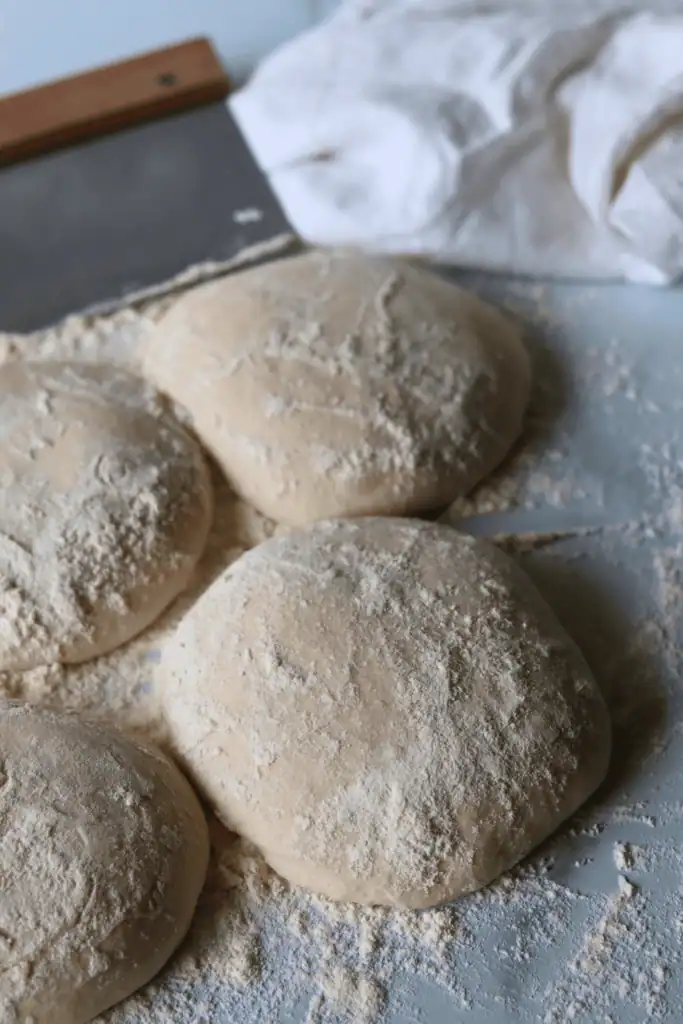
- About an hour before you’re ready to bake the sourdough pizza, carefully remove the dough from its container without disturbing the bubbles and place it on a generously floured workspace. Tip: I like to flour my hands so the dough doesn’t stick. Sprinkle plenty of flour on top of the dough and cover the mounds with a tea towel.
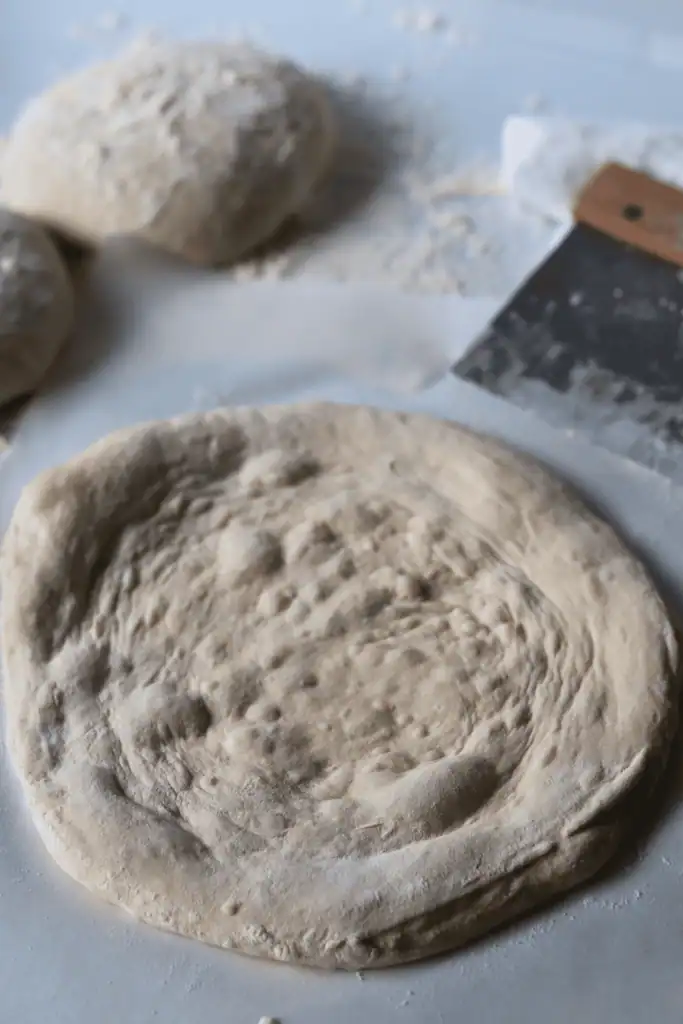
- Let the dough rest for at least an hour to reach room temperature. It should puff up slightly and look light and airy. While the dough is resting, place your pizza stone in the oven and preheat to 550 °F for at least an hour before baking.
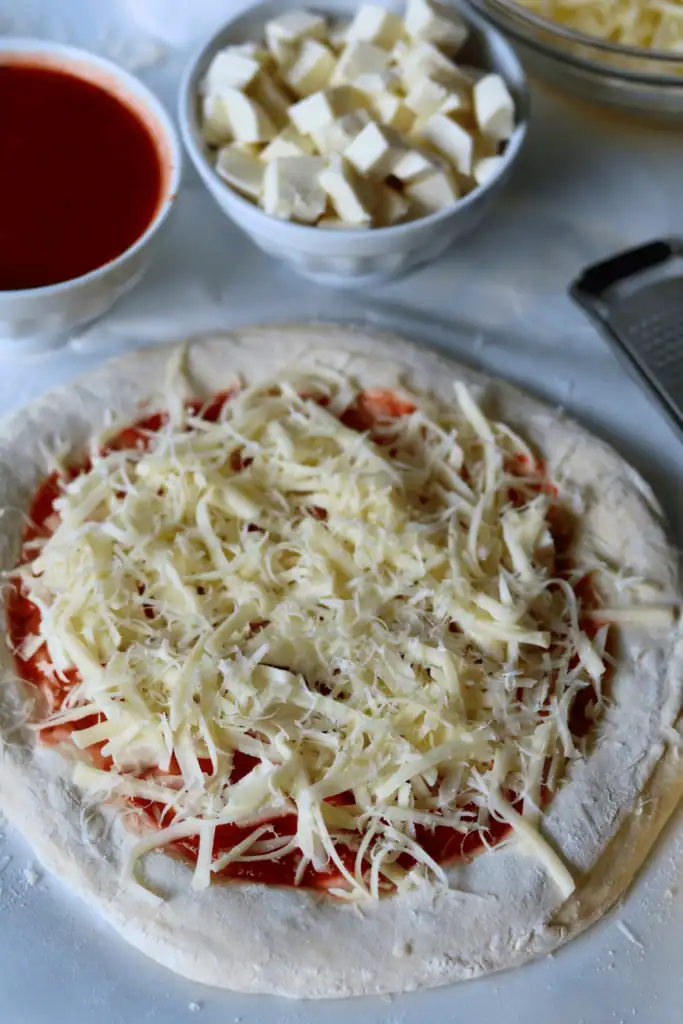

- After an hour, gently place a dough ball on a piece of parchment paper. Carefully shape it into a 9-inch round, being careful not to pop all those air bubbles. Once shaped, top with about 2 tablespoons of sauce, your cheese of choice, and any toppings you like, using your heart as a guide.
- Use a pizza peel to slide the parchment and pizza onto the preheated pizza stone. Bake for 5–6 minutes, or until the cheese is melted and the crust is golden brown. Transfer to a cutting board, slice, and enjoy!
McKenna’s Helpful Tips
- Label everything – Always mark your stored dough with the date so you can easily track freshness.
- Keep it covered – Make sure the dough is well-covered to prevent it from drying out or forming a crust.
- Avoid over-proofing – When refrigerating or freezing, check that the dough doesn’t overproof, which can change the texture and flavor of your sourdough pizza crust.
- Rest the dough – Let the dough sit for at least 30 minutes before starting stretch-and-folds to relax the gluten.
- Stretch and fold – Perform 4 sets of stretch-and-folds with 30-minute rests between each to build structure and smooth the dough.
- Handle gently – When shaping, be careful not to pop the air bubbles to keep the crust light and airy.
How to Store
Room temperature for immediate use: If you plan to use the dough within a few hours, store it at room temperature. Place it in a covered bowl or under a damp cloth to prevent drying out. Note that this method is less ideal for longer storage and can lead to over-proofing if left out too long.
Refrigeration: Put the dough in a reusable container and store it in the fridge for up to 3 days. This keeps it ready for a quick pizza night or a tasty pan pizza the next morning. You can also keep it in a bowl tightly covered with plastic wrap. Before baking, let it come to room temperature, and give it a little extra time to rise if needed.
Long-term Storage: Divide the dough into equal portions for individual pizzas. Wrap each portion tightly in plastic wrap and place the wrapped dough in a freezer bag or airtight container. It can be frozen for up to 3 months.
Thawing: To use frozen dough, move it to the fridge about 24 hours before you plan to bake. Let it thaw and rise in the refrigerator. You can also thaw it at room temperature for a few hours, but make sure it has time to rise properly before shaping and baking.
Sauce, Cheese, and Topping Ideas
- Sauce ideas: Use about 2 tablespoons of your favorite sauce per pizza. Tomato sauce works classic, pesto adds a fresh, herbal punch, and white garlic sauce gives a rich, creamy option. Keep it light so the crust stays airy and crispy.
- Cheese options: Layer mozzarella for that classic melt and stretch, cheddar for sharper flavor, or a mix of both. Use just enough to cover the sauce without weighing down the dough.
- Topping suggestions: Add protein or veggies to taste. Pepperoni and sausage are great for a savory bite, roasted vegetables keep it lighter, fresh herbs add aroma, and fruit gives a sweet contrast. Spread toppings evenly and don’t overload the pizza to maintain the airy, puffy crust.

Sourdough Pizza Dough FAQs
Yes, you absolutely can! Instead of a pizza stone, you can use a 12-inch cast iron skillet. You could also cook the pizza dough in a nonstick skillet, then carefully transfer the pizza onto a baking sheet lined with parchment paper before broiling to melt the cheese on top.
Be gentle. Flour your hands and your work surface lightly, and don’t press down too hard. Those little bubbles give you a light, airy crust that makes homemade pizza so good.
Yes! After the bulk fermentation, divide the dough into four pieces, wrap each tightly, and pop them in a freezer bag. They’ll keep up to three months. Thaw in the fridge for about 24 hours before using, and let them rise a bit so you don’t lose that airy texture.



Sourdough Pizza Dough Recipe
Enter your email below, and we’ll send it straight to your inbox! Plus, you’ll get my newest sourdough recipes and best tips every week!
Ingredients
Sourdough Pizza Crust
- 100 grams active and bubbly starter 1/2 cup
- 350 grams warm water 1 1/2 cups
- 30 grams extra virgin olive oil 3 Tablespoons
- 500 grams bread flour 3 1/2 cups
- 10 grams salt 1 1/2 teaspoons
Pizza Toppings
- pizza sauce
- freshly shredded cheese
- your choice of toppings
Instructions
Mix the Dough:
- To a straight-edge bowl, add the sourdough starter, olive oil, and warm water.I love using this bowl because it allows me to clearly see when the dough is done rising.100 grams active and bubbly starter, 350 grams warm water, 30 grams extra virgin olive oil
- Mix with a Danish dough whisk or by hand until the water is milky white and most of the starter is dissolved.
- Pour the bread flour and salt into the wet ingredients. Mix until all of the dry ingredients have been incorporated. The dough will be sticky.500 grams bread flour, 10 grams salt
- Cover the dough with the bowl cover or plastic wrap and leave it to rest for at least 30 minutes.
Stretch and Folds:
- Once the Sourdough Pizza Dough has rested for at least 30 minutes, remove the bowl cover.
- Wet your finger to prevent the dough from sticking.
- Scrape the sides of the bowl with a bowl scraper. Then, take a small piece of the dough with your fingers, pull it up towards you, and then fold it on top of the pizza dough. Turn the dough a quarter turn clockwise and perform the same stretch and fold.
- Continue to do this motion about 10–15 times. The dough will begin to look smoother.
- Cover the bowl again and allow it to rest for another 30 minutes.
- Repeat the same stretch and fold at least 3 more times (for a total of 4 sets of stretch and folds) with 30 minutes of rest in between each set.
Bulk Fermentation:
- After all of the stretch and folds are complete, cover the bowl and allow the dough to ferment until the dough has doubled in size, at room temperature in a warm spot. In my 70 degrees F kitchen, this took an additional 6-8 hours. Warmer temperatures will rise faster, so adjust appropriately to your environment.
Cold Rise:
- Once the dough has doubled in size, remove the dough from the bowl. With a bench scraper, divide the dough into 4 equal pieces and gently shape into dough balls. Place each dough ball in a greased, reusable container, cover and place the sourdough pizza crust in the fridge until ready to use.You can store this pizza dough for up to 36 hours.
Shape:
- One hour or so before you are ready to bake the Sourdough Pizza, carefully remove the sourdough pizza dough from its container (without disturbing all the bubbles) and place it on a generously floured workspace. I like to flour my hands to prevent the dough from sticking!
- Sprinkle the top of the dough with plenty of flour and cover the mounds with a clean tea towel.
- Let the dough rest for at least 1 hour to come to room temperature, or until it has puffed up and looks light and airy.This will take longer in a cool kitchen, while the dough will rise faster in a warmer kitchen.
- In the meantime, place your pizza stone into the oven and preheat at 550 ºF for at least 1 hour before cooking.
- Don't have a pizza stone? I share other cooking options below!
Cook:
- Once the dough looks light and airy, gently place one dough ball onto a piece of parchment paper. Carefully shape the dough ball into a 9-inch round (you don’t want to pop all of those air bubbles!) Once shaped, top with 2 Tablespoons of sauce, cheese and all your favorite toppings, measure with your heart!pizza sauce, freshly shredded cheese, your choice of toppings
- Slide the piece of parchment paper with the pizza on top of the pizza peel, then carefully slide the parchment paper onto the pizza stone. Bake for 5-6 minutes or until the cheese is melty and the crust is gold brown. Transfer the cooked pizza to a cutting board, slice and enjoy!

Can I partake naked crust and freeze? Would love to bake these in bulk and freeze to I can just put toppings on and bake for a few minutes
That’s such a great idea—and yes, you can absolutely par-bake and freeze them for later!
Here’s how I’d recommend doing it:
Shape the dough as usual.
Par-bake at 450°F for 2-3 minutes—just until the crust is set and barely golden (but not fully baked).
Let them cool completely, then wrap tightly in plastic wrap and store in a freezer-safe bag.
When ready to use, just add toppings and bake from frozen at 475°F until hot and bubbly (usually 5-7 minutes).
Let me know if you try it—I’d love to hear how it works for you!
Do you freeze before cold fermentation or after?
Also when you place in reusable containers before cold ferment do you add flour or oil to the container to prevent sticking?
Hi Kerrie! You will want to freeze the dough after the bulk fermentation. I wouldn’t suggest freezing the dough longer than a week though. Any longer and I find that they dough doesn’t rise as well after thawing. You can lightly grease the containers with oil, but it isn’t absolutely necessary. Enjoy!
I love this pizza dough recipe. It has become my go-to for pizzas and even calzones! I decided to make a double batch and freeze it after bulk fermentation, but after it thawed (one in the fridge for 24 hours and one on the counter) it did not rise again. It was so flat and lost all bubbles that I ended up throwing it out two days later after being 100% it would not rise at some point. I’m not sure where I went wrong.. do you have any tips or advice so bringing your frozen pizza dough back to life?
I’m so glad to hear you love the recipe and are using it for both pizzas and calzones—thank you!
It sounds like you did everything right by freezing after bulk fermentation and allowing plenty of time to thaw. Sometimes, though, if the dough is in the freezer too long (even past a week), the wild yeast can become sluggish or inactive, especially if it wasn’t shaped and frozen right away after the bulk rise. Freezer burn or inconsistent freezer temps can also impact its strength.
Here are a few tips to help bring frozen dough back to life:
Freeze sooner after bulk fermentation while the dough is still strong and bubbly.
Wrap it tightly (plastic wrap + freezer bag or airtight container) to prevent moisture loss and freezer burn.
After thawing, give it a long warm rest (4–6 hours or more)—it may need extra time to perk up!
It’s always disappointing to toss dough, but you’re doing everything right by experimenting and learning through it! I’d love to hear how it goes if you try freezing it again.
Can I double the recipe to make four regular size such as 12”-18” pizzas? I made this recipe before a couple months ago and made four but I can’t remember if I doubled it.
Yes, you can absolutely double the recipe to make four 12–18″ pizzas! I’m so glad you’ve made it before—hopefully it comes back to you as soon as you start mixing the dough again! 😊 Let me know how it turns out!
My dough was doughy but toppings were fully cooked??
Hi Jen! So sorry to hear that. If your toppings were fully cooked but your sourdough pizza dough was still doughy, there are a few possible culprits:
Oven temperature – Pizza needs a very hot oven (ideally 500°F or higher). If it’s too cool, the toppings might cook before the dough does.
Under-proofed dough – If your dough didn’t have enough time to ferment and rise properly, it can stay dense and gummy inside, even after baking. Well-proofed dough will have more bubbles, better oven spring, and bake more evenly. Make sure the dough is no longer cold from being in the fridge! It should feel soft, light and room temp.
Crust thickness – A thicker crust will take longer to bake. Try rolling or stretching it a bit thinner next time.
Let me know if you want help figuring out what it might’ve been in your case—I’d love to help you troubleshoot!
Try a prebake. I prebaked my crust for 8 minutes at 500. Then toppings. Might help!
Could this be done with a gluten-free sourdough starter and brown rice flour or all-purpose GF flour instead of bread flour?
Hi Kiley! I have not tested this recipe with GF flour, so I am not 100% certain. Sorry! Wish I could be more helpful.
Hi, do you still do a cold rise before shaping into balls to freeze?
Hello Lizzy! Freeze the dough balls right after shaping!
i made this dough this morning, stretched 3 times and then let it rise for 4 hours. It was so sticky I had a lot of trouble handling it and had to add a considerable amount of flour just to get it to shape. Any suggestions?
Hi Michelle! So sorry to hear the dough was hard to work with. This is a high hydration dough, so it is naturally a little more sticky, but it shouldn’t be unmanageable. I like to flour my hands when working with it to prevent it from sticking to my hands. It’s also important that there is enough flour in the dough. For the best results, I always recommend using a kitchen scale! I hope you give this recipe another try! It’s so delicious.
My oven doesn’t go up to 550, only 500. Should I just plan to bake a little longer?
500 degrees F should be just fine! You might just have to bake the pizzas a tad longer, but keep an eye on them! They bake up fast.
I have to say I look at a ton of recipes on Pinterest and I am so happy to say that you have one of the best layouts of the recipe! Thank you for making this very easy to use/view on a phone!
So happy to hear this, Kyra! Thank you for sharing.
Can you bake without bulk fermenting it?
This recipe is a long-fermented sourdough pizza recipe, so for the best and chewy sourdough pizza crust, the bulk fermentation is a crucial step to this recipe.
Just made this yesterday. Pushed the time a bit as needed it for suppertime. Very delicious and made 3 – 9 inch pizzas rather than the 2 I usually make. Baked 425 for 10 minutes then Convect Bake 425 for 7 minutes. Perfect. Let sit for a bit. Tomatoe Pizza Sauce Kielbasa Pepperoni Mozzarella Cheese by the block that I grate myself, Oregano.
Thank you for sharing! I will try your hamburger buns today.
I have been working with sourdough for 25 years! Flour & Water! And I still learn something new everyday!
Thank you so much for sharing your process! I’m thrilled to hear that you enjoyed this recipe. And couldn’t agree more – so many recipes to try!
Can you bake after bulk fermentation?
Yes you can!
This pizza crust was amazing! My husband described it as “the bomb diggity”. The texture was just the right amounts of crispy and chewy while also being very light! We loved it! Never going back to any other pizza crust again! Thank you!
Amazing! So thrilled that everyone enjoyed it! Thank you for sharing.
How do you thaw out the pizza crust after you freeze it? Should it rise after it thaws?
Yes! Leave at room temperature until puffy.