

The Best Sourdough Bagels (Easy Homemade Bagel)
This post may contain affiliate links. Please read our disclosure policy.
With a soft and chewy texture and that classic sourdough tang, each bite will have you wondering why it took you so long to make these Sourdough Bagels! This sourdough bagel recipe is incredibly simple and only requires 5 basic ingredients that you probably already have in your pantry. The secret is a quick honey-sweetened boil bath before baking — that’s what gives these bagels their signature glossy, chewy crust and that golden-brown finish you only get with a proper New York-style bagel.
Whether you eat them straight out of the oven, toasted with butter, or smothered with your favorite cream cheese shmear, I guarantee you will be making these again and again. Once you’ve got this base recipe down, you’ll want to try my Sourdough Blueberry Bagels for a fruity twist, or whip up a faster batch with my Sourdough Discard Blueberry Bagels when you’re short on time.

Quick Look: Sourdough Bagels
- Prep Time: 1 hour
- Rise Time: 8 hours
- Bake Time: 20 minutes
- Total Time: 9 hours 20 minutes
- Servings: 8 bagels
- Calories: ~270 kcal per serving (based on nutrition panel)
- Cook Method: Boiled, then baked
- Flavor Profile: Soft and chewy with a slightly crisp exterior and classic sourdough tang. Delicious plain or topped with everything bagel seasoning, sesame seeds, or cheese.
- Difficulty: Intermediate — Simple ingredients and mostly hands-off, but requires an overnight rise and a boiling step before baking.
SUMMARIZE & SAVE THIS CONTENT ON
Why You’ll Love This Sourdough Bagel Recipe
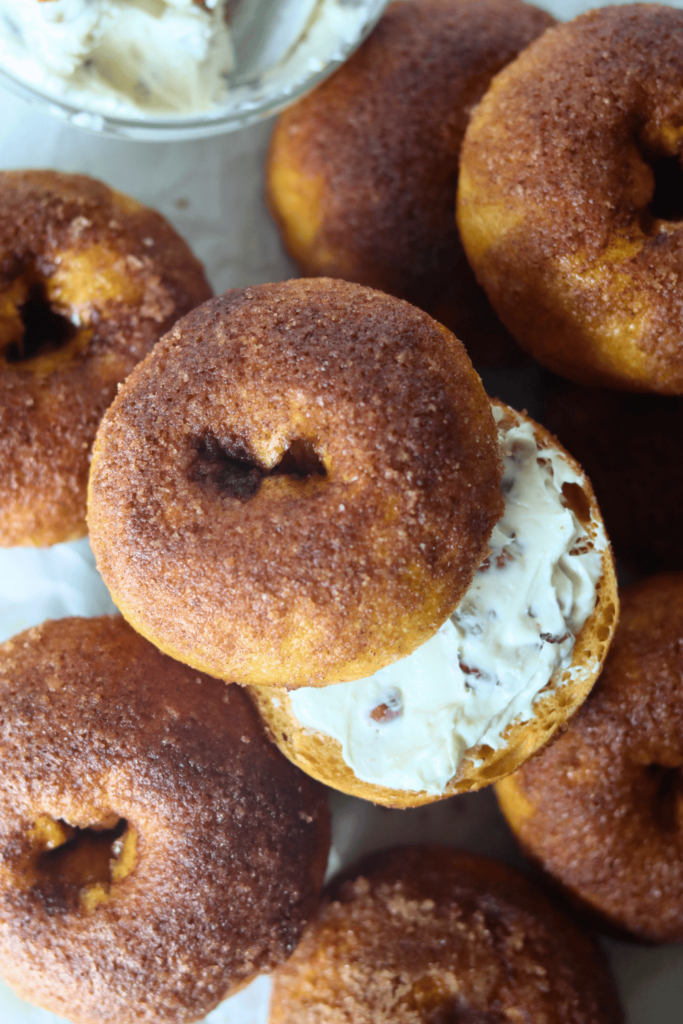
- Incredible Chewy Texture—Be forewarned, once you make homemade bagels, there’s no going back! From the classic chewy crust to the soft and airy inside, these sourdough bagels will ruin all other bagels due to their superior taste and texture. They have that authentic New York style bagel chew that you just can’t get from store-bought. For a fun twist on the classic version, you can also try my Sourdough Pumpkin Bagel recipe!
- Surprisingly Easy to Make—Better yet, this recipe is mostly hands-off! After a short kneading time and an easy shaping method, this recipe is the easiest way to enjoy delicious bagels at home.
- Endlessly Versatile—I love a plain sourdough bagel, but they are also the perfect canvas for all of your favorite flavor options. From sesame, cheese, garlic, jalapeño and cheddar, to everything bagel seasoning, you can have fun experimenting with different toppings. You can even use leftovers to make my Easy Sourdough Bagel Chips!
Ingredients & Substitutions
* To find precise measurements, scroll to the bottom of this post to find the recipe card*
- Active Sourdough Starter – An active and bubbly starter will give you the best rise for these chewy bagels.
- Water – Use room temperature, filtered water for consistent results.
- Bread Flour – You technically can use all-purpose flour for this recipe, but I highly suggest making it with bread flour, as it has a higher protein percentage. This allows the dough to rise at great lengths for a more chewy and enjoyable Sourdough Bagel.
- Sugar – I used white sugar for a touch of sweetness, but you can use alternate sugars like cane or coconut sugar.
- Salt – Any unrefined salt will do, but my favorite is Redmond’s unrefined salt for some extra minerals!
- Honey – Adding a little bit of honey to the boil bath gives your Sourdough Bagels the perfect golden brown, chewy crust once they are baked. This can be substituted with brown sugar or maple syrup as well.
Baking Time For Sourdough Bagels
|
Time |
Process |
|---|---|
|
8:00 PM |
Make and knead the dough. Cover the bowl and let rest for 1 hour. |
|
9:00 PM |
Knead bagel dough for 30 seconds, cover, and let rest overnight for 8-12 hours. |
|
7:00 AM |
Remove dough from bowl and cut into 8 equal pieces. Roll and shape them into small dough balls, poke holes in the middle, and stretch them to shape. Cover and let them rest for 20-60 mins until puffed up. |
|
8:00 AM |
Boil bagels for 30 seconds on each side. Dip into seasonings of choice. Bake for 20-25 minutes at 425 degrees. |
How to Make Sourdough Bagels
Make the Dough
- In a large bowl, add your active starter, warm water, and sugar. Mix until it looks like a milky liquid. Next, add the bread flour and salt to the dough. Mix until fully incorporated.
- Next, pull a small section of bagel dough above the rest, fold it over on top, and push into the dough with the heel of your hand. Repeat this motion while turning the bowl of dough clockwise for 5-6 minutes.
- Cover the dough and let it it rest for 60 minutes.
Stretch and Fold
- After 1 hour of resting, repeat the same “stretch, fold and push” routine with the heel of your hand for 30 seconds.
- Cover the bowl with a reusable shower cap and place dough in a warm place to double in size.

Shape
- Once the dough has at least doubled in size, gently remove the sourdough bagel dough from the bowl and place it in your work surface – no flour dusting needed.

- Stretch and shape the dough into a large rectangle, about 1/2 of an inch high. With a bench scraper or a sharp knife, cut the dough into 8 equal triangle pieces ( about 115g each).

- To shape, grab one piece of dough and pull the corners of the triangles towards the center. Then roll the dough until formed into a smooth ball. Repeat with the remaining pieces of dough.

- One at a time, use your thumb to punch a hole in the middle of the dough ball. Stretch the dough ball with both thumbs, about 2 inches.
Second Rise
- Place your shaped bagels on a parchment-lined baking sheet and cover them fully with a damp tea towel so they don’t dry out.
- Let them rest until puffed up in a warm place, about 20-60 minutes.
Boil Bath
- Fill a large pot of water. Add honey and whisk until well mixed. Bring the water to a boil.
- Carefully drop 2-3 bagels into the boiling water and boil for 30 seconds on each side.
- Using a slotted spoon, scoop the bagels and place them on the cooling rack. Repeat until all bagels have been boiled.
Toppings
- After all the bagels have been boiled, you can sprinkle some of your toppings on a small plate and dip the top of the bagel. The bagels will be slightly sticky to the touch, which will help the toppings stick.
Bonus tip – If you are topping your bagels with cheese, dip the bottom side as well. This will create a crunch bite on the bottom – so good!
Bake
- Bake the Sourdough Bagels for 20-25 minutes at 425 degrees F, or until golden brown.
- Remove the bagels from the oven and allow them to cool on a wire rack.
- Enjoy warm with your favorite toppings!
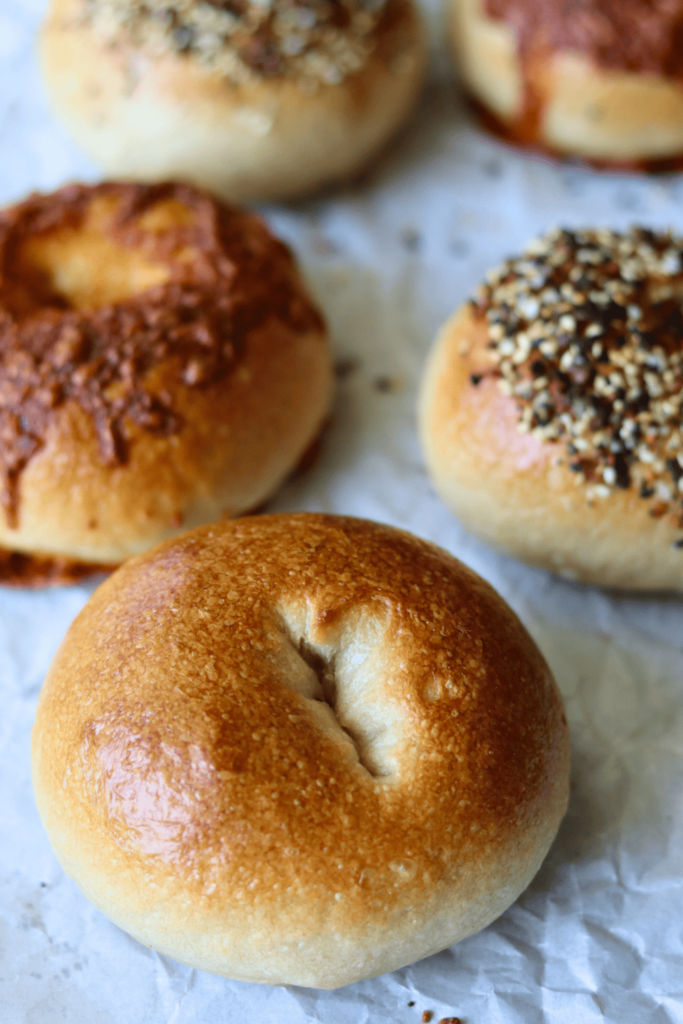
Topping Suggestions:
- Everything seasoning – a mixture of white and black sesame seeds, onion and garlic flacks, sea salt
- Poppy seeds
- Sesame Seeds
- Garlic flakes
- Onion flakes
- Cheese – for example, shredded Asiago cheese – so yummy! Put on top AND bottom for a crunch bite.
- Cinnamon Crunch – a mixture of brown, white, and course sparkling sugar, cinnamon, flour, vanilla, and butter
Other Ways to Eat Sourdough Bagels:
Looking for a few creative ways to enjoy your Sourdough Bagels? How about giving one of these a try?
- Bagel Chips: Normally we don’t have many bagels that last past 2 days in our house, but if you do, my easy sourdough bagel chip recipe only takes 10 minutes to make and the crunch is addicting.
- Egg Sandwich: Over-medium eggs, cast iron skillet bacon, avocado spread, and a little salt and pepper on a homemade sourdough bagel… now that’s a way to start your morning!
- Burger Buns: You’ve got to try this! Will beat store-bought buns any day! I like to toast mine in the skillet I cooked my burgers in to soak up those flavorful juices – killer.
- Adult “Bagel Bites”: Spoon on some marinara, sprinkle with cheese and your favorite toppings, and then bake it in the oven. Brings back all those childhood memories with this delicious rendition.
McKenna’s Helpful Tips
- Use an active, bubbly starter: For the best rise and that perfect chewy texture, make sure your sourdough starter is at its peak activity before mixing your dough. If you’re short on time and only have discard, try my Easy Sourdough Discard Bagels instead.
- Stick with bread flour: While you technically can use all-purpose flour, I highly suggest using bread flour. The higher protein content is what gives these bagels their signature chew. I use the same rule for my Homemade Sourdough Cinnamon Raisin Bagels.
- Don’t skip the honey in the boil bath: Adding a little bit of honey to the boiling water is the secret to getting that beautiful golden brown, chewy crust once they are baked. You can substitute brown sugar or maple syrup if needed.
- Weigh your dough pieces: For perfectly uniform bagels that bake evenly, use a kitchen scale to weigh your 8 pieces of dough (they should be about 115g each).
- Dip both sides in toppings: If you are topping your bagels with cheese or everything bagel seasoning, dip the bottom side as well as the top. This creates an amazing crunchy bite on the bottom!
How to Store
If you are like my family, these homemade sourdough bagels won’t make it to see the next day! They are that good! But if you do find yourself with a few bagels left over, they are best stored in a plastic bag at room temperature for 2-3 days.
These bagels also freeze really well! Place in a gallon-sized plastic bag either sliced or whole for up to 3 months.
To reheat, warm the bagel up for 10 seconds in the microwave or leave on the counter to thaw until room temperature. Slice in half and toast in the toaster.

Sourdough Bagels FAQs
The biggest difference between homemade sourdough bagels and regular bagels from the store is the leaven, or what helps to make the bagels rise. These Sourdough Bagels use a sourdough starter (a wild yeast) to get that airy and chewy bite, whereas, unless labeled as sourdough, other bagels use commercial yeast.
It may seem like a hassle to bring a whole pot of water to boil for such a short cooking time, but trust me, you won’t want to skip this step! Boiling the bagels helps to achieve that chewy exterior we love so much. Believe me, once you bite into these homemade sourdough bagels, it will all be worth it. I use this same boiling technique for my Sourdough Blueberry Bagels too!
Some loss is normal, but those steps should help it stick much better! Try adding the seasoning immediately after boiling while the bagels are still very wet, or lightly brush the tops with egg wash before adding the seasoning to help it adhere better during baking.
Absolutely! Add all of the ingredients into the bowl of a stand mixer and knead on low for 5-6 minutes or until the dough is smooth and tacky to the touch. I do the same method for my Sourdough Discard Bagels recipe!
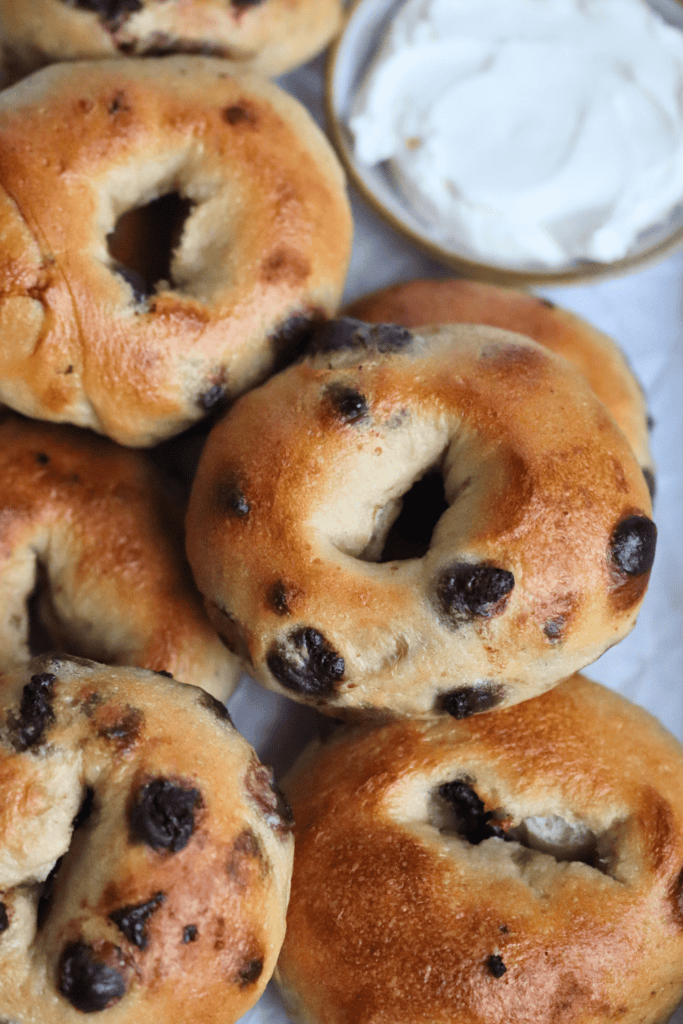
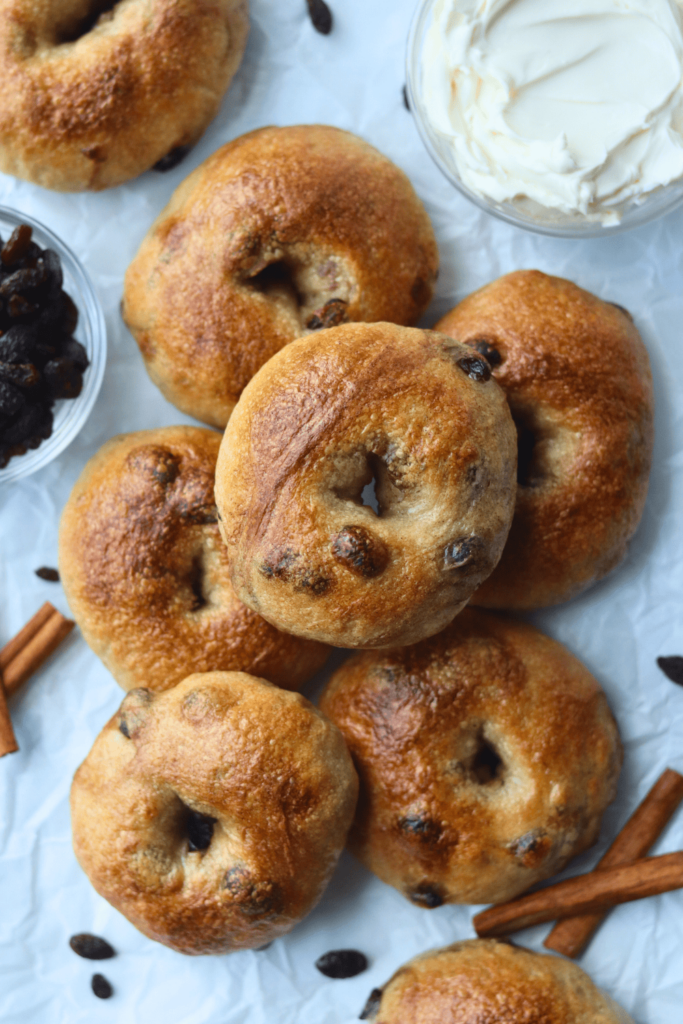
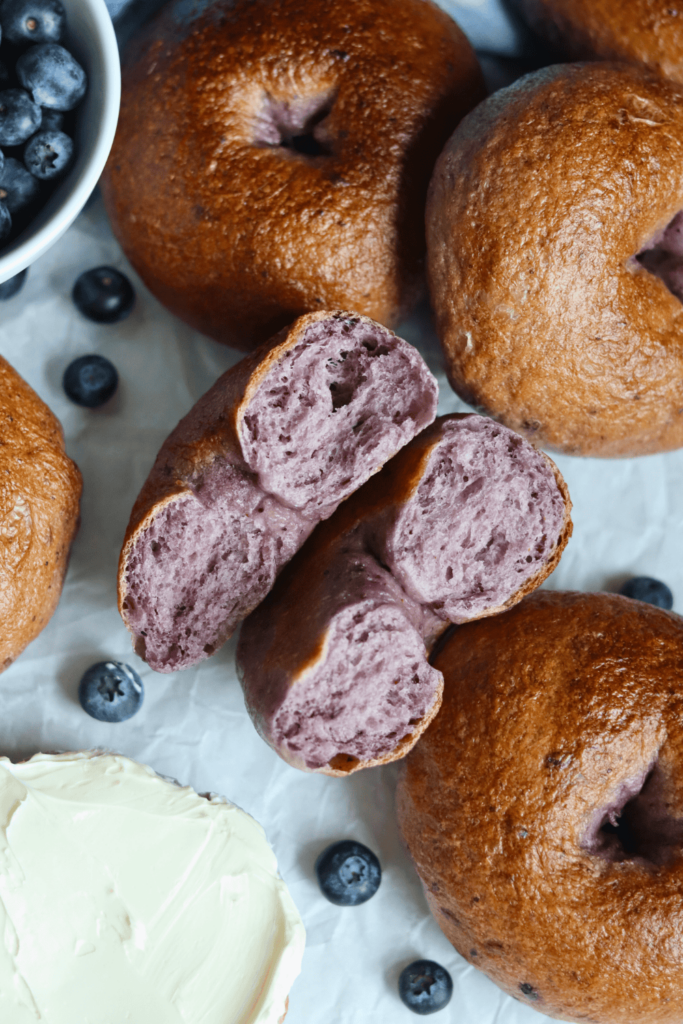
If you tried this Sourdough Bagels recipe or any other recipe on my blog, please leave a 🌟 star rating and let me know how it went in the📝 comments below. Thanks for visiting!
FULL RECIPE TUTORIAL
Sourdough Bagels Recipe
Enter your email below, and we’ll send it straight to your inbox! Plus, you’ll get my newest sourdough recipes and best tips every week!
Equipment
- Large Pot
Ingredients
- 150 grams active sourdough starter 3/4 cup
- 250 grams warm water 1 cup + 1 Tablespoon
- 500 grams bread flour 3 1/2 cups
- 40 grams sugar 3 Tablepoons
- 12 grams salt 2 teaspoons
- 20 grams honey for the boil bath
Instructions
*Find a Sample Baking Schedule below*
MAKE THE DOUGH :
- In a straight-edge bowl, add active starter, warm water, and sugar. Mix by hand (or use a Danish dough whisk (one of my favorite sourdough tools!) until it it looks like a milky liquid.I love using this straight-edge bowl so I can clearly see when the dough has doubled in size.150 grams active sourdough starter, 250 grams warm water, 40 grams sugar
- Next, add the bread flour and salt to the wet ingredients. Mix until fully incorporated.500 grams bread flour, 12 grams salt
- Next is a small labor of love, but trust me when I say, it is all worth it. Knead the dough for 5-6 minutes. I’ve tried using a stand mixer, but my bagels never taste as soft and chewy as when I do it by hand. So it is still my preferred method. To do so, pull a small section of bagel dough above the rest, fold it over on top, and push into the dough with the heel of your hand. Repeat this motion while turning the bowl of dough clockwise for 5-6 minutes.As you knead, you will notice the dough will become pretty stiff and a little bumpy looking – this will be a stiff dough, so totally normal.
- Cover the dough with the plastic top and let it it rest for 60 minutes.
STRETCH AND FOLD :
- After one hour of resting, repeat the same “stretch, fold and push” routine with the heel of your hand for 30 seconds.You’ll notice the dough is a little less stiff and now the dough ball is smoother. Cover the bowl again and place dough in a warm place to rise.
BULK RISE :
- Leave the dough to double in size. In my 69 degree kitchen, this typically takes anywhere from 8-12 hours. If your kitchen is warmer, it will be less time and the opposite is true if it is colder.
SHAPE :
- Once the dough has doubled in size, gently remove the sourdough bagel dough from the bowl and place it in your work surface – no flour dusting needed.
- Stretch and shape the dough into a large rectangle, about 1/2 of an inch high. Now, with a bench scraper or a sharp knife, cut the dough into 8 equal triangle pieces. (I cut it like I would a pizza.)You can weigh the pieces of dough on a kitchen scale to verify that they are all equal ( about 115g), otherwise, just eyeball it and call it a day!
- To shape, grab one piece of dough and pull the corners of the triangles towards the center. Then roll the dough until formed into a smooth ball. Repeat with the remaining pieces of dough.
- One at a time, use your thumb to punch a hole in the middle of the dough ball. Stretch the dough ball with both thumbs, about 2 inches apart. The dough will shrink back a bit after, but that’s okay.
SECOND RISE :
- Place your shaped bagels on a parchment-lined baking sheet and cover with a plastic cover or plastic wrap so the dough doesn't dry out.
- Let them rest until puffed up in a warm place, about 20-60 minutes.
- Not ready to bake? Cover the shaped bagels and place them in the fridge for up to 24 hours. Pull them out of the fridge when ready to bake, and continue with the recipe as normal. The second rise will take longer since the dough will be cold from being in the fridge.
BOIL BATH :
- While your bagels are rising, preheat your oven to 425 degrees F.
- Fill a large pot of water, about 10 cups. Add the honey and whisk until well mixed. Bring the water to a boil.20 grams honey
- Once the bagels have risen, it’s time to set up your station. I like to place a kitchen towel on the counter and a cooling rack on top to help for minimal cleanup later.
- Carefully drop 2-3 bagels into the boiling water and boil for 30 seconds on each side.
- Using a slotted spoon, scoop the bagels and place them on the cooling rack. Repeat until all bagels have been boiled.
TOPPINGS :
- After all the bagels have been boiled, it’s time to talk toppings! To be honest, eating these homemade sourdough bagels plain is heavenly, but adding toppings can bring some fun creativity to your bagels.
- To do so, sprinkle some of your toppings on a small plate and dip the top of the bagel. The bagels will be slightly sticky to the touch, which will help the toppings to stick. Place the bagels on a parchment-paper lined baking sheet.
- *Bonus tip – If you are topping your bagels with cheese, dip the bottom side as well. This will create a crunchy bite on the bottom – so good!
BAKE :
- Bake the Sourdough Bagels for 20-25 minutes, or until golden brown with an internal temperature of 200 – 210 degrees F.
- Remove the bagels from the oven and allow them to cool on a wire rack.
- Once they are cool enough to handle, I highly recommend slicing into one while it is still warm and spreading a slab of butter on top. That chewy, buttery bite will be out of this world, I promise. Enjoy!

My tried and true sourdough bagels recipe. It’s so easy to follow and this one never fails me. I’ve made it six times already!! The only suggestion I have is to make a blueberry bagel recipe if you haven’t already, if you have then I must go back to your page haha. Thank you so much. I love your page and use your recipes religiously<3
Wow, six times!? That makes me so happy to hear! Thank you for your sweet words and for baking along with me. Yes, I’ve got you! You can find my sourdough blueberry bagels recipe here – https://simplicityandastarter.com/sourdough-blueberry-bagels/. Hope you love it just as much!
These were amazing!! This was my first time making bagles, but the instructions were clear and easy to follow. I made some with everything but th bagel seasoning and some with parmesan (I didn’t have asiago). Thank you for sharing this recipe!
I’m so glad you loved them!! Parmesan sounds like a perfect swap for the asiago—love that you tried both versions. Thanks so much for baking along with me!
Hi, this recipe was very easy to follow. My dough turned out perfectly (not sticky when shaping). I did the bulk fermentation on the counter (at about 85*F) then shaped and put in the fridge to boil and bake this morning. Everything was going well until I went to boil them; my bagels sank right to the bottom on the pot and never popped back up 😔. I boiled all of them anyways, they’re baking right now. Would you have any idea why they wouldn’t have floated on the surface like they usually do? I’ve never done sourdough bagels before, only discard with yeast. maybe its something that sourdough “just does”? Thank you!
Hi Jesse! Thank you so much for trying my recipe. Great question! There are a couple of reasons why bagels might sink instead of floating during the boil. The most common cause is that they were slightly under-proofed and just needed more time to rise before boiling. Another possible reason is that the dough was cold from the fridge — cold dough is denser and less buoyant, so it often sinks at first (sometimes it will float back up after a minute, sometimes not). For best results, you can let the bagels rest at room temperature a short while after taking them out of the fridge to warm up and puff a bit before boiling.Hope you give this recipe another try!
Wow! Just completed my first batch of bagels and sure were amazing! This recipe is easy and clear to follow, thank you!! I ended using all purpose flour, but next will do bread flour or whole wheat flour.
So thrilled to hear that you found this recipe to be easy to follow and delicious! We seriously can’t get enough of them around here. Thank you for sharing!
I tried refrigerating the shaped bagels before rising, boiling and baking but when I did the rest of the steps the bagels are instantly hard after toasting even when microwaving them in a wet paper towel to get moisture back in them. What did I do wrong?
Sorry to hear that, Perryn! Chilling shaped bagels overnight can sometimes cause them to dry out if they’re not well-covered, or if they’re slightly over-proofed before refrigerating. This can lead to a tougher crust, especially after toasting. Next time, try covering them tightly so no air gets in, and make sure they’re slightly under-proofed before going into the fridge — that way they’ll finish rising in the morning. Also, boiling in water that’s too hot for too long can create a thicker crust, so aim for about 30 seconds per side at a gentle boil.
I have never had success with my sourdough bagels until now! In the past, they tasted great, but they never rose properly. These were so easy to make, rose perfectly, and were delicious! Thank you!
So thrilled you loved this recipe, Karin! We seriously can’t get enough of them. Thank you so much for taking to time to share!
If I’m putting the shaped bagels in the fridge do I let them rise for an hour after shaping and then put them in the fridge or do I put them in the fridge right after shaping them?
Cover them and place them in the fridge right after shaping! Continue with the second rise the following day.
My first round of kneeling the dough, it was extremely sticky and sticking to my hands. Is that normal?
Hi Kylea! This is a low-hydration dough, so it shouldn’t be overly sticky. I highly suggest using a kitchen scale for the most accurate measurement. However, if you live somewhere that is very humid, this can affect your dough and cause it to be sticky. In this case, I would add a touch of flour until it is no longer sticking to your hands. Hope they still baked up delicious for you!
I read all the comments below and I agree these bagels are delicious. I’ve made bagels for many years. I only boiled this recipe 30 seconds on each side and I still feel like the outer crust is super tough. I did the shaping and then put them in the refrigerator overnight and baked them in the morning once they came to room temperature and puffed up a little. I might try turning the oven temp down a teense? The interior is great.
Thank you so much for your kind words and for sharing your experience! I’m so glad you enjoyed the flavor and interior texture. If the crust felt a little too tough, lowering the oven temp slightly (or reducing the bake time just a bit) could definitely help. You might also try a shorter boil next time—closer to 15–20 seconds per side. I love that you’re experimenting and making it your own!
I’ve been making sourdough for about 2 months now and this is my second time making the recipe. It is so easy to follow, specific and they turn out great every time! I didn’t add toppings this time and they are still amazing.
This makes me so happy to hear—thank you! I’m so glad the recipe has been easy to follow and that you’re enjoying the bagels. Honestly, they’re just as good plain, aren’t they? Keep up the great baking!
Any tips for getting the toppings to stick better? I have made these with everything bagel seasoning and when I go to slice into them I feel like a lot of the seasoning falls off
Great question! A couple tips that help toppings stick better: after boiling, while the bagels are still slightly wet, press the top side gently into a shallow dish of your seasoning rather than sprinkling it on. You can also lightly brush the tops with an egg wash before adding toppings for extra sticking power. Hope that helps—and happy bagel baking!
I live in southwest NM. The environment is hot. I doubled the recipe. Left it overnight and this morning I checked it. It was sticky. It really didn’t rise as much as I hoped. I stretched with wet hands. Still sticky. Placed on counter still sticky. Stretched and rolled dough. Let it rest but still sticky. I added flour and divided dough to equal portions and rolled to ball. Should I let it rest longer before boiling. Did I need to have proofed and rested longer? How do I fix this or not before boiling?
Thanks so much for sharing your process—and you’re not alone! In hot climates like Southwest NM, dough can sometimes overproof overnight, especially when doubled. That can break down the gluten and make the dough feel sticky, slack, and hard to shape, just like you described.
Here are a few tips that might help:
Next time, try reducing the fermentation time or refrigerating the dough earlier to slow things down—especially with a double batch!
If your dough feels really weak and sticky, a gentle rest after shaping into balls (30–60 minutes at room temp) can help them tighten up a bit before boiling.
If the dough isn’t holding its shape well, you can also try a short cold proof in the fridge before boiling—they’ll be easier to handle and hold their structure better.
It sounds like you did great troubleshooting on the fly by adding a bit of flour and dividing! Let me know how they turned out after boiling—I’m rooting for your bagels!
I just made these for the first time and they are fantastic!! Great recipe with easy to follow directions. I’m already planning my next batch!
So thrilled to hear you love this recipe! Aren’t they so delicious? Thank you so much for taking the time to share!
Oh my, I am so hoping to get some right 😢 I have made (well failed) making these! I can make so many other Sour dough! Everything looks good until, until the last rise. Then when I try to shape the dough it’s like soup! Loose and runny! I have tried three times this week! 😢
Oh no—I’m so sorry to hear that, but I promise you’re not alone! I’m guessing the dough may be overproofing, especially if it’s turning loose and runny by the final rise. When that happens, the gluten structure starts to break down, and shaping becomes really tricky (or impossible).
Try shortening the bulk fermentation time—you want the dough to just double, not go too far beyond that. Warmer temps can make it rise much faster, so keep an eye on the dough, not the clock!
Also, I highly recommend watching my step-by-step YouTube video for these bagels if you haven’t already—it walks through the process visually, which can be really helpful: https://youtu.be/3bbExJAOAAc
You’ve got this! I know that first successful batch will feel so rewarding—and I’m cheering you on every step of the way! Let me know how your next try goes!
Hi! I am about to make these bagels for the 5th or 6th time. I am so in love with this recipe. My daughter forwarded it to me. I share the bagels with my neighbors and everyone loves them & can’t wait for the next batch. Now I just read about Sourdough Pumpkin Bagels? I’ll try those in the fall. Thank you.
This absolutely made my day—thank you so much! I’m so happy to hear the recipe has become a favorite in your home (and your neighborhood too!). What a joy that your daughter shared it with you—I love how sourdough brings people together like that.
And yes, the Sourdough Pumpkin Bagels are a must-try in the fall—so cozy and full of warm spice. I can’t wait to hear what you think when you make them! Thanks again for sharing the love (and the bagels)