

Sourdough Discard English Muffins (Same Day or Overnight)
This post may contain affiliate links. Please read our disclosure policy.
If you love my original 100% sourdough English muffins but don’t always have the time to wait for a long fermentation, this recipe is for you. These sourdough discard English muffins are ready in about 2 hours, made entirely on the stovetop, and are one of the easiest ways to turn extra discard into something truly special. No oven, no complicated steps—just mix the dough, cut it into discs, and cook.
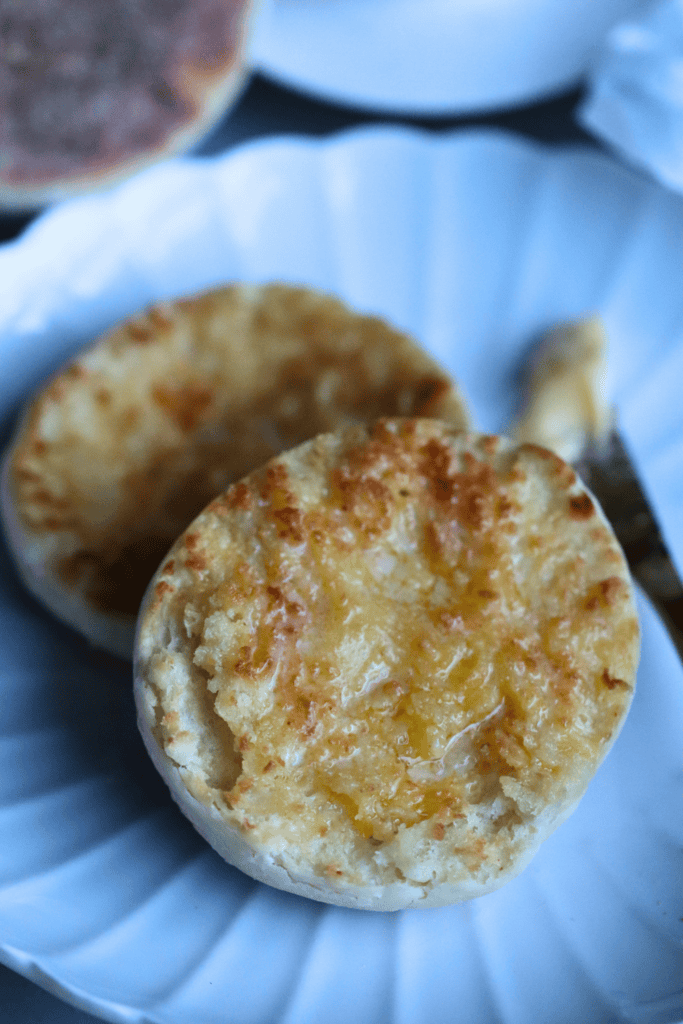
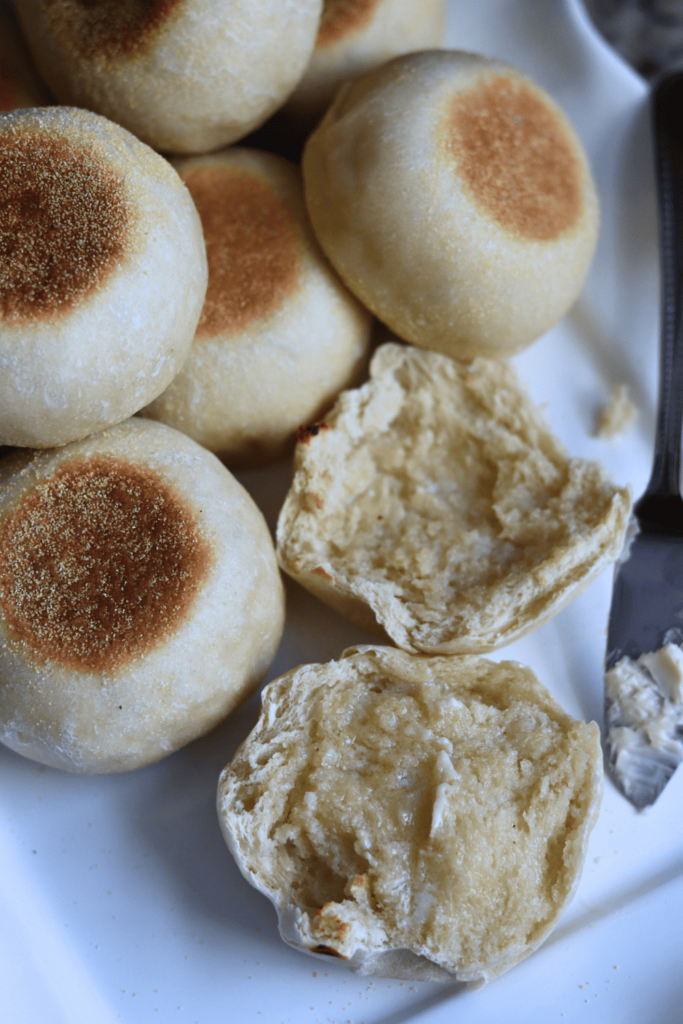
They cook up light and airy with all those classic nooks and crannies, perfect for soaking up melty butter, honey, or your favorite jam. I especially love keeping a batch in the freezer so homemade English muffins are always within reach for quick breakfasts or snacks.

Quick Look: Sourdough Discard English Muffins
- Prep Time: 15 minutes
- Rise Time: 1 hour 30 minutes
- Cook Time: 24 minutes
- Total Time: 2 hours 9 minutes
- Servings: 12 muffins
- Calories: ~208 kcal per serving (based on nutrition panel)
- Cook Method: Stovetop, skillet
- Flavor Profile: Soft, chewy, and slightly tangy with a classic cornmeal crust and plenty of nooks and crannies. Perfect toasted with butter or jam for breakfast!
- Difficulty: Easy — Simple to mix and shape, ready in just over 2 hours, and easy to make ahead overnight!
SUMMARIZE & SAVE THIS CONTENT ON
Why You’ll Love This Sourdough Discard English Muffins Recipe
- Soft, Tender, and Full of Nooks and Crannies: The combination of all-purpose flour, warm milk, and honey keeps these homemade English muffins light and pillowy without being dense or gummy. Every muffin has that classic fork-split texture that soaks up butter beautifully. If you enjoy this soft, chewy texture, you will also love my Sourdough Popovers for a similarly airy interior.
- Easy One-Bowl Dough, No Oven Required: Everything comes together in a single large bowl. You stir the sourdough discard with the wet ingredients, add the flour and salt until a shaggy dough forms, and let it rise. Then you shape, rest, and cook them in a skillet over medium-low heat. No stand mixer, no oven, no complicated folding. This simple approach is similar to my Easy Sourdough Discard Bagels, which also keeps things minimal.
- Flexible Same-Day or Overnight Schedule: You can let the dough rise at room temperature for about 60 to 90 minutes for a same-day bake, or cover it with plastic wrap and refrigerate overnight for a slower bulk fermentation. Either way, the second rise after shaping only takes 20 to 30 minutes, so you can have fresh sourdough English muffins on the table without waiting around all day. If you’ve got a little more time, give my Best Sourdough Bagels a try!
Ingredients & Substitutions
* To find precise measurements, scroll to the bottom of this post to find the recipe card*
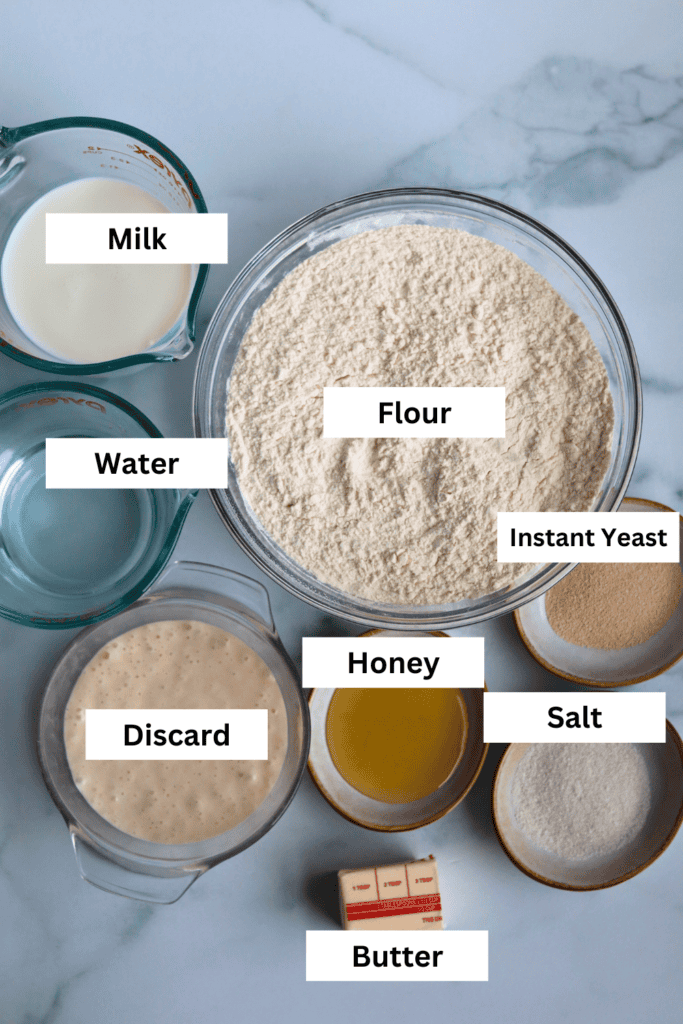
- Sourdough Discard – I used fresh, room temperature sourdough discard that’s no more than 1-2 days old. You can use older discard, but it will bring a tangier flavor to the English muffins. If using discard straight from the fridge, it’ll slow down the rise time. By the way, you can swap in the same amount of active sourdough starter (grams).
- Instant yeast – I used instant yeast for this recipe, not active dry yeast. Active dry yeast needs to be dissolved in liquid to activate and takes longer to rise dough. Instant yeast, by contrast, can be added directly to the dry ingredients and works much faster.
- Flour – Many sourdough recipes call for bread flour for it’s higher protein content, but this English muffin recipe calls for all-purpose flour. If you use bread flour, the muffins will become too dense and chewy, while AP flour keeps them tender and soft.
- Honey – For a touch of sweetness, I added honey to the dough. This can be substituted with 2 tablespoons of sugar.
- Milk – Milk makes these English muffins cloud-like by adding moisture to the dough. I used whole milk, but oat milk, almond milk, soy milk, or coconut milk work well too.
- Butter, cubed – adds richness, tenderness, and flavor to the muffins. Melted slightly in the warm liquids.
- Salt – Enhances flavor and strengthens the gluten structure in the dough. You can use kosher salt or whatever salt you have on hand. I prefer unrefined Redmond salt for the extra minerals.
- Cornmeal – dusts the baking sheet so muffins don’t stick and gives that classic English muffin texture on the bottom.
Same-Day Baking Schedule
|
Time |
Process |
|---|---|
|
6:00 AM |
Mix dough |
|
7:30 AM |
Remove the dough from the bowl and shape |
|
8:00 AM |
Cook in the pan |
2-Day Baking Schedule
|
Time |
Process |
|---|---|
|
DAY 1 |
|
|
7:00 PM |
Mix the dough |
|
8:30 PM |
Cover and place the dough in the fridge |
|
DAY 2 |
|
|
6: 00 AM |
Remove the dough from the fridge and shape |
|
8:00 PM |
Cook in the pan |
How to Make Sourdough Discard English Muffins
- In a liquid measuring cup, combine milk, water, and cubed butter. Heat until the butter just melts and the liquid is warm. Cool slightly before adding to the dough (no hotter than 110°F, or it can kill the yeast).
- In a large bowl, mix sourdough discard and honey. Slowly pour in the warm milk mixture and stir with a Danish dough whisk until combined.
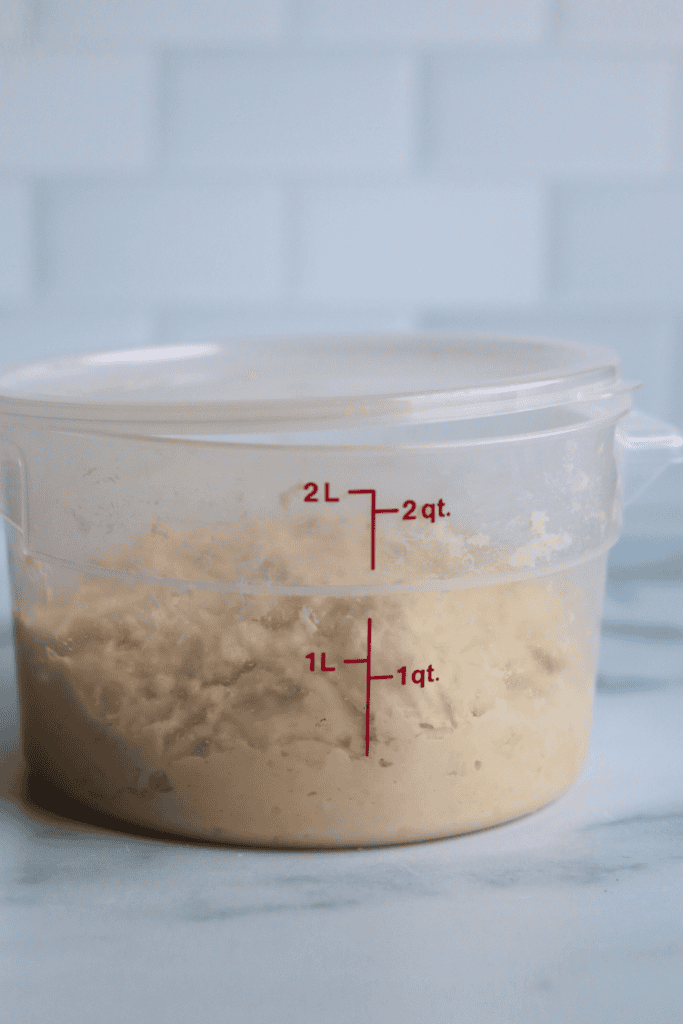
- Add the flour and salt to the wet ingredients and stir until a shaggy dough forms. Scrape the sides of the bowl to incorporate all the flour, then use your hands to finish bringing the dough together. Cover with a damp towel, plastic wrap, or a reusable shower cap.
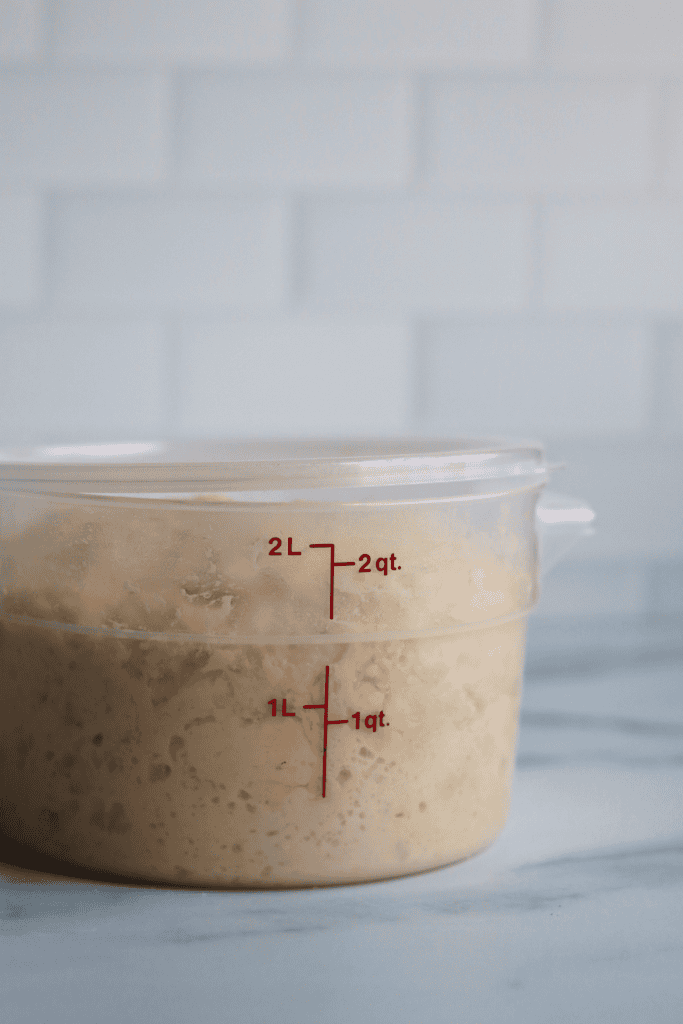
- First rise: Cover the bowl and leave in a warm place until the dough doubles in size (about 60–90 minutes at 70°F). Adjust time if your kitchen is warmer or cooler. You can also cover and chill in the fridge overnight instead of shaping immediately.
- Remove the dough from the fridge or bowl and place it on a lightly floured work surface.
- Prepare a baking sheet by lining it with parchment paper and generously sprinkling with cornmeal.
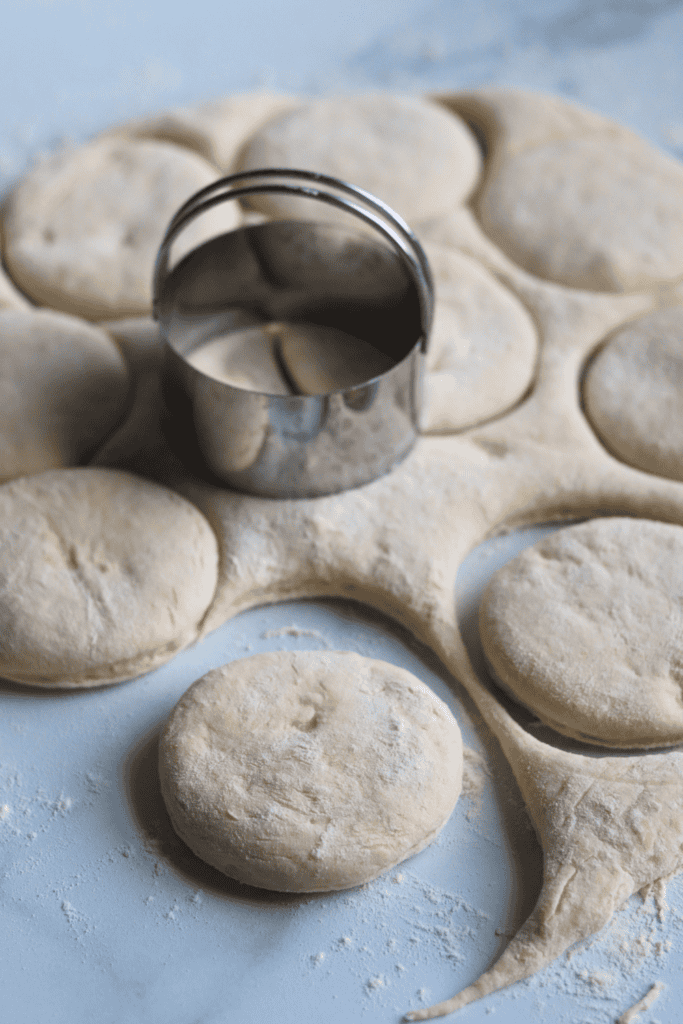
- Pat the dough into a rectangle about ½-inch thick. Use a 3-inch English muffin ring, cookie cutter, biscuit cutter, or a rimmed glass to cut 10–12 rounds. Place them on the prepared sheet. Reroll scraps as needed.
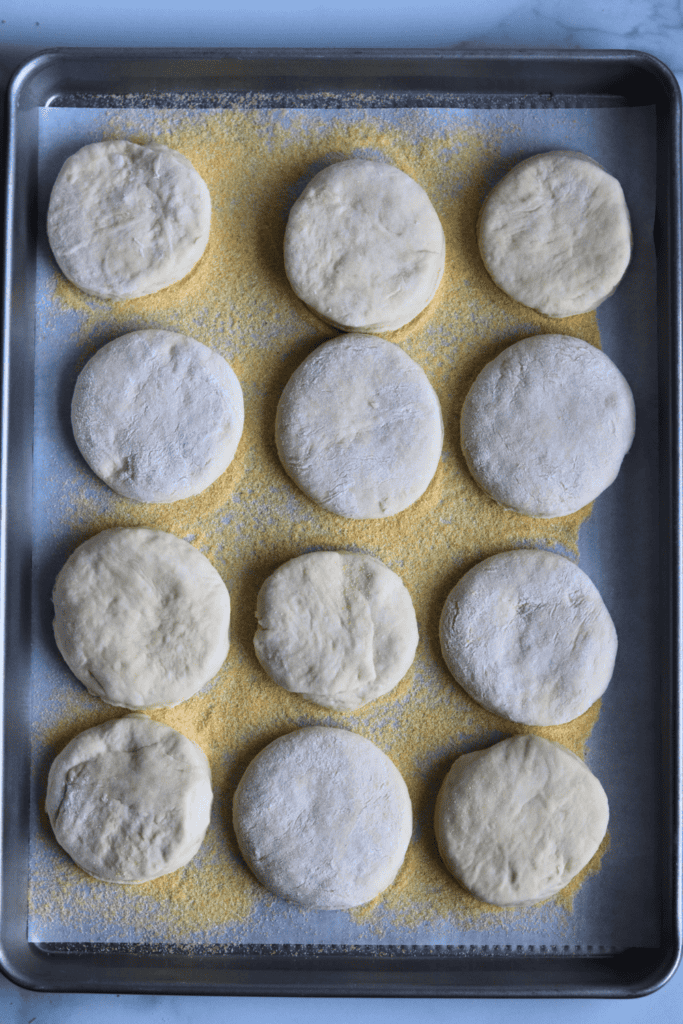
- Cover the shaped muffins with a plastic cover that fits your baking sheet and let them rise until puffy (about 20–30 minutes at room temp, or 1–2 hours if cold).
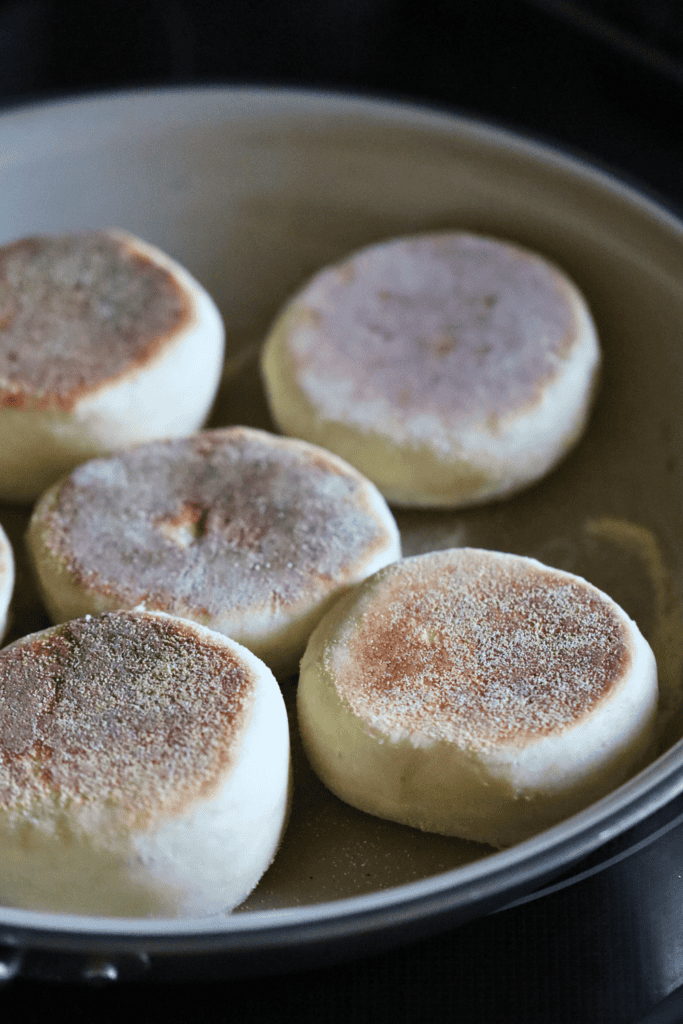
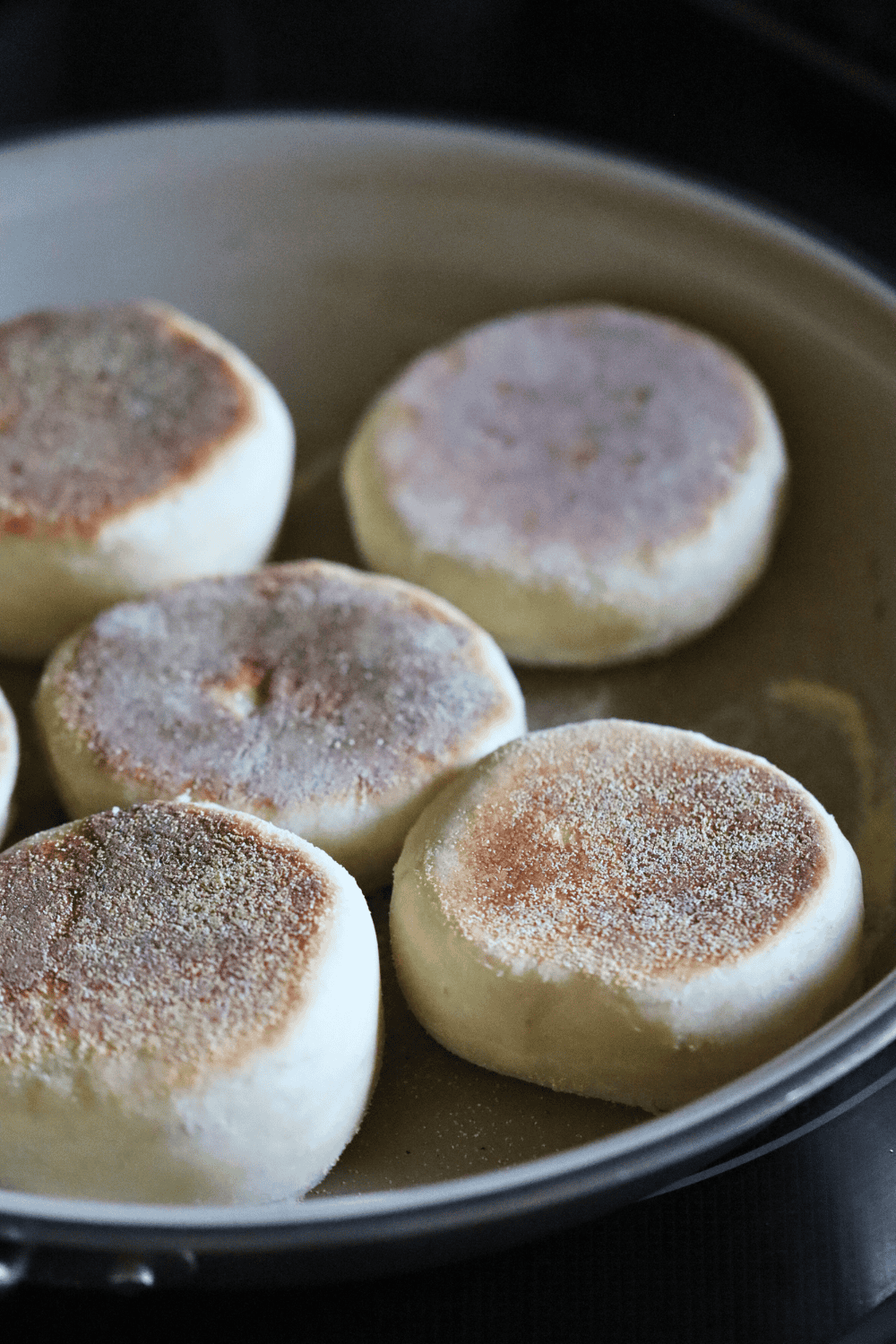
- Preheat a large skillet over medium-low heat. Cook 6 muffins at a time for 12–14 minutes per side, checking the bottoms halfway for even browning.
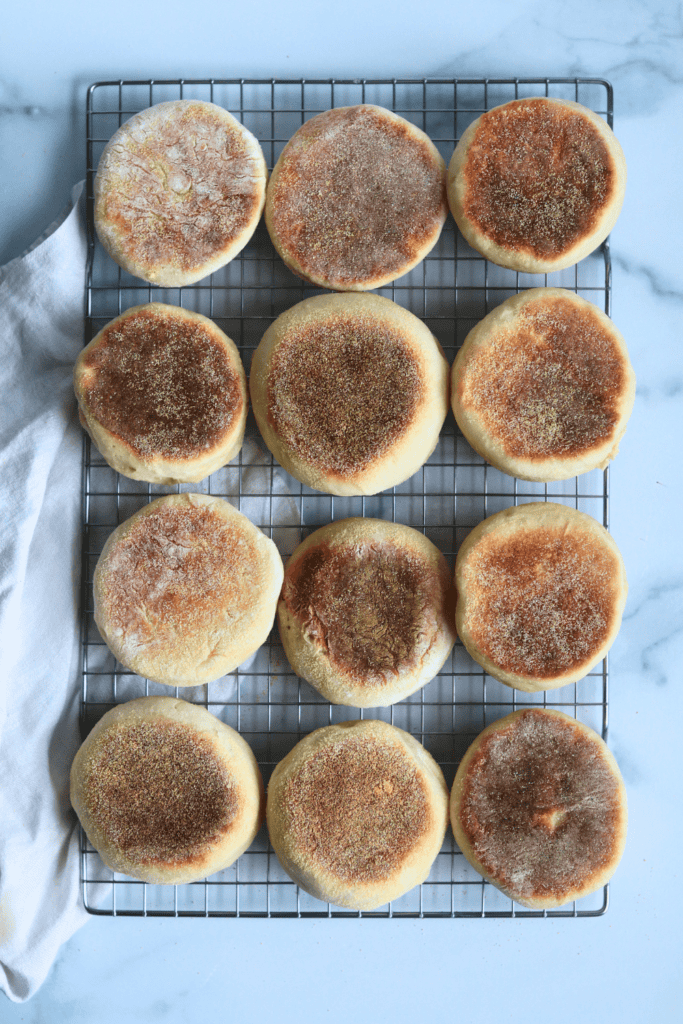
- The muffins are done when the internal temperature reaches at least 190°F and the sides spring back when pressed lightly.
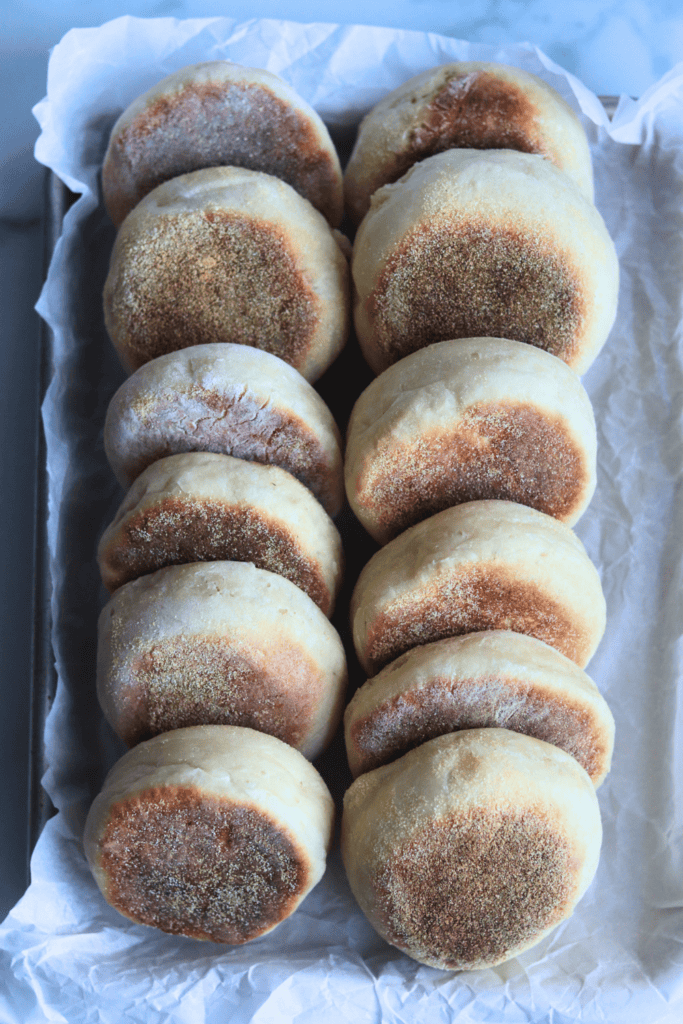
- Transfer the cooked muffins to a wire rack to cool while cooking the remaining batch. Split, toast, and enjoy!
McKenna’s Helpful Tips
- Use a kitchen scale for the best results: Because flour compacts easily when measured with cups, using a scale ensures you get the right amount every time. Too little flour can make the dough excessively sticky and hard to shape, while too much will make the muffins dense. A scale takes the guesswork out of it completely.
- Cook low and slow for even browning: Keep your cast iron skillet or non-stick pan on medium-low heat and be patient. If your stove runs hot (especially propane or gas burners), you may need to reduce the cook time to about 6 to 8 minutes per side instead of 12 to 14. The muffins are done when the internal temperature reaches 190 F. For more stovetop sourdough recipes, check out my Sourdough Pancakes.
- Dust generously with cornmeal for that classic bottom texture: Cornmeal on the parchment paper and baking sheet prevents sticking and gives the muffins their signature look and slight crunch. Do not skip it. If you want to try another stovetop bread with a similar technique, my Soft & Fluffy Sourdough English Muffins use the same approach without commercial yeast.
- Freeze extras for quick breakfasts all week: Once cooled, wrap individual muffins and freeze for up to three months. Toast them straight from the freezer for breakfast sandwiches, Sourdough French Toast Casserole, or a quick eggs benedict. They hold up beautifully and taste just as good reheated.
How to Store
Keep cooked sourdough discard English muffins in an airtight container at room temperature for up to three days. For longer storage, wrap them individually and freeze for up to three months. To enjoy later, toast or warm them straight from the freezer until lightly browned. They hold up really well, so making a bigger batch ahead of time works perfectly.
Sourdoug Discard English Muffins FAQs
The 12 to 14 minutes per side is a guideline for a standard electric stovetop on medium-low heat. If you are using a propane stove or a gas burner that runs hotter, your muffins may be done in as little as 6 minutes per side. The key is cooking low and slow and checking the internal temperature, which should reach at least 190 F. Adjust the time based on your specific stove rather than relying solely on the clock.
The instant yeast gives the dough a reliable, faster rise so you can have homemade English muffins ready in about two hours. The sourdough discard is mainly for flavor and to reduce waste, not for leavening. If you prefer a version with no commercial yeast at all, check out my 100% Sourdough English Muffins recipe, which relies entirely on active sourdough starter for the rise.
This dough is meant to be a little sticky, but it should not be unmanageable. Most often, excessive stickiness comes down to flour measurement. Because flour compacts so easily, using cups instead of a kitchen scale can result in not enough flour in the dough. I always recommend weighing your ingredients for the best results. A light dusting of flour on your lightly floured work surface and hands should be enough to make the dough easy to shape. If it still feels too tacky, try adding flour a tablespoon at a time during shaping until it becomes workable.
No, you do not need special rings. A 3-inch biscuit cutter, cookie cutter, or even the rim of a drinking glass works perfectly to cut the dough into rounds. English muffin rings can help keep the shape uniform and neat, but the muffins will still cook evenly, puff nicely, and develop the right texture without them.
If the dough was chilled or your kitchen is on the cooler side, it may take longer for the shaped muffins to puff up. Give them extra time in a slightly warmer spot and they should rise nicely. The dough needs to feel puffy and slightly pillowy before you cook them. A little patience here makes a big difference in the final texture.


If you tried this Sourdough Discard English Muffins recipe or any other recipe on my blog, please leave a 🌟 star rating and let me know how it went in the📝 comments below. Thanks for visiting!
Sourdough Discard English Muffins Recipe
Enter your email below, and we’ll send it straight to your inbox! Plus, you’ll get my newest sourdough recipes and best tips every week!
Equipment
- medium skillet
Ingredients
- 240 grams milk 1 cup
- 120 grams water 1/2 cup
- 42 grams unsalted butter 3 Tablespoons
- 150 grams sourdough discard, room temperature 2/3 heaping cup
- 24 grams honey 1 Tablespoon
- 500 grams all-purpose flour 3 1/2 cups + 1 teaspoon
- 7 grams instant yeast 2 teaspoons
- 10 grams salt 1 1/2 teaspoons
- cornmeal for dusting
Instructions
Make the Dough:
- In a liquid measuring cup, add milk, water and cubed butter. Heat in the microwave until the butter is just melted and the liquid is warm. Cool slightly before adding to the dough.You don't want the liquid to be hotter than 110 degrees F, otherwise this can kill the instant yeast.240 grams milk, 120 grams water, 42 grams unsalted butter
- Add sourdough discard and honey to a straight-edge bowl. Slowly pour the warm milk mixture into the bowl and stir with a Danish dough whisk or your hand until combined.150 grams sourdough discard, room temperature, 24 grams honey
Bulk Rise:
- Next, add the flour, instant yeast and salt to the liquid and stir until a rough dough forms. Be sure to scrape the sides of the bowl for the extra flour. You will need to use your hands to incorporate the last bit of the flour into the dough. It will be sticky. Cover the dough with the plastic cover or plastic wrap and leave in a warm place to bulk ferment until doubled in size.In my 70 degree F kitchen, this took about 60-90 minutes. If your kitchen is warmer, it will take less time. If your kitchen is cooler, it will take more time.500 grams all-purpose flour, 10 grams salt, 7 grams instant yeast
- Once the first rise is complete, either cover the dough and place it in the fridge to chill overnight or continue on to shaping.
Shaping:
- The next morning, or when you are ready to shape, remove the dough from the fridge or the bowl and place it on a lightly floured surface. Let the dough rest for 10 minutes.
- In the meantime, prepare a cookie sheet by lining it with a piece of parchment paper and generously sprinkling it with cornmeal to prevent the dough from sticking.cornmeal for dusting
- Roll the dough with a floured rolling pin into a rectangle shape that is 1/2 inch thick. Using a 3-inch English muffin ring, cookie cutter, biscuit cutter, or a rimmed drinking glass, cut the dough into 10-12 rounds. Place them onto the prepared sheet pan. Sprinkle the tops of the English muffins with more cornmeal. Reroll the scrapes and cut the dough until all of the dough has been formed.
Second Rise:
- Once all of the Sourdough Discard English Muffins have been shaped, cover them with a plastic cover and let them rest until puffy.In my 70 degree F kitchen, this step took about 20-30 minutes when the dough was room temperature. When the dough was stored in the fridge overnight, this took about 1-2 hours. Again, if your kitchen is warmer, it will be faster. If your kitchen is cooler, it will be slower.
Cook:
- Warm a large skillet over medium-low heat. I usually cook 6 at a time since they do not spread very much when they are cooking.
- Cook on one side for 12-14 minutes, checking the bottoms halfway for even cooking. Flip to the other side and continue to cook for another 12-14 minutes or until the internal temperature reaches at least 190 degrees F.A great way to know when the muffins are done cooking is they should feel lightweight and when pressed gently, the sides spring back.
- Place the Sourdough Discard English Muffins on a wire rack to cool while you cook the second batch. Split in half with a fork when ready to serve and enjoy!
Notes
Refer to the 2 Sample Baking Schedules above
Ingredients & Substitutions
- Sourdough Discard – I used fresh, room temperature sourdough discard that’s no more than 1-2 days old. You can use older discard, but it will bring a tangier flavor to the English muffins. If using discard straight from the fridge, it’ll slow down the rise time. By the way, you can swap in the same amount of active sourdough starter (grams).
- Flour – So many sourdough recipes call for bread flour for it’s higher protein content, but this recipe calls for all-purpose. If you use bread flour, the English muffins will become too dense and chewy, while all-purpose flour keeps them tender and soft.
- Honey – For a touch of sweetness, I added honey to the dough. This can be substituted with 2 tablespoons of sugar.
- Milk – Milk makes these English Muffins cloud-like as it brings moisture to the dough. I used whole milk, but you can substitute with non-dairy options as well.
- Cornmeal: Cornmeal is used to dust the parchment-lined baking sheet before the second rise. It prevents sticking and gives the bottoms of the muffins their classic texture during skillet cooking.

These were absolutely delish! Never buying store bought again. Thank you for sharing McKenna!
I love hearing that! I’m so glad you enjoyed them, and thank you so much for trying the recipe and taking the time to leave such a sweet review!
My muffins became very wobbly after the second rise. They were very difficult to transfer from my baking sheet into the pan to cook. It was impossible to keep their round shape, but they still tasted good although not super pillowy in texture. Should I have added more flour? It was very hot in my kitchen today, could that have had an effect? Thanks
I’m glad they still tasted good! Yes, the heat in your kitchen could definitely have had an effect. Warmer temperatures speed up fermentation, so it’s possible they became a little overproofed during the second rise, which would make them extra soft and difficult to transfer. I wouldn’t recommend adding more flour. Instead, I’d try shortening the second rise a bit next time or popping the dough into the refrigerator for 15–20 minutes before transferring them if your kitchen is especially warm. That should make them much easier to handle while still keeping them nice and pillowy. I hope you give this recipe another try!