

Easy Sourdough Masala Chai Spiced Tea Bread Recipe
This post may contain affiliate links. Please read our disclosure policy.
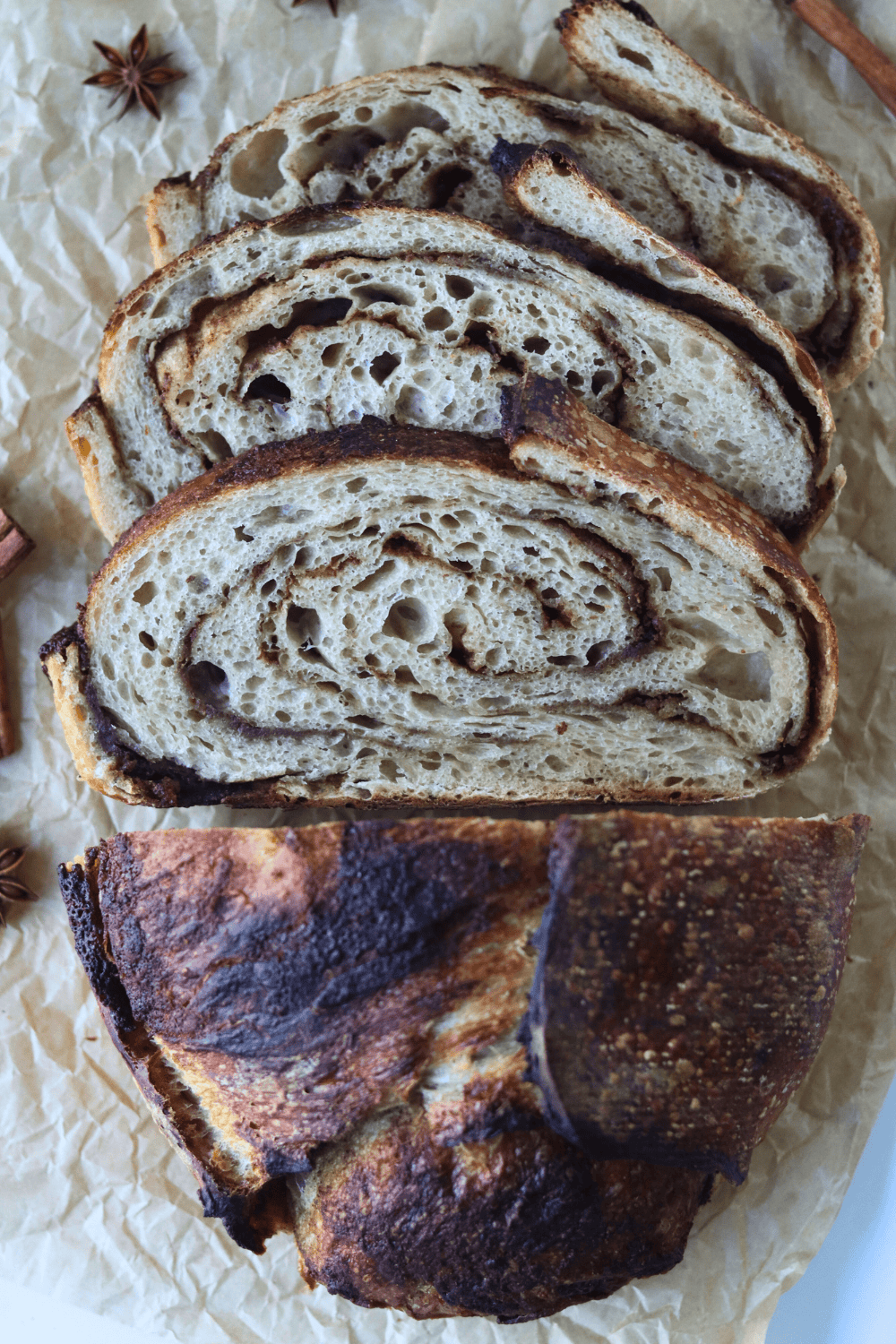
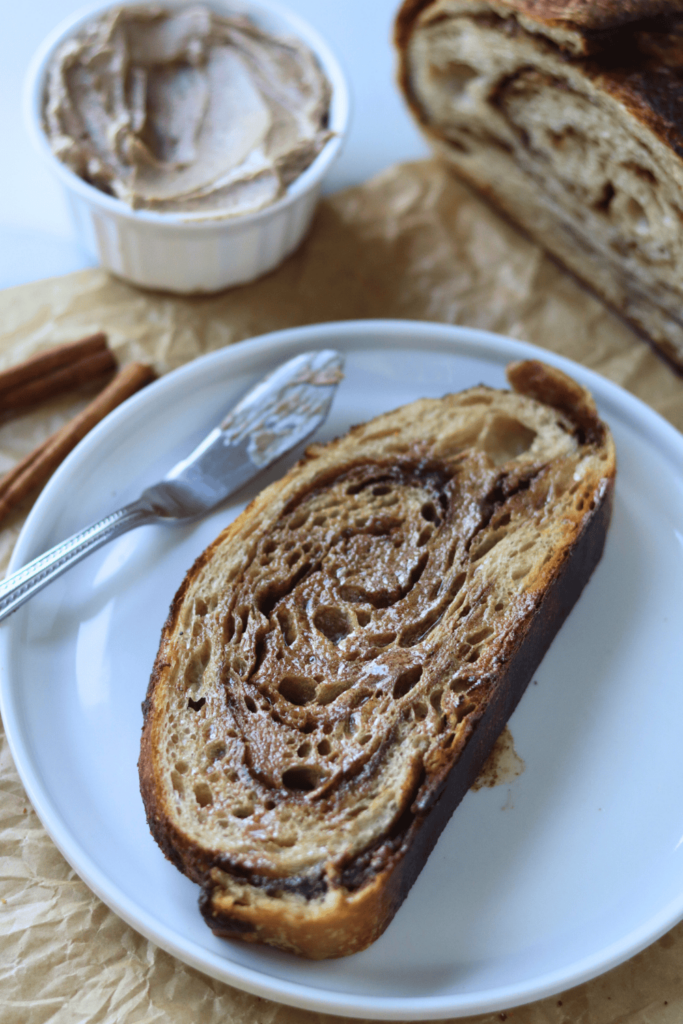
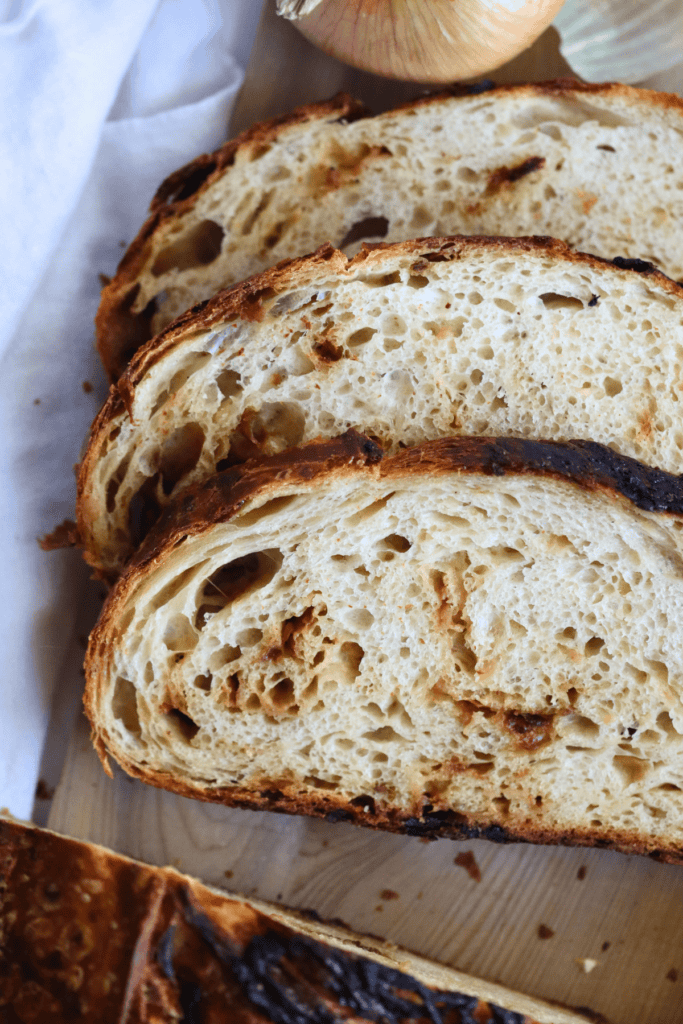
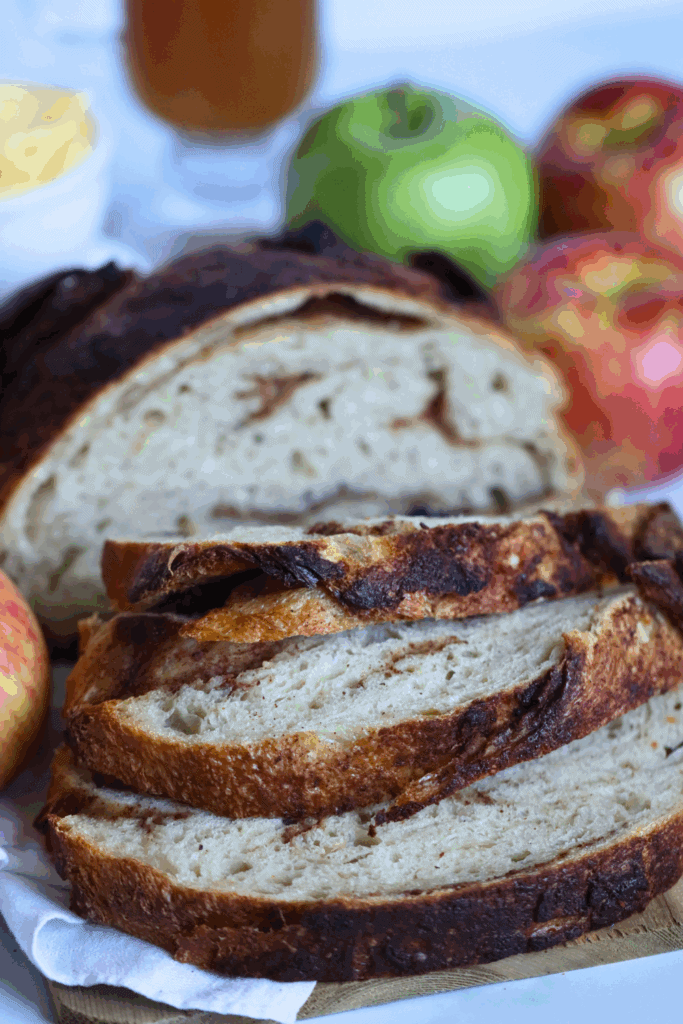
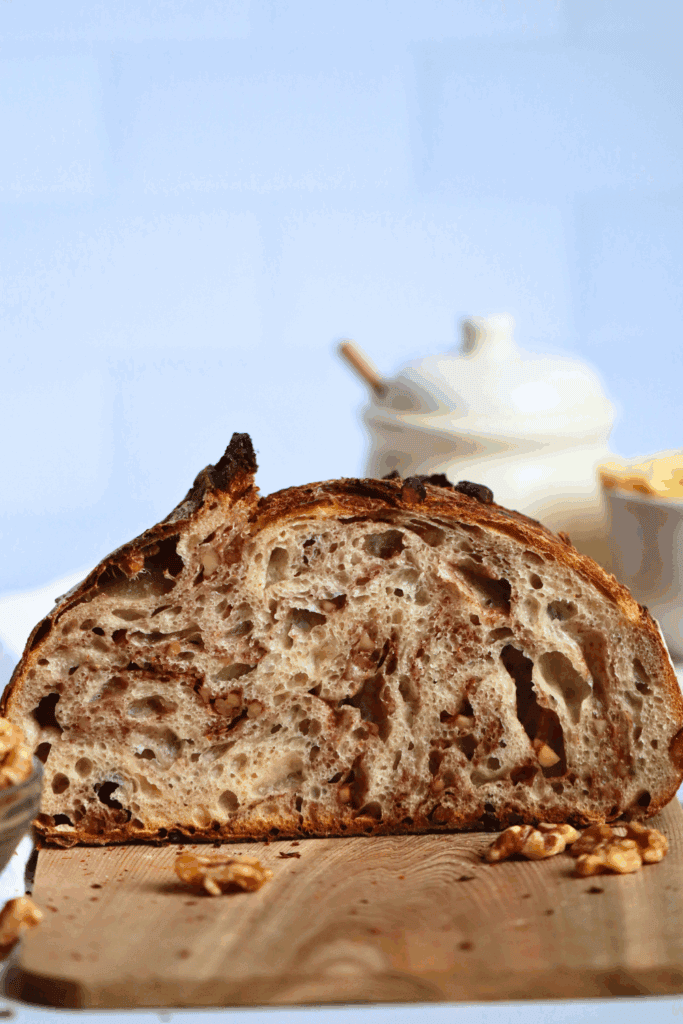
My Sourdough Masala Chai Spiced Tea Bread Recipe is a sweet sourdough loaf of bread with a warm chai spice mix, subtle tea flavor, and a brown sugar swirl.
I make this chai bread when I want the cozy flavors of masala chai tea in a sliceable sourdough bread, then serve it with whipped chai butter or alongside Sourdough Chai Cupcakes with Chai-Spiced Buttercream.
Quick Look: Sourdough Chai Bread
- Prep Time: 12 hours
- Cook Time: 40 minutes
- Cold Proof: 8 hours
- Total Time: 20 hours 40 minutes
- Servings: 1 loaf
- Calories: ~3,353 kcals whole loaf (based on nutritional panel)
- Cook Method: Baked
- Flavor Profile: A beautifully swirled sourdough loaf filled with a warm chai spice paste of cinnamon, ginger, cardamom, and cloves, best enjoyed slathered with homemade whipped chai butter. Cozy fall baking at its finest!
- Difficulty: Intermediate — Requires patience with bulk fermentation and shaping, but the lamination technique makes those gorgeous swirls totally achievable!
SUMMARIZE & SAVE THIS CONTENT ON
Why You’ll Love This Easy Sourdough Chai Bread Recipe
- Warm, layered chai flavor: You get a balanced mix of cinnamon, ginger, cardamom, nutmeg, cloves, allspice, and black tea in every loaf. That same sweet-spice appeal makes Soft Cinnamon Raisin Swirl Sourdough Bread a natural next bake.
- A true sourdough bread project: We use an active sourdough starter and bread flour for a chewy loaf with a long fermentation and a distinctive chai filling. When I want to practice the foundational dough, I turn to Easy Sourdough Bread for Beginners.
- Made for a flexible baking schedule: You can cold-proof the shaped dough for 8 to 72 hours, then bake when it suits your day. For a faster fall-style loaf made with sourdough starter discard, try Sourdough Pumpkin Quick Bread, while Easy Sourdough Pumpkin Bread offers another active-starter option.
Ingredients & Substitutions
* To find precise measurements, scroll to the bottom of this post to find the recipe card*
- Bread flour: Bread flour is best when it comes to making sourdough recipes. The higher protein percentage in flour gives the dough its strength so that it can rise to great heights and give you the best results.
- Water: Use room temperature, filtered water for consistent results.
- Sourdough starter: This recipe calls for an active and bubbly sourdough starter.
- Salt: Any unrefined salt will do, but my favorite is Redmond’s unrefined salt for some extra minerals!
- Dark Brown sugar: I love the subtle sweetness and richness adding dark brown sugar brings to this fall-like sourdough bread. It isn’t absolutely necessary, but it adds just a touch of sweetness to the bread. Light brown sugar can be substituted.
Filling
- Unsalted butter: Makes everything richer and keeps your chai bread nice and moist without messing up the flavor.
- Dark brown sugar: Adds a deep, sweet, caramel-y flavor to the bread, but if you don’t have it, light brown sugar works just as well for a lighter taste.
- All-purpose flour: It gives the filling its shape and keeps everything together, so you don’t end up with a messy bite.
- Spices: These offer that warm, cozy vibe we all love, really making you feel like you’re enjoying a chai treat
Whipped Chai Butter
- Salted butter: It brings a nice balance, adding a bit of savory goodness to the sweetness of the filling.
- Powdered sugar: A sprinkle of this on the whipped chai butter gives it a sweet, light touch that makes every bite even better.
- Spices: More masala chai spice to continue to highlight the chai flavor!
Baker’s Schedule # 1
|
Time |
Process |
|---|---|
|
DAY 1 |
Feed starter before bed in a 1:4:4 ratio (ex. 10g starter /40g flour /40g water) |
|
DAY 2 |
Step |
|
9:00 AM |
Mix Ingredients |
|
9:30 – 11:30 AM |
Stretch and fold every 30 minutes |
|
11:30 AM |
Continue the bulk fermentation |
|
9:00 PM |
Preshape |
|
9:30 PM |
Inclusions, shape and place in the fridge |
|
DAY 3 |
Score and bake in the morning |
Baker’s Schedule # 2
|
Time |
Process |
|---|---|
|
DAY 1 |
Feed starter so that it’s active, bubbly, and at its peak (4-12 hours before mixing dough) |
|
8:00 PM |
Mix Ingredients |
|
8:30- 10:00 PM |
Stretch and fold every 30 minutes |
|
10:00 PM |
Continue the bulk fermentation |
|
DAY 2 |
|
|
8:00 AM |
Pre-shape |
|
8:30 AM |
Inclusions, shape and place in the fridge |
|
Score and bake in the evening |
How to Make Sourdough Chai Bread
- Feed your sourdough starter. An active starter can take around 4-12 hours to peak, so adjust to what works best for your environment.
- In a large bowl, combine the active starter, dark brown sugar, and room-temperature filtered water. Mix with a Danish dough whisk or by hand until it looks like a tan-ish, milky liquid.
- Add the bread flour and salt. Mix until no dry flour remains. The dough will look shaggy, not like a uniform dough ball.
- Cover and rest for at least 30 minutes.
- With slightly wet hands, reach down to the bottom of the bowl, grab a section of dough, and stretch it up above itself. Fold it back over, rotate the bowl a quarter turn, and repeat until you have gone full circle. You will notice the dough start to look much smoother.
- Cover and rest for 30 minutes. Repeat for a total of 4 rounds. Wait at least 30 minutes between each set.
- After the final set, cover and let the dough bulk ferment on the counter. At 68-70°F, expect around 9-11 hours after the stretch and folds. Look for these signs rather than the clock:
- The dough has grown at least 50% and is domed on top
- Looks light and jiggles when the bowl is shaken
- Pulls away from the bowl easily
- Has visible bubbles in the dough and on top
- Does not tear when you do a windowpane test
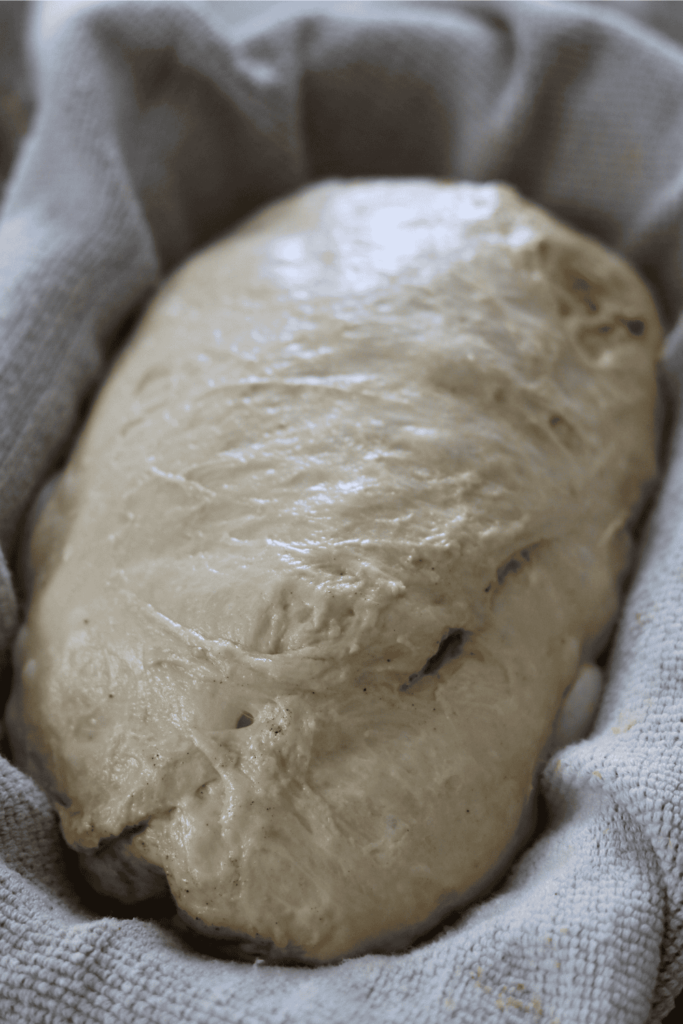
- With slightly wet fingers, gently loosen the dough from the sides of the bowl. Be careful not to pop those large bubbles! Tilt the bowl and let gravity slide the dough onto the counter.
- Do one round of stretch and folds, then flip the dough seam-side down. Cover with the bowl and rest for 30 minutes.
- While you wait, prepare your proofing basket. Use either a banneton or a small bowl lined with a tea towel. Dust generously with flour to prevent sticking.
- While the dough rests, make the chai filling. Add the softened butter to a stand mixer bowl with the paddle attachment or use a hand mixer. Add the dark brown sugar, cinnamon, ginger, cardamom, nutmeg, cloves, allspice, and flour. Mix on medium/low speed for about 2 minutes until a paste forms. Set aside.
- After 30 minutes, flip the dough seam-side up and gently stretch it into a large rectangle. Be careful not to stretch any section too thin.

- Spread half the chai filling over the dough. Fold the left side toward the middle and spread half of the remaining filling on top.

- Fold the right side over like a tri-fold and spread the last of the filling on top. Roll the dough up starting from the side closest to you.
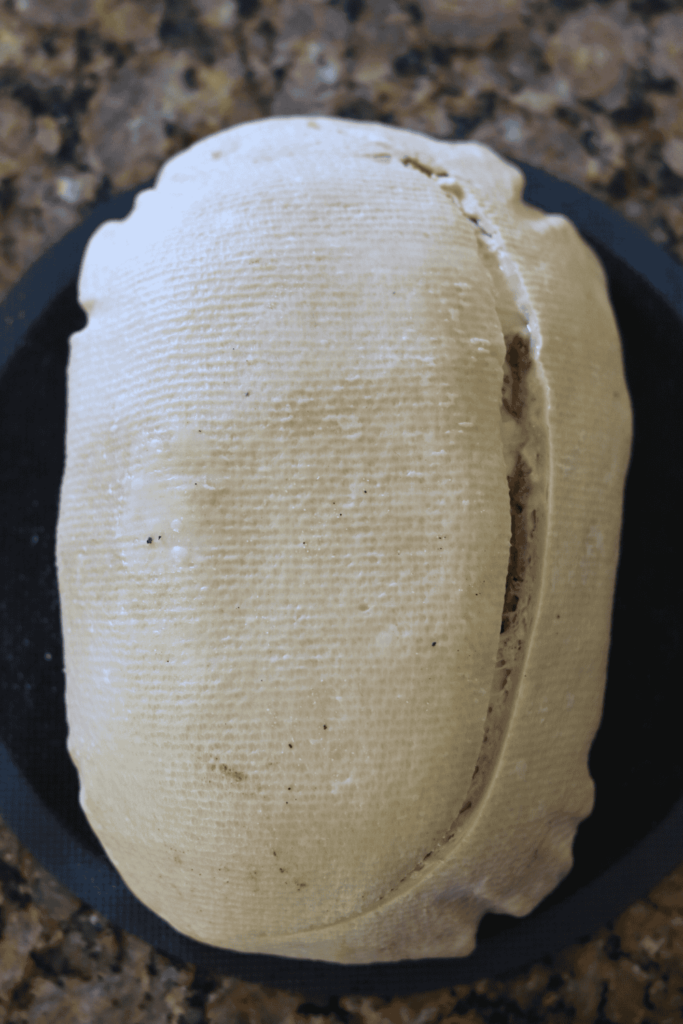
- Cup your hands around the dough and rotate it clockwise, pulling gently toward you until it forms a tight, round shape.
- Using a bench scraper or your hands, carefully scoop the dough up and place it seam-side down into your floured proofing basket. Cover with a plastic bag or shower cap.
- Refrigerate for 8-72 hours. The cold slows fermentation and deepens the flavor of your loaf. It also gives you flexibility in when you want to bake your bread. Just don’t wait too long or the dough will over-ferment and won’t be able to rise while baking.
- 30 minutes before baking, place the dough in the freezer. This helps the scoring design hold its shape. At the same time, place your Dutch oven in the oven and preheat to 500°F for at least 30 minutes.
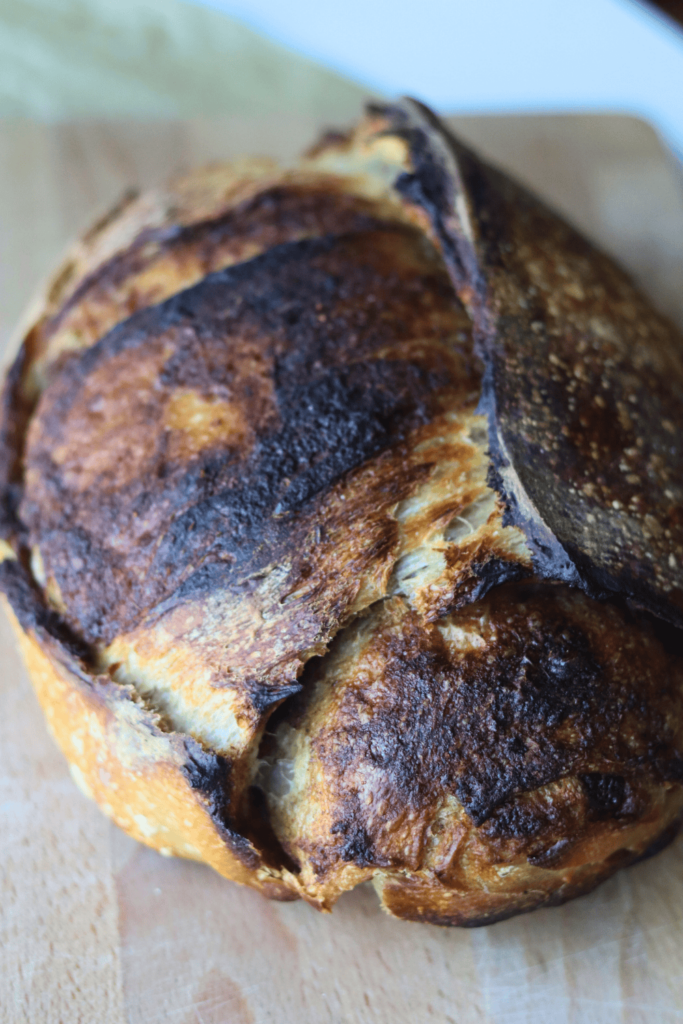
- Place a piece of parchment paper on your workspace and gently flip the banneton upside down. The dough should slowly release and land floured-side up.
- Score a crescent moon shape on top with a lame, razor blade, or sharp knife. This allows the bread to expand while baking. Grab the corners of the parchment and carefully lower it into the hot Dutch oven. Cover with the lid.
- Lower the oven to 450°F and bake covered for 30 minutes.
- Remove the lid and lower the oven to 425°F. Bake for another 10-15 minutes until golden brown and the internal temperature reaches 205°F. Keep an eye on the chai filling. If it is browning too quickly, cover loosely with aluminum foil.
- Lift the bread out using the parchment paper and place it onto a wire rack to cool for at least 1 hour before slicing. I know!! How can you possibly wait when it looks and smells so good?! But trust me, if you cut in too soon, your masterpiece will turn gummy.

- While the loaf cools, mix up the whipped chai butter. Add the softened butter to a stand mixer with the whisk attachment or use a hand mixer. Add the powdered sugar, cinnamon, ginger, cardamom, nutmeg, cloves, and allspice. Mix on medium/low speed for about 3 minutes until light and fluffy.
- Once the hour is up, slice into your work of art, slather on some chai butter, and enjoy!
McKenna’s Helpful Tips
- Wait until your active sourdough starter is bubbly and at its peak before mixing the dough. We use the same readiness cue with Easy Sourdough Bread for Beginners.
- Watch for a domed dough, visible bubbles, and a jiggly texture instead of relying only on the bulk fermentation clock. We use those fermentation signs in Easy Sourdough Pumpkin Bread as well.
- Cool the loaf on a wire cooling rack for at least one hour before slicing so the crumb can set. I give Double Chocolate Espresso Sourdough Bread the same patience.
- Freeze any extra slices so you can toast them later and enjoy the chai flavor another day. You can use this approach for Sourdough Pumpkin Quick Bread too.
How to Store
Keep sourdough chai bread fresh by wrapping it in a clean tea towel or storing it in a bread box at room temperature for up to 3-4 days. This protects the crust while keeping the inside soft. If you need to store it longer, place the whole loaf in an airtight bag or container and freeze it. When you’re ready to enjoy it, thaw it at room temperature. Reheat the bread by warming it in the oven at 300°F for about 10 minutes, or toast individual slices if desired, preserving both texture and flavor.
Sourdough Chai Bread FAQs
Keep ground cinnamon and the rest of the chai spice mix in the filling rather than mixing them into the dough. Cinnamon can slow fermentation, so concentrating the spices in the swirl preserves the chai flavor without limiting the rise. We use the same filling-focused approach when baking Soft and Fluffy Sourdough Cinnamon Rolls.
You can replace part of the bread flour with whole wheat flour or rye flour, but expect a denser loaf and a different bread taste. Adjust the water as needed because alternate flours absorb moisture differently. For a fruit forward loaf variation, try my Easy Lemon Blueberry Sourdough Bread.
You can bake the dough in a loaf pan if you do not have a Dutch oven or banneton. It’s the same way in Sourdough Bread in a Loaf Pan when we want a practical loaf-pan alternative.
Keep the entire loaf at room temperature in a clean tea towel or bread box for three to four days. For longer storage, freeze the whole loaf or individual slices in an airtight container, thaw at room temperature, and warm at 300°F for about 10 minutes. We use a similar make ahead mindset with Sourdough Discard Cinnamon Rolls.
If you tried this Sourdough Chai Bread recipe or any other recipe on my blog, please leave a 🌟 star rating and let me know how it went in the📝 comments below. Thanks for visiting!
Chai Sourdough Bread Recipe
Enter your email below, and we’ll send it straight to your inbox! Plus, you’ll get my newest sourdough recipes and best tips every week!
Equipment
Ingredients
Chai Sourdough Bread
- 50 grams active sourdough starter heaping 1/4 cup
- 55 grams dark brown sugar 1/4 cup
- 350 grams water, room temperature 1 1/2 cups
- 500 grams bread flour 3 1/2 cups
- 9 grams salt 1 1/2 teaspoons
Chai Filling
- 57 grams unsalted butter 1/4 cup
- 55 grams dark brown sugar **see notes 1/4 cup
- 3 grams ground cinnamon 1 1/2 teaspoons
- 1 gram ground ginger 1/2 teaspoon
- .5 grams ground cardamon 1/4 teaspoon
- .5 grams ground nutmeg 1/8 teaspoon
- .5 grams ground cloves 1/8 teaspoon
- .5 grams ground allspice 1/8 teaspoon
- 5 grams all-purpose flour 1 1/2 teaspoons
Whipped Chai Butter
- 57 grams salted butter **see notes 1/4 cup
- 55 grams powdered sugar 1/4 cup
- 3 grams ground cinnamon 1 1/2 teaspoons
- 1 gram ground ginger 1/2 teaspoon
- .5 grams ground cardamon 1/4 teaspoon
- .5 grams ground nutmeg 1/8 teaspoon
- .5 grams ground cloves 1/8 teaspoon
- .5 grams ground allspice 1/8 teaspoon
Instructions
Feed your sourdough starter
- An active starter can take around 4–12 hours to peak, so adjust to what works best for your environment.
Make the Dough
- In a straight-edge bowl, add the active sourdough starter, dark brown sugar, and room-temperature filtered water. Mix with a Danish dough whisk or with your hand until it looks like tan-ish, milky liquid.I love using this straight-edge bowl because it allows to me clearly see when the dough is done rising.50 grams active sourdough starter, 350 grams water, room temperature , 55 grams dark brown sugar
- Then, add the bread flour and salt. Again, mix with a whisk or by hand. Be sure to mix until all of the flour is incorporated. The dough will look shaggy, not like a uniform dough ball.500 grams bread flour, 9 grams salt
- Cover and let the dough rest for at least a half hour before you move on to the next step.
Stretch and folds
- With a bowl scraper, scrape the dough away from the bowl. Now, with slightly wet hands, reach down to the bottom of the bowl, grab a section of the dough and stretch the bread dough above itself. Then fold it over on top of the dough.
- Rotate your bowl clockwise a quarter of the way and repeat identical stretch and fold. Repeat the process until you come full circle. You will notice the dough will start to look much smoother than before.
- Cover and let the dough rest for another 30 minutes.
- Repeat the same stretch and folds 3 more times, for a total of 4 sets. Cover the dough and wait for at least 30 minutes of rest in between each set.
- Once you have completed the final set of stretch and folds, cover the dough and let it rest for the remainder of the bulk fermentation on your counter top, about 9-11 more hours if the dough is kept at 68-70 degrees F.
Bulk fermentation
- Now this is the most finicky part of sourdough. There isn’t a set time for your bulk ferment. It is greatly dependent on the temperature of your environment. The warmer it is, the faster your dough will ferment. The opposite is true for cooler temperatures.
- In an environment of 68-70 degrees, doughs will typically bulk ferment for 9-11 hours more after the stretch and folds, but again, you will have to look for the signs that your dough is done fermenting, rather than the clock. Warmer temperatures will be faster, while cooler temperatures will be slower.
Here’s what to look for:
- -The dough should have increased in size by at least 75% and be domed on top.-The dough looks light, and jiggles when the bowl is shaken.-The dough should easily pull away from the bowl.-There should be visible bubbles in the dough and on top.-The dough doesn’t tear when you do a windowpane test
- Pre-shape
- Once your dough has completed it's bulk ferment, it's time to move on to the pre-shape.
- With slightly wet fingers, gently release the dough from the sides of the bowl. Be careful not to pop all of those lovely bubbles! Tilt the bowl and leave gravity to do the work to move the dough on the counter.
- Shape the dough by doing another round of stretch and folds until you have gone full circle.
- With a bench scraper or your hands, turn the dough upside down, so the seam is now on the counter. Cover the dough with the bowl and let it rest for 30 minutes.
- While you are waiting for the dough to rest, prepare your proofing basket. This can either be a banneton or a small mixing bowl lined with a tea towel. The purpose of this proofing basket is to keep the tight shape that you will create, so make sure you are using a standard bowl that is small enough to help keep the shape.
- Dust the banneton or the tea towel with flour (most will say to use rice flour, but I have used just regular all-purpose flour) to prevent sticking.
Chai Filling
- Add the softened butter to a bowl of a stand mixer with the paddle attachment. This can also be done with a hand mixer.57 grams unsalted butter
- To the butter, add dark brown sugar, cinnamon, ginger, cardamon, nutmeg, cloves, allspices, and flour. Mix on medium/low speed for about 2 minutes, or until the ingredients are combined and a paste is formed.55 grams dark brown sugar **see notes, 3 grams ground cinnamon, 1 gram ground ginger, .5 grams ground cardamon, .5 grams ground nutmeg, .5 grams ground cloves, .5 grams ground allspice, 5 grams all-purpose flour
Final shape
- After 30 minutes of rest, flip the dough, with the seamed side up. Gently stretch the dough into a large rectangle, this is called lamination technique. Refer to the pictures above. Be careful not to stretch any sections of the dough too thinly.
- Spread half of the chai filling over the top of the dough.
- Next, take the left side of the dough and fold it towards the middle. Spread 1/2 of the remaining chai filling on top of this new section.
- Finally, take the right side of the dough and fold that towards the middle on top of the last section, like a tri-fold. Spread the remaining chai filling on top. Now, roll up the dough, starting with the part of the dough closest to you.
- Gently cup your hands around the dough ball. Turn the ball in a clockwise motion about a quarter turn and then softly pull the dough towards you. Do this repeatedly until you see the dough form a tighter and more round shape.
- With a bench scraper or just your hands, carefully scope up the dough and lay it upside down (seed side down) into your floured proofing basket and cover it with a plastic bag or a shower cap.
Cold Proof
- Place your proofing basket in the fridge to cold proof for 8-72 hours.Placing your dough in the fridge slows down the fermentation process, which deepens the flavors of your loaf. It also gives you flexibility in when you want to bake your bread.But don’t wait too long! If left in the fridge for too long, your dough will over-ferment, causing the dough to not be able to rise while baking.
Score
- Thirty minutes before baking, place the dough in the freezer. This helps with the scoring design.
- At the same time, place your Dutch oven in your oven and preheat to 500 degrees F. Allow the Dutch oven to preheat for at least 30 minutes.
- Place a piece of parchment paper on your workspace and gently flip the banneton upside down over the parchment paper. Since you dusted the banneton, your dough should slowly release and fall onto the parchment paper, landing in the middle with the floured side facing up.
- With a lame / razor blade or sharp knife, score a crescent moon shape on top of the dough. This is necessary for your bread to be able to expand while baking.
- Grab the corners of the parchment paper and carefully place the Sourdough Chai dough into your preheated Dutch Oven and cover with the lid.
- Lower the temperature to 450 degrees F and bake the Chai Sourdough Bread covered for 30 minutes. Then remove the lid of the Dutch oven and continue to bake the bread for an additional 10-15 minutes with the lid off at 425 degrees F. Keep an eye on the chai filling. If they are browning too much, cover the Dutch oven with aluminum foil while the bread continues to bake.
- Once golden brown, with an internal temperature of at least 205 degrees F, remove the Dutch Oven from your oven.
- Using the corners of the parchment paper, lift the sourdough bread out of the Dutch oven and place it onto a wire rack to cool.
- Allow your homemade bread to cool for at least 1 hour before cutting into it. (I know!! How can you possibly wait when it looks and smells so good?! But trust me, if you cut in too soon, your masterpiece will turn gummy.) While the loaf cools, I highly suggest mixing up some whipped chai butter!
Whipped Chai Butter
- Add the softened butter to a bowl of a stand mixer with the whisk attachment. This can also be done with a hand mixer.57 grams salted butter **see notes
- To the butter, add powdered sugar, cinnamon, ginger, cardamon, nutmeg, cloves, and allspices. Mix on medium/low speed for about 3 minutes, or until the butter is looking light and fluffy.55 grams powdered sugar, 3 grams ground cinnamon, 1 gram ground ginger, .5 grams ground cardamon, .5 grams ground nutmeg, .5 grams ground cloves, .5 grams ground allspice
- Once the hour is up, slice into your work of art, slather on some of the chai butter, and enjoy!
